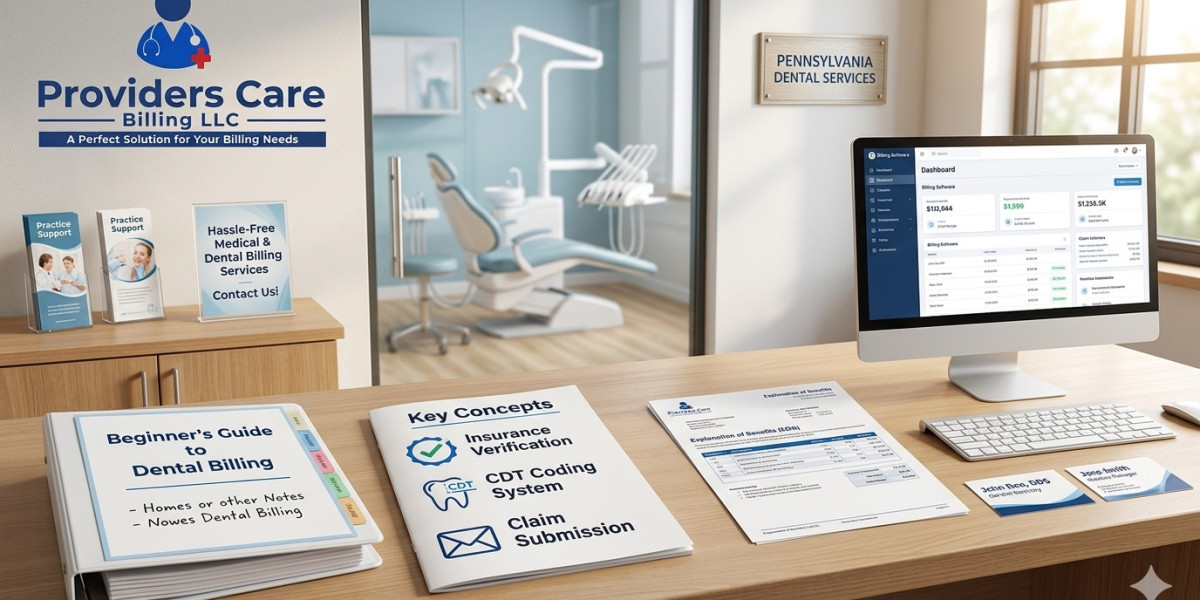

Dental billing plays a critical role in the financial success of any dental practice. Even when high-quality care is provided, errors in billing or insurance claim submission can lead to delayed payments and revenue loss.
Many healthcare providers also look for professional support such as medical billing services in Pennsylvania or a reliable medical billing company in Pennsylvania to streamline their revenue cycle and reduce administrative burden.
This guide explains the essential concepts of dental billing and claims management in a simple and practical way for beginners.
What is Dental Billing?
Dental billing is the process of submitting insurance claims for dental treatments and managing payments from insurance companies.
It includes:
Insurance verification before treatment
Assigning correct procedure codes
Submitting claims to insurance providers
Tracking claim status
Handling denials and resubmissions
Posting insurance payments
Many clinics today also rely on outsourcing partners, including medical billing companies in Pennsylvania, to ensure accuracy and faster reimbursement cycles.
Importance of Dental Billing in Healthcare Practices
Efficient billing systems are essential for maintaining a stable revenue cycle in dental and medical practices.
Proper billing helps:
Improve cash flow
Reduce claim denials
Ensure accurate reimbursements
Minimize administrative workload
Improve patient satisfaction
In many cases, practices choose a professional medical billing service in Pennsylvania to manage billing operations more efficiently and reduce internal errors.
Key Concepts Every Beginner Should Know
1. Insurance Verification
Insurance verification ensures that patient coverage is active and valid before treatment begins. It includes checking:
Eligibility status
Coverage limits
Deductibles and co-pays
Waiting periods
This step helps reduce claim rejections and delays.
2. CDT Coding System
CDT (Current Dental Terminology) codes are used to describe dental procedures in a standardized format.
Examples:
D0120 – Routine oral exam
D1110 – Dental cleaning
D2740 – Crown procedure
Accurate coding ensures proper claim processing and reimbursement.
3. Claim Submission Process
A complete claim includes:
Patient details
Insurance information
CDT procedure codes
Tooth numbers and surfaces
Provider details
Accurate submission helps avoid delays and denials.
4. Pre-Authorization
Some procedures require insurance approval before treatment begins, such as:
Root canals
Crowns
Implants
Failure to obtain pre-authorization may lead to denied claims.
5. Claim Follow-Up
Follow-up is essential after claim submission. This includes:
Checking claim status
Identifying pending claims
Resubmitting denied claims
Correcting documentation errors
Many practices working with a medical billing company in Pennsylvania benefit from dedicated follow-up teams that improve collection rates.
6. Explanation of Benefits (EOB)
An EOB is a document from insurance companies that explains:
Covered services
Paid amounts
Denied or adjusted charges
Understanding EOBs helps ensure accurate payment posting.
Common Dental Billing Mistakes to Avoid
Beginners should avoid:
Incorrect CDT coding
Missing insurance verification
Late claim submission
Incomplete documentation
Ignoring denied claims
These mistakes can significantly affect revenue flow.
Why Many Practices Outsource Billing Services
Healthcare providers increasingly rely on outsourcing to improve efficiency and accuracy. A professional medical billing service in Pennsylvania helps practices:
Reduce administrative workload
Improve claim accuracy
Speed up reimbursement cycles
Ensure compliance with insurance rules
This is why many providers prefer experienced medical billing services in Pennsylvania or established medical billing Companies in Pennsylvania to manage their billing operations.
Best Practices for Successful Claims Management
To improve billing performance:
Always verify insurance before treatment
Use updated CDT codes
Submit claims within 24–48 hours
Maintain proper documentation
Follow up regularly on unpaid claims
Stay updated with insurance guidelines
These practices help improve approval rates and reduce delays.
Conclusion
Dental billing requires accuracy, consistency, and strong attention to detail. Understanding insurance verification, coding, claim submission, and follow-up processes is essential for beginners.
Whether managed in-house or through a medical billing company in Pennsylvania, a well-structured billing system ensures faster reimbursements and improved financial performance for dental and medical practices.
If you are looking to improve your billing efficiency or reduce claim denials, our team is here to help. We provide reliable and professional support to streamline your revenue cycle and improve overall performance.
Contact us today to learn more about our medical billing services in Pennsylvania and discover how we can support your practice growth.
Ubicación del Autor
1901 N Roselle Rd, Suite 820AB Schaumburg, IL 60195