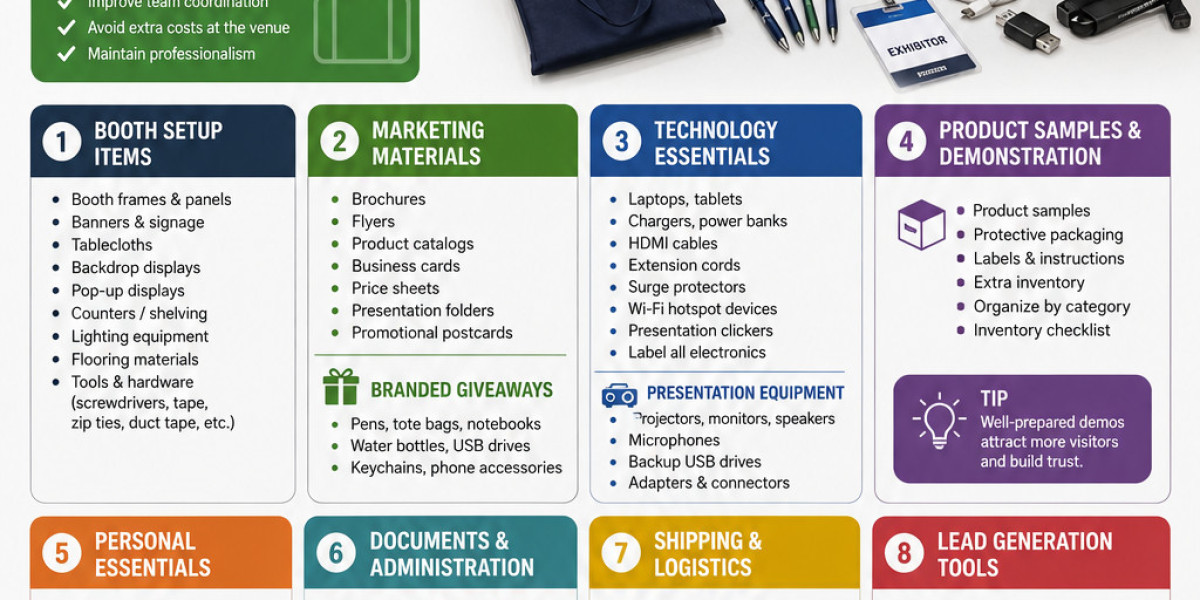

Trade shows remain one of the most powerful B2B marketing channels for building relationships, generating leads, and showcasing products in a highly competitive environment. However, success doesn’t happen at the event—it is built weeks in advance through structured planning and disciplined execution. A clear roadmap like the Trade Show Preparation Guide: 8 Weeks to Show-Ready helps businesses stay organized and performance-focused throughout the entire journey. You can view the complete framework here: Trade Show Preparation Guide: 8 Weeks to Show-Ready.
This blog provides a complete 8-week B2B trade show preparation system, guiding you from initial planning to flawless execution and post-event success.
Why B2B Trade Show Preparation Requires an 8-Week Strategy
Unlike smaller marketing activities, trade shows involve multiple departments, vendors, and timelines. Without a structured plan, things can quickly become chaotic.
An 8-week strategy helps B2B companies:
- Align sales and marketing teams
- Control budgeting and logistics
- Improve booth performance and engagement
- Increase lead quality and conversion rates
- Reduce operational stress
Preparation is not optional—it is the foundation of trade show ROI.
Week 8: Strategic Planning and Objective Setting
Every successful trade show begins with clarity.
Key Actions:
- Define measurable business goals (leads, meetings, partnerships)
- Identify target customer profiles
- Select relevant trade shows
- Set budget allocation across departments
At this stage, businesses must focus on why they are attending before deciding how they will execute.
Week 7: Booth Concept Development and Planning
Once objectives are defined, the focus shifts to booth strategy.
Key Actions:
- Finalize booth size and location preference
- Develop initial design concepts
- Plan visitor journey inside the booth
- Decide on branding direction
A strong booth concept ensures that your physical presence aligns with your business goals.
Week 6: Content Creation and Marketing Preparation
Content is the voice of your booth.
Key Actions:
- Create brochures, catalogs, and presentations
- Develop product demo videos
- Prepare case studies and sales materials
- Design pre-event marketing campaigns
At this stage, consistency in messaging across all channels is essential for B2B credibility.
Week 5: Logistics and Vendor Coordination
Execution depends heavily on logistics.
Key Actions:
- Finalize booth fabrication contracts
- Coordinate shipping schedules
- Book travel and accommodation
- Confirm trade show registrations
Strong vendor coordination prevents costly delays and disruptions.
Week 4: Pre-Show Outreach and Lead Generation
Now the focus shifts to attracting the right audience.
Key Actions:
- Send personalized email invitations
- Promote attendance on LinkedIn and industry platforms
- Schedule meetings with prospects in advance
- Launch targeted digital campaigns
Pre-show engagement ensures that your booth attracts qualified B2B prospects.
Week 3: Sales Team Training and Role Assignment
Your booth team is your most important asset.
Key Actions:
- Assign roles (greeters, presenters, closers)
- Train staff on product knowledge and pitch delivery
- Conduct mock booth interactions
- Define lead qualification criteria
A trained team ensures consistent messaging and better conversions.
Week 2: Booth Production and Technical Testing
Now everything moves into final production.
Key Actions:
- Inspect booth fabrication quality
- Test all digital equipment
- Confirm shipping and delivery
- Prepare backup materials
This stage ensures that no technical issues arise during the event.
Week 1: Final Readiness and Execution Preparation
The final week focuses on precision and confidence.
Key Actions:
- Conduct final team briefing
- Reconfirm event schedules
- Pack essential materials
- Review performance goals
At this point, the team should be fully aligned and ready for execution.
Trade Show Day: Execution Excellence
Execution determines success.
Key Actions:
- Set up booth early and test all systems
- Engage visitors proactively
- Qualify leads efficiently
- Collect and organize contact data
Every interaction should align with your B2B goals.
Post-Show Strategy: Maximizing ROI
Many companies fail after the event—not during it.
Key Actions:
- Follow up with leads within 48 hours
- Segment prospects based on interest level
- Share personalized communication
- Measure performance against KPIs
Post-show engagement is where revenue is actually converted.
Common B2B Trade Show Mistakes
Avoid these to protect your ROI:
- Lack of clear goals
- Poor booth design planning
- Weak pre-show outreach
- Untrained booth staff
- No follow-up strategy
Even strong brands lose opportunities due to avoidable errors.
How an 8-Week Plan Drives B2B Success
A structured timeline improves every stage of performance:
- Better coordination across teams
- Higher quality leads
- Stronger brand visibility
- Improved engagement rates
- Higher return on investment
The key is discipline and consistency throughout the preparation cycle.
Final Thoughts
B2B trade show success is not accidental—it is engineered through structured preparation, strategic execution, and disciplined follow-up. An 8-week timeline ensures that every element of your participation is carefully planned and executed with purpose. From defining goals in the first week to converting leads after the event, every step plays a critical role in overall success.
By following a structured system like the Trade Show Preparation Guide: 8 Weeks to Show-Ready, businesses can transform their trade show presence into a high-performance growth channel. You can revisit the full guide here: Trade Show Preparation Guide: 8 Weeks to Show-Ready.
Ubicación del Autor
ProMat 2027 McCormick Place Chicago, Illinois, USA 50000 1000 Material Handling Supply Chain Autom