

When you're dropping real money on a men's leather biker vest, the leather grade makes all the difference between something that lasts five years and something that lasts fifty.
The two options you'll run into most are full grain and top grain. Both come from cowwhide, and both look good at first, but they age completely differently, especially when you're wearing your real leather biker vests for men through rain, sun, and highway miles.
Here's the straight talk from someone who's built and worn both.
What "Grain" Actually Means
Think of cowwhide like a thick piece of wood. The very top layer, the part that had hair growing out of it, is the strongest and most character-filled. Everything below gets progressively weaker.
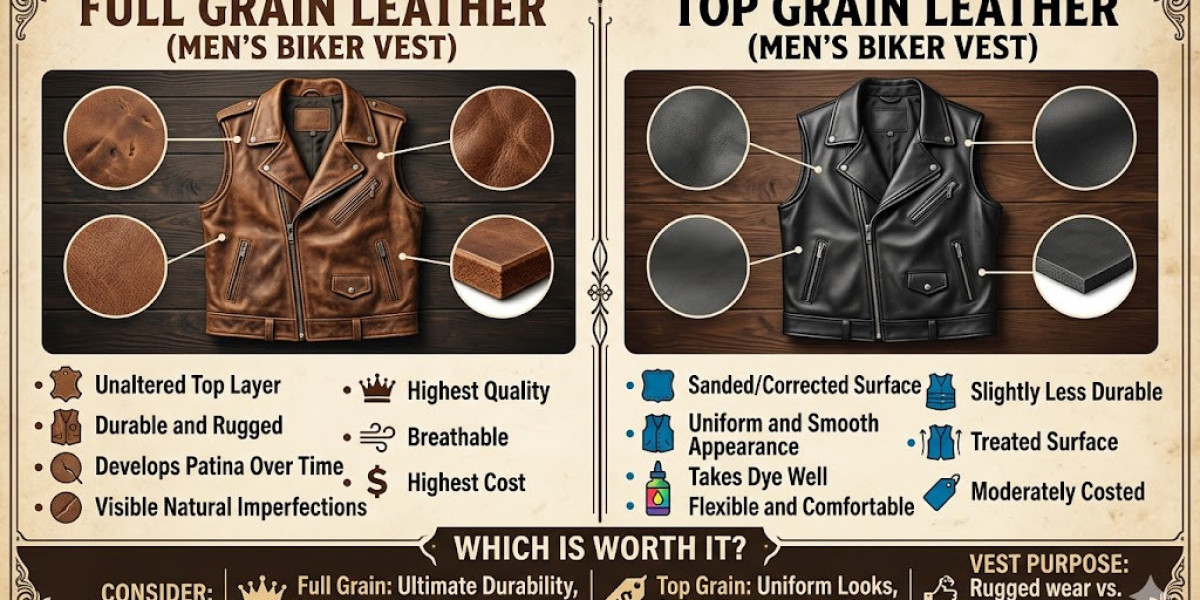
Full Grain = Uses the entire top layer, exactly as nature made it
Top Grain = Takes that top layer and sands or buffs off the imperfections, then usually stamps a fake grain pattern back on
That sanding process is where everything changes.
Full Grain Leather: The Real Deal
How It's Made
Full grain leather keeps the original surface intact. Scars from old scratches, bug bites, or branding marks might show up. Range marks (wrinkles from the cow's neck) stay visible. The grain pattern is 100% natural.
This top layer contains the tightest fiber structure in the entire hide. Those fibers run in every direction, making it incredibly strong and resistant to tearing.
How It Ages
A men's black leather biker vest in full grain starts stiff and shiny. After a season of riding, it breaks in and develops a patina, darker areas where your hands rest, lighter wear lines across the shoulders, a unique sheen that only comes from real use.
Scuffs and scratches don't ruin it, they add character. Rub a little leather balm on a scratch and it often blends right in.
Durability Reality
Full grain laughs at abrasion. If you lay the bike down wearing a full grain vest over your jacket, the leather might scuff deep but it rarely tears through. I've seen full grain vests from the 1970s still holding strong with original stitching.
Top Grain Leather: The Practical Choice
How It's Made
Top grain starts with the same hide, but manufacturers sand off the top 0.1–0.3mm to remove imperfections. What you're left with is still the upper part of the hide (better than splits or bonded leather), but the strongest fibers are gone.
Then they usually stamp an artificial grain pattern and finish it with pigment coating. This creates that perfect, uniform look you see in most store vests.
How It Ages
Your men's leather biker vest in top grain looks perfect for the first year or two. Every panel matches. No weird marks or color variations.
Then the coating starts to wear. High-contact areas lose their finish and look dull compared to the rest. Scratches show up white or light because you're seeing the sanded leather underneath the pigment. The fake grain pattern can peel in heavy wear zones.
Durability Reality
Top grain tears easier than full grain. The removed fiber layer was doing most of the heavy lifting for strength. Once the surface coating fails, the leather underneath deteriorates faster.
Side-by-Side Comparison
Feature | Full Grain | Top Grain |
Strength | Highest | Good but lower |
Natural marks | Yes (adds character) | Removed for uniform look |
Patina development | Beautiful, unique to your vest | Limited, surface coating dominates |
Scratch resistance | Scuffs blend in | The scratches show clearly. |
Water resistance | Better when properly treated | Good initially, coating can peel |
Weight | Slightly heavier | Slightly lighter |
Break-in period | Longer (stiffer at first) | Breaks in faster |
What Real Riders Choose
Guys Who Pick Full Grain
Ride year-round in all weather
Want a vest that tells their story over decades
Value heirloom quality (many pass these down)
Don't mind spending more upfront
Ride with clubs where colors matter for life
Guys Who Pick Top Grain
Want that perfect new look for photos and meets
Ride mostly in fair weather
On a tighter budget
Prefer lighter weight for summer riding
Replace gear every 5-7 years anyway
Both choices have their place. I've owned top grain vests that served me well for years. But my full grain vest from 2012? Still looks better every season.
The Black Vest Factor
A men's black leather biker vest hides a lot of sins.
Full grain black develops rich depth over time, almost purple highlights in sunlight. Top grain black stays flat and uniform until the pigment starts wearing off in patches.
Black dye also helps full grain age better because small scratches fill with natural oils and darken rather than standing out.
Price vs Value Reality Check
Yes, full grain costs more. A quality full grain men's leather biker vest runs $250–$450. Top grain versions often sell for $120–$250.
But think about cost per year:
Top grain vest last 7 years = $25–$35 per year
Full grain vest last 25+ years = $10–$18 per year
Plus the full grain version usually sells used for more than you paid if you ever decide to part with it.
How to Spot the Difference When Shopping
Look for these signs
Full Grain Clues:
Natural grain variations (even in black)
Some surface texture you can feel
Description mentions "full grain," or "aniline dyed"
Heavier weight for the same thickness
Price reflects quality
Top Grain Red Flags:
Perfectly uniform appearance
Plastic-like sheen that doesn't change with angle
Description says "genuine leather" without specifying grain
Very lightweight for the thickness
Too cheap to be true
Feel the leather. Full grain has life to it. Top grain often feels flatter and more processed.
The Bottom Line
If you're buying one men's leather biker vest to wear for the next twenty years, get full grain. It costs more upfront but becomes part of your riding history.
If you're just getting into the life, ride occasionally, or want that perfect new look without breaking the bank, top grain will treat you right for years.
Neither choice is wrong. Both are real leather. Both look good on a bike.
But only one ages into something that makes people ask, "Man, where'd you get that vest?" twenty years from now.
That's full grain.
Your call depends on how long you plan to keep telling your story on two wheels.