
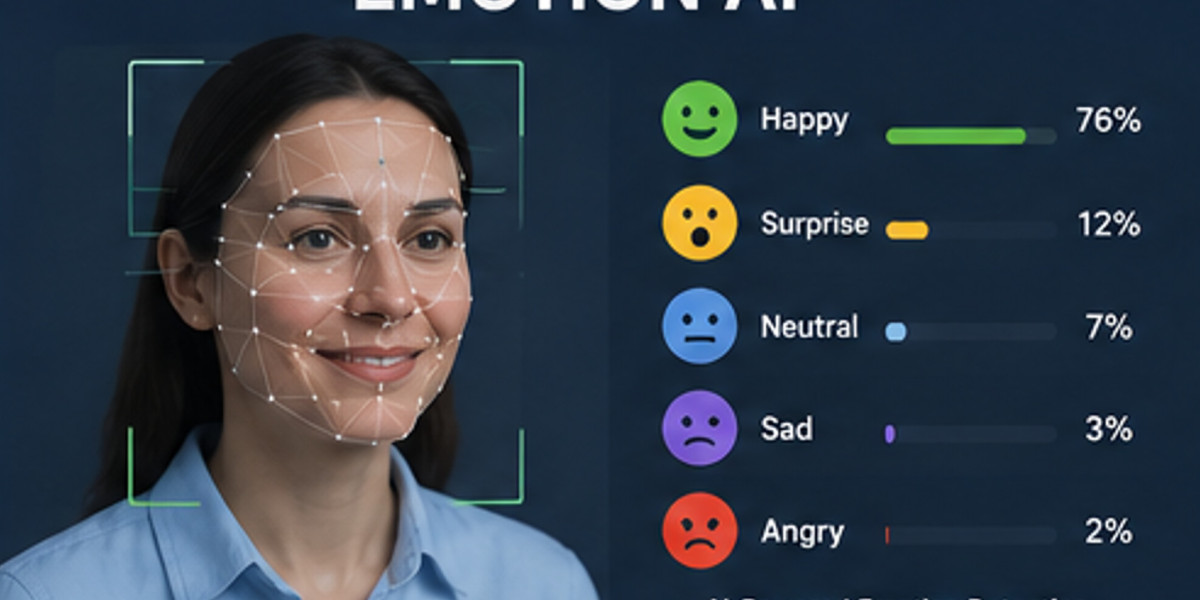

Emotion AI measures facial expressions, voice patterns, and physiological signals to quantify how customers feel during interactions. This technology moves research beyond what customers say to what they actually experience. Traditional surveys and interviews rely on self reporting, which is filtered, delayed, and often inaccurate.
Emotion detection AI captures reactions in real time, revealing frustration, confusion, delight, or disinterest as they happen. This shift gives businesses direct access to emotional friction points that drive abandonment and loyalty.
The Problem With Self Reported Feedback
Customers often cannot or will not accurately describe their experiences. They struggle to recall specific emotional moments after an interaction ends. They provide socially acceptable answers instead of honest reactions. They misattribute causes of satisfaction or frustration.
Post experience surveys ask users to rate their journey on numerical scales. These ratings reflect overall impressions, not the specific moments that created those impressions. A single point of delight can offset multiple frustrations in memory, hiding problems that still need fixing.
Focus groups and interviews provide richer detail but introduce recall bias and group dynamics that distort individual perspectives. Participants influence each other. Dominant voices shape consensus. Actual emotional reactions during the original experience get lost in reconstructed narratives.
Emotion AI solves this gap by measuring reactions during the experience itself. You see exactly when frustration peaks, which interface elements cause confusion, and which moments create positive engagement.
How Emotion Detection Systems Actually Work
These platforms analyze multiple signals to infer emotional states with increasing accuracy.
Facial expression analysis uses computer vision to detect micro expressions. Raised eyebrows indicate surprise. Furrowed brows suggest confusion or frustration. Lip corners turning down signal dissatisfaction. These reactions happen before conscious awareness and before customers can filter their responses.
Voice analysis measures pitch, tone, pace, and stress patterns. Frustration changes vocal characteristics in measurable ways. Confusion slows speech and increases filler words. Satisfaction creates more fluid and energetic delivery.
Some systems incorporate biometric signals like heart rate variability, skin conductance, and eye dilation. These physiological responses connect directly to emotional arousal and cognitive load.
Machine learning models combine these inputs to classify emotional states. Training data from thousands of participants helps systems distinguish between similar expressions and account for individual variation.
Real Time Insight During Customer Interactions
The most significant transformation comes from capturing emotions as they occur.
When testing a checkout process, emotion AI shows exactly which form field causes frustration. When evaluating a support call, it identifies when customer stress escalates or when relief appears after resolution.
This timing precision allows teams to connect specific design elements, words, or processes to emotional reactions. You do not just know customers felt frustrated. You know they felt frustrated at the password reset step, during the shipping option selection, or when the confirmation page loaded slowly.
This specificity accelerates problem solving. Instead of guessing which aspect of a workflow creates friction, you see the exact trigger point.
Applications Across Research Contexts
Product Testing
Companies use emotion detection AI during prototype evaluations. Participants interact with new features while cameras and microphones capture reactions. Designers see which elements create delight and which cause confusion before products launch.
This approach works for physical products and digital interfaces. Automotive companies test dashboard layouts. Appliance manufacturers evaluate control panels. Software teams assess new navigation patterns.
Advertisement Effectiveness
Marketing teams measure emotional engagement with video ads, display banners, and social content. AI facial expression recognition shows which moments capture attention, which create positive associations, and which prompt viewers to look away.
This goes beyond click rates and view duration. You see whether content creates the intended emotional response. A humorous ad that makes people uncomfortable fails even if they watch it completely.
Retail Environment Design
Physical stores use emotion AI to evaluate layout changes, signage placement, and product displays. Cameras in test environments track shopper expressions as they navigate aisles and examine products.
Retailers identify which displays create interest, which checkout configurations reduce stress, and which layout patterns cause navigation confusion.
Customer Service Quality
Contact centers analyze voice patterns during support calls. Emotion AI companies provide systems that flag calls where customer frustration escalates, allowing supervisors to intervene or use those interactions for training.
The technology also evaluates agent emotional tone. It identifies when representatives maintain calm under pressure and when stress affects their delivery.
Advantages Over Traditional Methods
Speed is the most obvious benefit. Traditional research requires recruiting, scheduling, conducting sessions, analyzing transcripts, and synthesizing findings. This process takes weeks.
Emotion AI analyzes reactions instantly. During a usability test, researchers see emotional responses in real time. After the session, the system generates reports highlighting peak emotional moments without manual coding.
Scale also improves. Analyzing hundreds of hours of interview footage manually is impractical. Automated emotion detection processes large sample sizes without additional time investment.
Objectivity increases as well. Human researchers bring biases to observation and interpretation. Automated systems apply consistent criteria across all participants.
Limitations and Accuracy Considerations
Current technology works well but is not perfect. Accuracy varies by demographic factors, cultural expression norms, and individual baseline differences.
Some cultures express emotions more outwardly. Others maintain neutral expressions regardless of internal states. Systems trained primarily on Western populations may misinterpret expressions from other cultural contexts.
Individual variation also creates challenges. Some people naturally show minimal facial movement. Others display exaggerated expressions unrelated to actual emotional intensity.
Context matters too. A furrowed brow might indicate frustration, concentration, or visual strain. The system needs surrounding behavioral cues to interpret correctly.
Most emotion AI companies address these limitations through diverse training data and multimodal analysis. Combining facial, vocal, and behavioral signals improves accuracy beyond any single input.
Privacy and Ethical Concerns
Recording faces and voices raises legitimate privacy questions. Customers may feel uncomfortable knowing their expressions are being analyzed.
Transparent consent becomes critical. Participants should understand what data is collected, how it is used, and how long it is retained. Research sessions should clearly communicate the use of emotion detection technology.
Data security also matters. Biometric information requires stronger protection than traditional research data. Companies must ensure recordings are encrypted, access is restricted, and retention periods are limited.
Some jurisdictions regulate biometric data collection. Compliance with laws like GDPR in Europe or CCPA in California is mandatory before deploying emotion recognition in research.
Integration With Existing Research Methods
Emotion AI works best when combined with other approaches rather than replacing them entirely.
Use emotion detection to identify moments worth exploring in depth. When the system flags a frustration spike, follow up with interview questions about that specific moment. When it shows unexpected delight, ask participants what created that reaction.
This combination provides both the what and the why. Emotion AI shows what happened emotionally. Qualitative methods explain why it happened and what it means to participants.
Behavioral analytics add another layer. Combine emotion data with click patterns, task completion rates, and navigation paths. You see not just how customers felt but how those emotions affected their actions.
Practical Implementation Steps
Start with clear research questions. Define which emotional responses matter for your specific context. Checkout processes should minimize frustration and anxiety. Entertainment content should maximize engagement and enjoyment. Support interactions should reduce stress and create relief.
Choose technology that fits your environment. Remote testing requires webcam based solutions. Physical locations might use dedicated cameras. Phone research needs voice analysis systems.
Establish baselines by testing neutral scenarios. Understand each participant's resting expression and vocal patterns before measuring reactions to your actual content.
Validate findings with follow up questions. Ask participants about moments when the system detected strong emotions. Confirm that the detected reaction matches their recalled experience.
Train teams to interpret results correctly. Emotion detection provides data, not automatic answers. Researchers still need to understand context, consider individual differences, and synthesize findings into actionable insights.
The Future of Customer Experience Research
As accuracy improves and costs decrease, emotion AI will become standard in customer research. The technology will move beyond dedicated studies into continuous monitoring of real customer interactions.
Support calls, chat sessions, and video consultations will include automatic emotion analysis. Systems will alert teams to negative experiences in real time, allowing immediate intervention.
Physical retail environments will incorporate emotion sensing to dynamically adjust experiences. Digital interfaces might adapt based on detected frustration or confusion.
The combination of emotion data with behavioral analytics and traditional research will create comprehensive understanding of customer experiences that was previously impossible to achieve.
Conclusion
Emotion AI transforms customer experience research by capturing genuine reactions during actual interactions instead of relying on filtered recollections. The technology measures facial expressions, voice patterns, and physiological signals to identify specific moments of frustration, confusion, or satisfaction. This precision helps teams fix problems faster and design experiences that align with real emotional needs.
While limitations around cultural variation and privacy exist, responsible implementation combined with traditional methods creates deeper customer understanding than any single approach alone. Businesses that adopt emotion detection AI gain competitive advantage through faster insight and more accurate problem identification.
Frequently Asked Questions
Q.1 What is emotion AI and how accurate is it?
Ans. Emotion AI uses computer vision, voice analysis, and sometimes biometric sensors to detect emotional states from observable signals. Current systems achieve 70 to 90 percent accuracy depending on context and demographic factors. Accuracy improves when multiple signals are combined and when systems are trained on diverse populations.
Q.2 Do customers need to know their emotions are being analyzed during research?
Ans. Yes. Ethical research requires informed consent. Participants should understand that emotion detection technology will be used, what data will be collected, and how it will be protected. Transparency builds trust and ensures compliance with privacy regulations in most jurisdictions.
Q.3 Can emotion detection AI work for remote research sessions?
Ans. Yes. Many platforms use standard webcams and microphones to capture facial expressions and voice patterns during video calls. This makes emotion analysis practical for remote usability testing, interviews, and product evaluations without requiring participants to visit physical locations.
Q.4 Which emotion AI companies lead the market currently?
Ans. Companies like Affectiva, Realeyes, iMotions, and Entropik Tech provide research focused emotion detection platforms. Each offers different features suited to specific contexts like advertisement testing, user experience research, or in person product evaluations. Selection depends on research environment and integration requirements.
Q.5 How does AI facial expression recognition differ from manual observation?
Ans. AI facial expression recognition processes micro expressions that happen too quickly for human observers to catch reliably. It applies consistent criteria across all participants and analyzes large data sets without fatigue. Manual observation provides contextual understanding and can interpret ambiguous signals better, making combined approaches most effective.
Ubicación del Autor
Nueva York, Estados Unidos