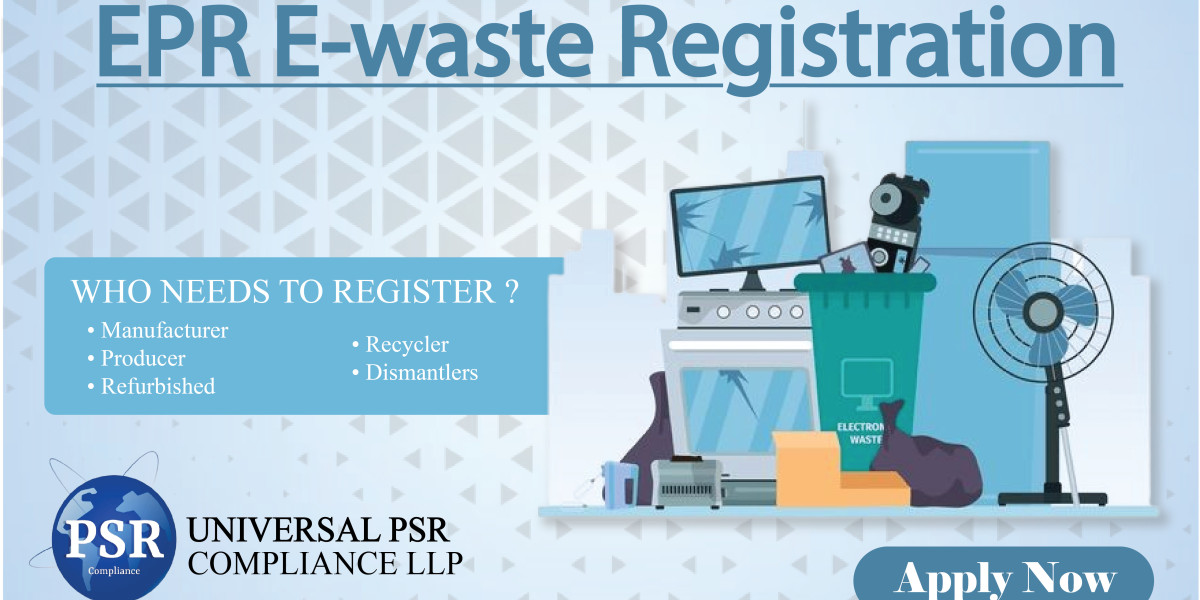

In today’s digital world, electronic waste is growing rapidly in India. Every year, millions of mobile phones, laptops, computers, TVs, batteries, and electronic products become waste. To control this environmental problem, the Government of India has made EPR E-Waste Registration mandatory for manufacturers, importers, producers, and brand owners selling electronic products in India.
If your business deals with electronic equipment, then obtaining an EPR Registration Certificate from CPCB is compulsory under the E-Waste Management Rules, 2022. Without EPR authorization, businesses may face heavy penalties, legal notices, and restrictions on selling products in India.
This detailed guide explains everything about EPR E-Waste Registration in India, including the registration process, documents required, CPCB compliance, fees, validity, recycling targets, and benefits.
What is EPR E-Waste Registration?
EPR (Extended Producer Responsibility) is a government compliance system where producers are responsible for collecting, recycling, and disposing of electronic waste generated from their products.
Under this rule, businesses must ensure that old electronic products are properly recycled through authorized recyclers.
The Central Pollution Control Board (CPCB) manages and monitors EPR compliance in India.
Why EPR E-Waste Registration is Important?
1. Legal Compliance
EPR registration is mandatory under Indian environmental laws.
2. Avoid Heavy Penalties
Non-compliance can lead to environmental compensation and legal action.
3. Environmental Protection
Proper recycling reduces pollution and harmful toxic waste.
4. Brand Reputation
Consumers trust environmentally responsible businesses.
5. Sustainable Business Growth
EPR compliance supports long-term sustainability goals.
Who Needs EPR E-Waste Registration in India?
The following businesses must obtain EPR authorization from CPCB:
Manufacturers
Companies manufacturing electronic products in India.
Importers
Businesses importing electronic products or components into India.
Brand Owners
Companies selling products under their own brand name.
Online Sellers & E-Commerce Companies
Online marketplaces selling electronic products.
Producers
Any business introducing electrical or electronic equipment into the Indian market.
Products Covered Under EPR E-Waste Rules
IT Equipment
Computers
Laptops
Printers
Servers
Routers
Consumer Electronics
Televisions
Refrigerators
Air Conditioners
Washing Machines
Mobile & Communication Devices
Smartphones
Tablets
Chargers
Lighting Equipment
LED Lights
CFL Bulbs
Electrical Appliances
Mixers
Microwave Ovens
Electric Irons
Regulatory Authority for EPR E-Waste in India
The Central Pollution Control Board (CPCB) is the main authority responsible for:
Granting EPR Registration
Monitoring recycling targets
Managing the CPCB EPR Portal
Verifying annual compliance reports
Taking action against non-compliant companies
Documents Required for EPR E-Waste Registration
The following documents are generally required:
PAN Card of Company
GST Registration Certificate
Company Incorporation Certificate
IEC Certificate (for importers)
Aadhaar & PAN of Authorized Signatory
Product Details
Brand Authorization Letter
EPR Plan
Agreement with Authorized Recycler
CIN Number
Business Address Proof
Step-by-Step Process for EPR E-Waste Registration
Step 1: Business Eligibility Check
First, identify whether your company falls under producer, importer, or brand owner category.
Step 2: Documentation Preparation
Prepare all required documents carefully to avoid rejection.
Step 3: CPCB Portal Registration
Create login credentials on the CPCB EPR portal.
Step 4: Submit EPR Application
Fill the application form with product and business details.
Step 5: Upload EPR Plan
Submit a proper waste collection and recycling plan.
Step 6: Recycler Agreement Submission
Attach agreements with authorized recyclers.
Step 7: CPCB Verification
The authority reviews the application and may raise queries.
Step 8: Grant of EPR Certificate
After approval, CPCB issues the EPR Registration Certificate.
EPR Recycling Targets in India
Businesses must fulfill yearly recycling targets fixed by CPCB.
The targets generally increase every year to improve waste management efficiency.
Failure to meet targets can result in:
Environmental compensation
Monetary penalties
Suspension of EPR authorization
Validity of EPR Certificate
The EPR Certificate is generally valid for 5 years.
Businesses must renew the certificate before expiry.
Timeline for EPR Registration
The approval process usually takes:
15 to 30 working days
The timeline depends on:
Proper documentation
CPCB query responses
Accuracy of EPR plan
Common Reasons for EPR Application Rejection
Many businesses face rejection because of:
Incorrect documentation
Invalid recycler agreements
Wrong product category
Incomplete EPR plan
GST mismatch
Missing IEC details
Proper professional guidance helps avoid these mistakes.
Benefits of EPR E-Waste Compliance
Better Brand Value
Shows commitment towards sustainability.
Increased Business Trust
Builds trust among customers and authorities.
Easy Market Expansion
Many marketplaces require EPR compliance.
Reduced Legal Risks
Avoid penalties and compliance notices.
Environmental Sustainability
Supports proper electronic waste management.
Penalties for Non-Compliance
Companies operating without EPR registration may face:
Heavy fines
Environmental compensation
Product sales restrictions
Legal proceedings
CPCB notices
Therefore, EPR compliance is extremely important for electronics businesses in India.
Why Choose PSR Compliance for EPR Registration?
PSR Compliance provides complete support for:
EPR Registration
CPCB Documentation
Recycler Agreements
EPR Portal Filing
Annual Return Filing
Compliance Management
Query Handling
Our experts ensure smooth and hassle-free approval with complete regulatory support.
Frequently Asked Questions (FAQs)
1. What is EPR E-Waste Registration?
EPR registration is mandatory authorization issued by CPCB for managing electronic waste recycling.
2. Who requires EPR registration?
Manufacturers, importers, producers, and brand owners dealing in electronic products.
3. Is EPR mandatory in India?
Yes, EPR compliance is compulsory under E-Waste Management Rules.
4. Which authority issues EPR certificates?
The Central Pollution Control Board (CPCB).
5. What is the validity of EPR registration?
Generally valid for 5 years.
6. How long does EPR approval take?
Usually 15–30 working days.
7. What happens if EPR compliance is not followed?
Businesses may face penalties, legal action, and environmental compensation.
8. Can importers apply for EPR registration?
Yes, importers of electronic products must obtain EPR authorization.
9. What documents are needed for EPR registration?
GST, PAN, IEC, incorporation certificate, recycler agreement, and EPR plan.
10. Can PSR Compliance help with EPR registration?
Yes, PSR Compliance provides complete EPR consultancy and documentation support.
Conclusion
EPR E-Waste Registration in India has become an essential legal requirement for businesses dealing with electronic products. The government is strictly monitoring e-waste management to reduce pollution and promote responsible recycling.
Obtaining an EPR Certificate from CPCB not only helps businesses remain legally compliant but also improves sustainability, brand image, and long-term business growth.
If your company manufactures, imports, sells, or distributes electronic products in India, obtaining EPR authorization should be your top priority.
Company Name: PSR Compliance
Phone: +91 7065883416
Email: [email protected]
Office Address: D-49, D Block, Sector 6, Noida, Uttar Pradesh, 201301
Website: https://www.psrcompliance.com