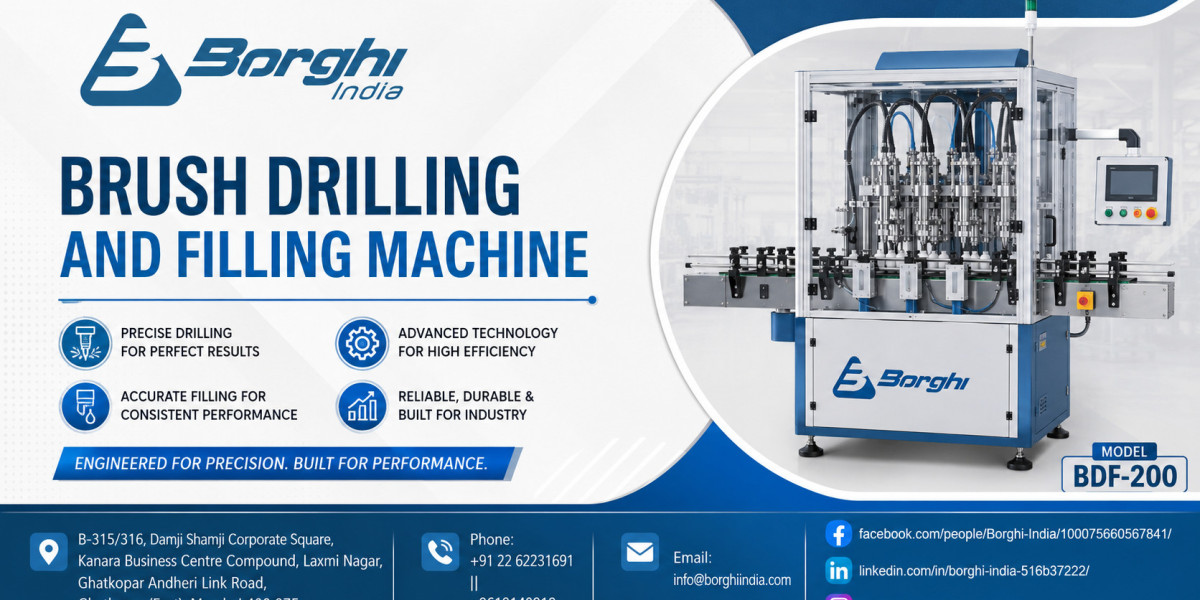

Among the various machinery used in this sector, the brush drilling and filling machine stands out as the most critical piece of equipment. This machine is responsible brush drilling and filling machine for the two fundamental steps of brush creation: preparing the block to receive bristles and inserting those bristles securely. By combining these operations into a single automated workflow, modern manufacturers can achieve high-volume production without compromising on quality. This article explores the mechanics, types, advantages, and technological features of brush drilling and filling machines.
Understanding the Dual Functionality
As the name suggests, this machine performs two distinct but sequential operations:
1. Drilling: The machine uses high-speed drill bits to create holes in the brush block (also known as the stock or body). The depth, angle, and diameter of these holes are precisely calculated based on the brush design.
2. Filling (Tufting): Immediately after a hole is drilled, the machine inserts a bundle of filaments (bristles) into it. This is often done using a staple or a metal anchor wire to grip the filaments, or sometimes using chemical adhesives depending on the machine type.
The integration of these two steps eliminates the need to move the brush block between separate stations, drastically reducing production time and the risk of misalignment.
The Role of CNC Technology
Most modern brush drilling and filling machines are controlled by Computer Numerical Control (CNC) systems. This technology allows for extreme precision and flexibility. The operator uses a computer interface to upload a design file, dictating which is the exact coordinates for every hole.
Multi-Axis Movement: Advanced machines operate on multiple axes (typically 2 to 5 axes). A 2-axis machine moves the brush head left and right (X-axis) and back and forth (Y-axis), making it suitable for flat brushes like toilet brushes or scrubbers. 3, 4, and 5-axis machines can rotate and tilt the brush head, allowing them to drill and fill curved surfaces like hairbrushes or brooms.
Servo Motors: These motors replace traditional mechanical gears, providing smoother acceleration, deceleration, and positioning. This results in quieter operation and less wear and tear on the machine components.
Key Components of the Machine
To understand how these machines function, one must look at their primary components:
The Worktable: This is where the brush block is clamped down. The fixture must be robust enough to hold the block steady during the high-impact drilling process.
The Drilling Head: Equipped with specialized drill bits, this head spins at high RPMs to bore into wood, plastic, or metal. It often features an automatic lubrication system to prevent overheating.
The Tufting Head: This component grabs the filament, folds it in half, and forces it into the hole. It feeds a metal staple or anchor wire simultaneously to lock the filaments in place.
Filament Feeding System: Large spools of filament (nylon, polypropylene, natural bristle, or wire) are mounted on the machine. The feeder pulls the material, cuts it to the required length, and delivers it to the tufting head.
Types of Brushes Produced
The versatility of the drilling and filling machine allows manufacturers to produce a vast array of products. By changing the drill bit size, the clamp fixture, and the filament type, the same machine can produce different items.
Household Cleaning Brushes: This includes toilet brushes, scrubbing brushes, and vegetable brushes. These require precise hole patterns to ensure effective cleaning.
Personal Care Brushes: Hairbrushes, combs, and nail brushes require the machine to handle softer materials and often require specific angles for bristle inclination.
Industrial Brushes: Heavy-duty brooms and strip brushes used in street sweeping or conveyor cleaning require the machine to drill into harder materials and fill with thicker, stiffer filaments like steel wire or coarse polypropylene.
Technical Brushes: Small, precision brushes used in electronics or medical equipment require microscopic accuracy in hole placement.
Advantages of Using Automatic Drilling and Filling Machines
Moving from manual methods to automatic machinery offers substantial benefits to a manufacturing business.
High Production Speed: These machines can drill and fill hundreds of holes per minute. A complex brush that might take an hour to make manually can be finished in seconds.
Uniform Quality: In manual production, hole depth and filling density can vary. Automatic machines ensure every hole is drilled to the exact same depth and filled with the exact same amount of filament, ensuring a balanced and durable product.
Design Flexibility: Changing the brush design is as simple as loading a new computer program. This allows manufacturers to offer custom designs to clients without lengthy mechanical retooling.
Labor Reduction: One operator can oversee multiple machines simultaneously, significantly reducing labor costs and the physical strain on workers.
Reduced Error Rates: The computer control system minimizes human error. If the machine detects an issue (like a broken drill bit or lack of filament), it will alert the operator or stop automatically to prevent defective products.
The Workflow: From Block to Bristle
The operation cycle of a brush drilling and filling machine is a marvel of synchronized automation:
1. Loading: The operator places the brush block into the fixture. In advanced setups, a robotic arm handles this.
2. Positioning: The computer moves the table so the first drilling position is directly under the drill head.
3. Drilling: The drill head descends, creates the hole, and retracts. A burst of air often clears the debris (chips) from the hole.
4. Indexing: The table rotates or shifts to move the newly drilled hole under the tufting head.
5. Filling: The tufting head inserts the filament bundle and the anchor wire.
6. Repetition: The cycle repeats for the number of holes required until the brush pattern is complete.
7. Unloading: The finished block is ejected, making room for the next one.
Maintenance and Care
To ensure longevity, maintenance of these machines is vital, particularly because they deal with fine dust and fibers.
Drill Bit Maintenance: Drill bits wear down and become dull. Regular sharpening or replacement is necessary to ensure clean holes without splintering the brush block.
Dust Extraction: Drilling creates sawdust, and filling creates fiber lint. An industrial dust extraction system connected to the machine is essential to keep internal components clean and prevent jams.
Lubrication: Regular oiling of the moving parts and the tufting head mechanisms ensures smooth operation and prevents rust.
Conclusion
The brush drilling and filling machine is the heart of the brush manufacturing industry. It represents the perfect synergy of mechanical engineering and digital control. By automating the intricate processes of drilling and tufting, these machines enable brush drilling and filling machine to produce high-quality, durable, and aesthetically pleasing brushes at a speed that meets the demands of the modern world. Whether for a simple scrubbing tool or a complex curved hairbrush, this technology ensures that the final product is built to last.
Follow Us More Social Media links:-
Follow Us On Facebook:- https://www.facebook.com/people/Borghi-India/100075660567841/
Follow Us On LinkedIn:- https://www.linkedin.com/in/borghi-india-516b37222/
Follow Us On Instagram:- https://www.instagram.com/borghi.india/
Add:- B-315/316, Damji Shamji Corporate Square, Kanara Business Center Compound, Laxmi Nagar,Ghatkopar Andheri Link Road, Ghatkopar (East), Mumbai 400 075
Phone: +91 22 62231691 || +9619140918
Email: [email protected]