
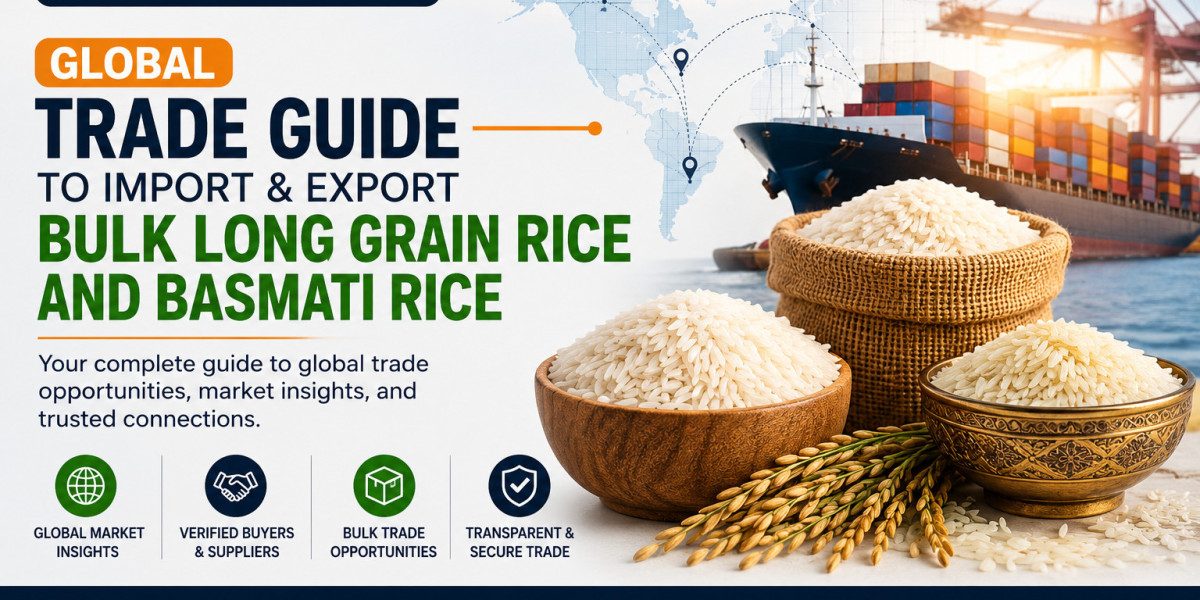

Connecting Rice Importers and Exporters Worldwide
Rice remains one of the most important agricultural commodities in the world and serves as a primary food source for more than half of the global population. As food security becomes increasingly important for governments, distributors, and procurement organizations, the international rice trade continues to expand. Businesses looking to import long grain rice or export bulk rice must navigate a complex global marketplace influenced by weather patterns, export policies, currency fluctuations, and changing consumer demand.
For international buyers, distributors, millers, and commodity traders, success in the rice industry depends on more than securing competitive prices. Efficient logistics, regulatory compliance, quality control, and reliable supplier networks all play a critical role in maintaining profitable and sustainable trade operations.
Understanding Long Grain Rice and Premium Basmati Rice
The global rice market is primarily divided into two major categories: standard long grain rice and premium Basmati rice. Each serves distinct consumer markets and purchasing requirements.
Long Grain Rice
Long grain rice forms the foundation of global rice trade by volume. Characterized by a length-to-width ratio greater than 3.0 and a high amylose content, these grains remain separate, firm, and non-sticky after cooking.
These characteristics make long grain rice highly suitable for:
- Institutional catering
- Government food programs
- Food processing industries
- Ready-to-eat meal manufacturers
- Large-scale distribution networks
Its affordability and versatility have made it a preferred choice across numerous international markets.
Premium Basmati Rice
Premium Basmati rice occupies a specialized segment of the global rice market. Cultivated in the fertile regions surrounding the Himalayan foothills, authentic Basmati rice is known for its distinctive aroma, long grain structure, and exceptional cooking performance.
The grain contains naturally occurring aromatic compounds that contribute to its signature fragrance. When cooked, premium Basmati rice can more than double in length while maintaining its slender appearance. These qualities have established strong demand among retailers, restaurants, hotels, and food service providers worldwide.
As a result, opportunities to export bulk Basmati rice continue to grow across key international markets.
Major Rice Exporting Countries and Supply Sources
Developing a reliable supply chain requires understanding where global rice production and export capacity are concentrated.
India: The Global Rice Export Leader
India remains the largest participant in global rice exports and consistently supplies a significant share of international demand. The country exports both long grain rice and premium Basmati rice to markets across Africa, the Middle East, Europe, and Asia.
Major export ports such as Kakinada and Kandla support high-volume shipments of:
- White long grain rice
- Parboiled rice
- Premium Basmati rice
Specialized processing facilities located in Haryana and Punjab have further strengthened India's position as a leading source for businesses seeking to export bulk Basmati rice.
Thailand and Vietnam
Thailand and Vietnam continue to play important roles in international rice supply. Both countries are recognized for producing premium-quality white long grain rice supported by advanced milling technologies and efficient export infrastructure.
Many international buyers diversify sourcing strategies across multiple countries to reduce risks associated with weather disruptions, policy changes, and supply shortages.
Global Rice Import Markets and Consumption Trends
Different regions of the world have distinct preferences when it comes to rice varieties and purchasing requirements. Understanding these preferences helps importers and exporters build more efficient trade strategies.
West Africa
West Africa remains one of the largest import destinations for long grain rice, particularly parboiled varieties.
The region commonly imports:
- Parboiled long grain rice
- 100% broken rice
- High-volume staple food products
Parboiling improves cooking performance and helps preserve important nutrients, making it highly suitable for local consumption patterns.
Middle East (GCC)
The Gulf Cooperation Council (GCC) region represents a major market for premium Basmati rice.
Buyers throughout the Middle East typically prioritize:
- Aged Basmati rice
- Superior grain elongation
- Minimal chalkiness
- Consistent quality standards
The premium nature of this market often results in higher value transactions compared to standard rice categories.
European Union
European importers place strong emphasis on compliance and product safety.
Requirements often include:
- Strict pesticide residue testing
- Heavy metal monitoring
- Traceability systems
- Sustainable sourcing practices
Many companies choose to import bulk rice in brown or cargo form and complete final processing within Europe to satisfy local regulatory requirements.
Southeast Asia
Southeast Asian markets frequently demand premium white rice with broken percentages ranging between 5% and 15%.
Fast and efficient regional shipping networks support trade throughout the region and contribute to consistent market activity.
Logistics, Compliance, and Freight Management
Transporting rice internationally requires strict attention to quality preservation and regulatory compliance.
Moisture Control
Moisture management remains one of the most important factors in international rice logistics. Safe storage and transportation generally require moisture levels below 14%.
Excess moisture can result in:
- Mold growth
- Product deterioration
- Quality loss
- Shipment rejection
Maintaining proper moisture levels is essential throughout the supply chain.
Phytosanitary Compliance
To successfully import bulk rice, shipments must typically be supported by:
- Phytosanitary certificates
- Pre-shipment inspections
- Fumigation treatments
- Destination-specific compliance documentation
These measures help prevent the movement of pests and ensure compliance with import regulations.
Freight and Transportation
Rice shipments move through multiple transportation models depending on volume and destination.
Retail-focused shipments often utilize:
- 20-foot containers
- 25 kg packaging
- 50 kg packaging
Large-scale industrial shipments frequently rely on break-bulk and Panamax vessel transportation for maximum efficiency.
Successful execution requires close coordination between exporters, shipping providers, port operators, and importers to avoid costly delays and demurrage charges.
Future Outlook for Global Rice Trade
The international rice market continues to evolve as climate conditions, sustainability regulations, and food security concerns influence global supply chains.
Businesses seeking long-term success should focus on:
- Direct sourcing relationships
- Quality assurance systems
- Laboratory testing protocols
- Reliable logistics partnerships
- Compliance-driven trade operations
Organizations that establish resilient supply chains and maintain strong relationships with trusted suppliers will be best positioned to capitalize on future opportunities in the global rice industry.
For companies looking to expand internationally, long grain rice and Basmati rice continue to offer significant trade potential across established and emerging markets worldwide.
Ubicación del Autor
India