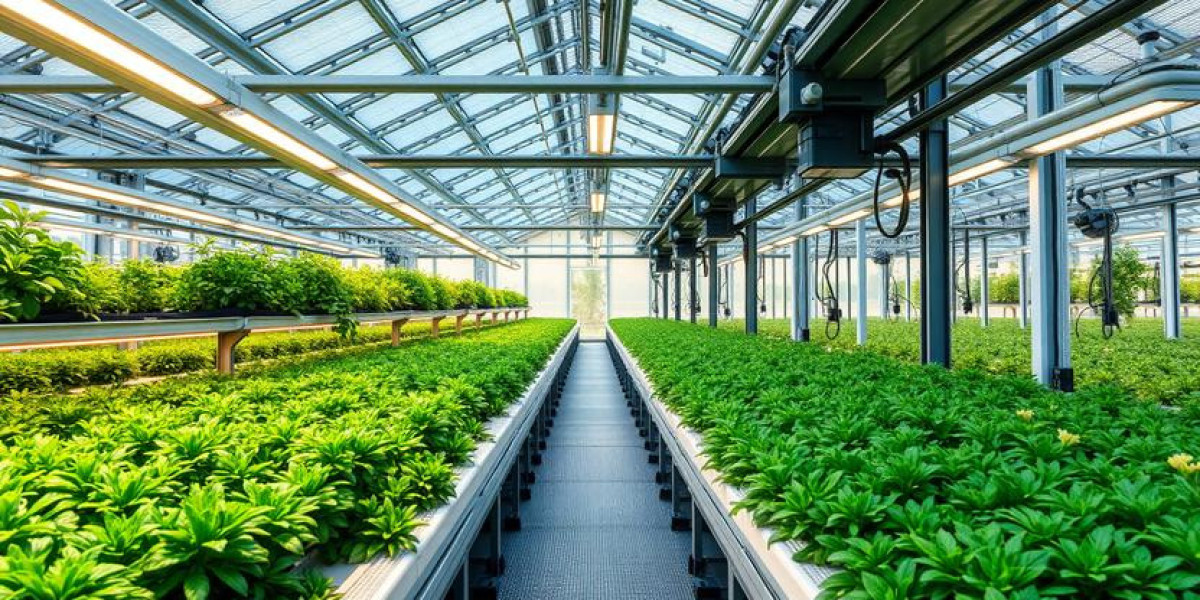

According to Dimension Market Research, The Global Europe Smart Greenhouse Market is witnessing substantial growth as modern agriculture increasingly embraces automation, data analytics, and controlled environment farming solutions. The Europe Smart Greenhouse Market has become a critical component of the region's agricultural transformation, enabling growers to improve crop productivity, optimize resource utilization, and address growing concerns surrounding food security and climate change.
As traditional farming faces challenges such as unpredictable weather patterns, labor shortages, land constraints, and rising food demand, smart greenhouse technologies are emerging as effective solutions. These advanced agricultural systems integrate sensors, artificial intelligence, climate control technologies, automation platforms, and data-driven management tools to create ideal growing conditions throughout the year.
Europe's strong commitment to sustainable agriculture, environmental protection, and agricultural innovation has accelerated the adoption of smart greenhouse systems. Countries across the region are investing heavily in controlled environment agriculture to enhance crop quality, reduce resource consumption, and increase production efficiency while meeting consumer demand for fresh, locally produced food.
Market Overview
The Europe Smart Greenhouse Market is expected to expand from USD 700 million in 2025 to USD 1,840 million by 2034, reflecting a robust CAGR of 11.4% during the forecast period.
This growth is primarily driven by increasing adoption of controlled environment agriculture, rapid implementation of automation technologies, rising demand for sustainable farming practices, and the growing integration of smart farming systems. The market is benefiting from strong government support, technological advancements, and increasing investments in modern agricultural infrastructure.
As Europe continues prioritizing food security and environmental sustainability, smart greenhouse solutions are expected to play an increasingly important role in the future of agricultural production.
Understanding Smart Greenhouses
Smart greenhouses are technologically advanced agricultural facilities designed to automatically monitor and control environmental conditions that affect crop growth.
These systems typically utilize:
- IoT-enabled sensors
- Climate control systems
- Automated irrigation technologies
- Artificial intelligence platforms
- Data analytics software
- Remote monitoring tools
- Automated lighting systems
- Fertigation management systems
By continuously monitoring growing conditions, smart greenhouses optimize plant health while maximizing productivity and resource efficiency.
Download a Complimentary PDF Sample Report:
https://dimensionmarketresearch.com/request-sample/europe-smart-greenhouse-market/
Key Market Drivers
Rising Demand for Controlled Environment Agriculture
Controlled Environment Agriculture (CEA) has become increasingly important as farmers seek reliable production methods that are less dependent on external weather conditions.
Smart greenhouses provide:
- Year-round cultivation
- Enhanced crop yields
- Improved product quality
- Reduced climate-related risks
- Better resource management
These advantages are accelerating adoption across Europe.
Increasing Focus on Sustainable Farming
Environmental sustainability has become a major priority within the European agricultural sector.
Smart greenhouse systems help reduce:
- Water consumption
- Energy waste
- Chemical usage
- Carbon emissions
- Land requirements
These sustainability benefits align closely with regional environmental goals and regulatory frameworks.
Growing Demand for Locally Produced Food
Consumers increasingly prefer locally grown fruits, vegetables, and herbs due to freshness, quality, and reduced environmental impact.
Smart greenhouses enable year-round local production, helping meet consumer demand while reducing dependence on imported produce.
Labor Shortages in Agriculture
Agricultural labor shortages remain a significant challenge across Europe.
Automation technologies integrated into smart greenhouses help reduce reliance on manual labor while improving operational efficiency and consistency.
Emerging Market Trends
Integration of Artificial Intelligence
Artificial intelligence is becoming a key component of smart greenhouse operations.
AI systems help optimize:
- Crop growth conditions
- Pest management
- Resource allocation
- Yield forecasting
- Disease detection
These capabilities improve productivity while reducing operational costs.
Expansion of Hydroponic and Vertical Farming Systems
Hydroponic and vertical farming technologies are increasingly being integrated into greenhouse environments.
These approaches allow growers to maximize production in limited spaces while minimizing water and nutrient waste.
Adoption of Predictive Analytics
Advanced analytics tools are enabling greenhouse operators to make data-driven decisions regarding irrigation, climate management, and crop planning.
Predictive technologies improve operational efficiency and reduce production risks.
Renewable Energy Integration
Many greenhouse operators are incorporating renewable energy solutions such as solar panels and energy-efficient heating systems to reduce operating costs and environmental impact.
Market Opportunities
Expansion of Urban Agriculture
Urban agriculture is gaining momentum throughout Europe as cities seek sustainable food production solutions.
Smart greenhouses offer an effective way to produce fresh food near population centers while minimizing transportation requirements.
Government Support and Incentives
European governments continue introducing incentives that encourage the adoption of advanced agricultural technologies.
Funding programs and sustainability initiatives are expected to support long-term market growth.
Increasing Demand for Organic Produce
Consumer preference for organic and pesticide-free products is creating opportunities for greenhouse operators that utilize controlled growing environments.
Export Potential for High-Quality Crops
Smart greenhouse technologies enable the production of premium-quality crops that can compete effectively in domestic and international markets.
Market Challenges
High Initial Investment Costs
Establishing smart greenhouse facilities often requires substantial capital investment.
Costs associated with automation systems, sensors, climate control equipment, and software platforms can present barriers for smaller growers.
Energy Consumption Concerns
Although smart greenhouses improve efficiency, certain operations require significant energy inputs for heating, lighting, and climate control.
Balancing productivity and energy costs remains a key challenge.
Technical Complexity
Managing advanced greenhouse technologies requires specialized expertise and training.
Growers must develop the skills necessary to effectively operate and maintain sophisticated systems.
Data Security Risks
As greenhouse operations become increasingly connected, cybersecurity and data protection concerns continue to grow.
Ensuring secure digital infrastructure is becoming increasingly important.
Competitive Landscape
The Europe Smart Greenhouse Market is characterized by rapid technological innovation and increasing investment activity.
Companies operating in the market are focusing on:
- Advanced automation systems
- AI-powered crop management
- IoT integration
- Sustainable farming technologies
- Energy-efficient greenhouse solutions
- Precision agriculture platforms
Continuous innovation is helping improve greenhouse productivity while supporting broader adoption across the agricultural sector.
Market Segmentation Analysis
By Technology
HVAC Systems
Heating, ventilation, and air conditioning systems are essential for maintaining optimal environmental conditions within greenhouses.
Irrigation Systems
Automated irrigation solutions improve water efficiency and ensure precise nutrient delivery.
LED Grow Lights
Advanced lighting technologies enable year-round cultivation and improved crop growth performance.
Sensors and Monitoring Systems
Sensors continuously monitor environmental parameters such as temperature, humidity, light intensity, and soil conditions.
By Crop Type
Fruits and Vegetables
This segment accounts for a significant share of greenhouse production due to strong consumer demand.
Flowers and Ornamentals
Smart greenhouse technologies are widely utilized for high-value ornamental plant cultivation.
Herbs and Leafy Greens
Rapid growth cycles and strong market demand make these crops ideal candidates for greenhouse production.
By Component
Hardware
Hardware includes sensors, controllers, climate systems, irrigation equipment, and automation technologies.
Software
Software platforms enable data analysis, remote monitoring, and intelligent decision-making.
Services
Services include installation, maintenance, consulting, and technical support.
By End User
Commercial Growers
Large-scale greenhouse operators represent a major segment of the market.
Research Institutions
Research facilities utilize smart greenhouses for agricultural innovation and crop development.
Government Agricultural Projects
Public-sector initiatives increasingly employ smart greenhouse technologies to support food security objectives.
Purchase the report for comprehensive details:
https://dimensionmarketresearch.com/checkout/europe-smart-greenhouse-market/
Regional Analysis
The Europe Smart Greenhouse Market is expanding rapidly across several major agricultural economies, supported by technological innovation, sustainability initiatives, and strong horticultural traditions.
Netherlands
The Netherlands remains one of Europe's leading smart greenhouse markets due to its highly advanced horticulture industry and widespread adoption of automation technologies.
The country continues setting global standards in greenhouse innovation and controlled environment agriculture.
Spain
Spain is experiencing significant growth driven by expanding greenhouse cultivation areas and increasing demand for high-quality fresh produce.
Advanced irrigation and climate control technologies are playing an important role in market expansion.
Italy
Italy's agricultural sector is increasingly adopting smart greenhouse systems to improve crop quality, resource efficiency, and production consistency.
Germany
Germany benefits from strong technological capabilities and growing investments in sustainable agriculture solutions.
The country continues advancing digital farming initiatives and greenhouse automation technologies.
France
France is witnessing increasing adoption of smart greenhouse systems as producers seek to improve productivity while meeting sustainability objectives.
Future Outlook
The future of the Europe Smart Greenhouse Market appears highly promising as agricultural modernization continues accelerating across the region.
Future developments are expected to include:
- AI-driven crop optimization
- Autonomous greenhouse operations
- Advanced robotics integration
- Renewable energy-powered greenhouses
- Digital twin technologies
- Enhanced predictive analytics
These innovations are expected to improve productivity, sustainability, and profitability across greenhouse farming operations.
Frequently Asked Questions (FAQs)
1. What is a smart greenhouse?
A smart greenhouse is an advanced agricultural facility that uses sensors, automation, AI, and data analytics to monitor and control environmental conditions for optimal crop growth.
2. What is driving the growth of the Europe Smart Greenhouse Market?
Key growth drivers include increasing adoption of controlled environment agriculture, demand for sustainable farming, automation technologies, and growing consumer preference for locally grown produce.
3. What is the projected size of the Europe Smart Greenhouse Market by 2034?
The market is expected to reach approximately USD 1,840 million by 2034, growing from USD 700 million in 2025.
4. Which countries are leading the market in Europe?
The Netherlands, Spain, Italy, Germany, and France are among the leading countries driving market growth.
5. What technologies are commonly used in smart greenhouses?
Common technologies include IoT sensors, climate control systems, AI platforms, automated irrigation systems, LED grow lights, and greenhouse management software.
Summary of Key Insights
The Europe Smart Greenhouse Market is projected to grow from USD 700 million in 2025 to USD 1,840 million by 2034, registering a strong CAGR of 11.4%. Growth is being fueled by the increasing adoption of controlled environment agriculture, automation technologies, smart farming systems, and data-driven greenhouse management solutions. Countries such as the Netherlands, Spain, Italy, Germany, and France are leading regional expansion due to strong horticultural traditions and supportive government initiatives. As sustainability, food security, and agricultural efficiency become increasingly important, smart greenhouse technologies are expected to play a pivotal role in shaping the future of European agriculture.
Ubicación del Autor
Florida