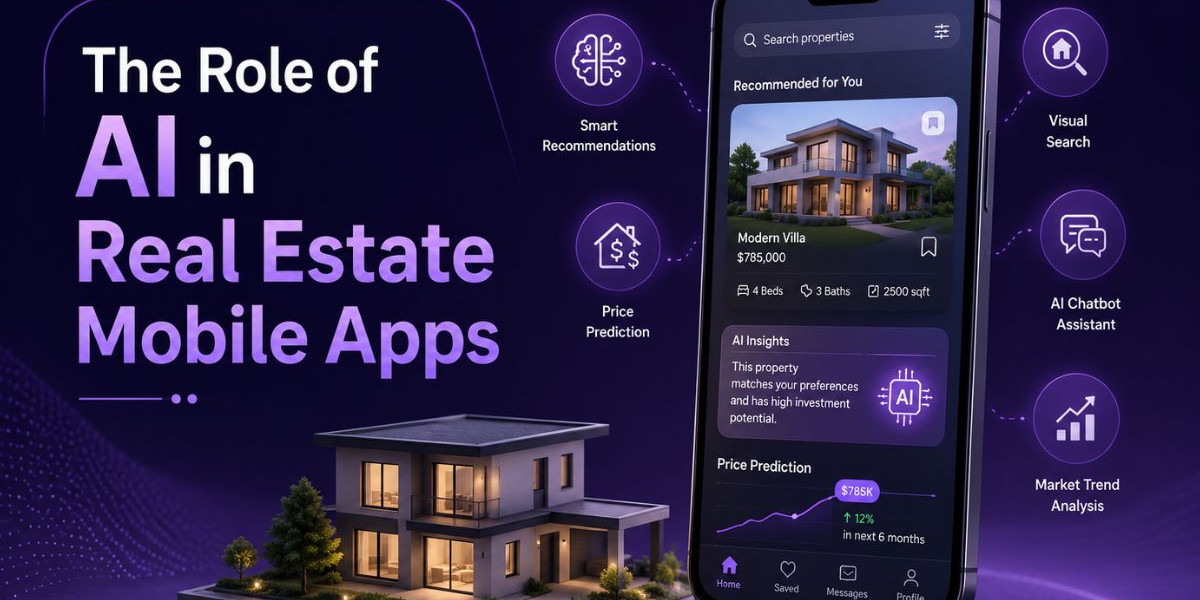

The real estate industry is undergoing a digital transformation, and Artificial Intelligence (AI) is playing a significant role in shaping its future. From personalized property recommendations to virtual assistants that answer buyer queries instantly, AI is helping businesses deliver faster, smarter, and more convenient experiences.
As customer expectations continue to evolve, real estate companies are increasingly exploring innovative technologies to improve efficiency and strengthen client relationships. AI-powered mobile applications are emerging as valuable tools that simplify property searches, streamline operations, and support data-driven decision-making.
How AI Is Transforming Real Estate Mobile Apps
AI enables mobile applications to analyze large amounts of data, recognize patterns, and provide insights that enhance the user experience. By automating routine tasks and offering intelligent recommendations, AI helps both real estate professionals and property seekers save time and make informed choices.
Unlike traditional real estate platforms that rely primarily on manual searches, AI-driven applications continuously learn from user interactions and evolving market conditions. This allows mobile apps to deliver increasingly relevant experiences, helping users discover suitable properties faster while enabling businesses to engage prospective buyers more effectively.
Key Applications of AI in Real Estate Mobile Apps
AI is being integrated into various aspects of real estate mobile applications to improve efficiency and enhance user experiences. From simplifying property searches to providing valuable market insights, these capabilities are helping businesses address evolving customer expectations.
Personalized Property Recommendations
AI algorithms can analyze user preferences, browsing history, budget ranges, and location interests to suggest properties that closely match individual needs. This level of personalization improves the search experience and increases the chances of successful conversions.
This capability not only improves user satisfaction but also increases engagement within the app. When buyers receive recommendations aligned with their preferences, they are more likely to continue exploring listings and take the next steps in the purchasing process.
AI-Powered Chatbots and Virtual Assistants
Modern buyers expect quick responses to their questions. AI-driven chatbots can provide instant assistance, answer frequently asked questions, schedule property visits, and guide users through the buying or renting process at any time of day.
These virtual assistants can also reduce the workload on sales teams, allowing agents to focus on high-value interactions while ensuring that customers receive timely support whenever they need it.
Predictive Market Analysis
AI tools can evaluate market trends, historical pricing data, and neighborhood developments to generate valuable insights. These predictions help buyers, investors, and agents make more strategic decisions regarding property investments.
For real estate businesses, predictive analytics can support investment planning, identify emerging market opportunities, and provide a deeper understanding of consumer behavior. These insights contribute to more informed decision-making and improved competitiveness.
Smart Property Valuation
Determining the right property price can be challenging. AI-powered valuation models assess multiple factors, including market conditions, property characteristics, and comparable listings, to estimate more accurate property values.
This can benefit both sellers seeking fair pricing and buyers looking to make confident purchasing decisions based on data-driven assessments.
Enhanced Fraud Detection
AI systems can identify unusual patterns and flag potentially fraudulent activities during transactions. This added layer of security helps build trust among users and protects sensitive information.
As digital transactions continue to increase, fraud prevention capabilities are becoming increasingly important for maintaining confidence in online real estate platforms.
Image Recognition Technology
AI can analyze property images to identify specific features such as swimming pools, gardens, parking spaces, or modern interiors. This improves property categorization and helps users find listings that align with their preferences.
By automating property tagging and organization, image recognition technology can also reduce manual effort for businesses managing extensive property databases.
Benefits of Integrating AI into Real Estate Apps
Implementing AI capabilities can provide several advantages for real estate businesses, including:
Improved customer experiences through personalized interactions
Faster response times with automated support
Increased operational efficiency
Better lead qualification and management
More informed decision-making using predictive insights
Enhanced security and fraud prevention
These benefits contribute to stronger customer relationships and improved business performance. Beyond operational improvements, AI adoption can help businesses build trust, increase customer engagement, and create more seamless experiences throughout the property journey.
Challenges to Consider
While AI offers significant opportunities, businesses should also consider potential challenges during implementation.
Data Privacy and Security
Real estate applications often handle sensitive customer information. Ensuring compliance with data protection standards and maintaining user trust should remain a priority.
Quality of Data
AI systems rely heavily on accurate and comprehensive data. Incomplete or outdated information can impact the effectiveness of recommendations and predictions.
Implementation Costs
Developing AI-powered features may require additional investment in technology, expertise, and ongoing maintenance. Businesses should carefully evaluate their objectives and long-term goals before adopting advanced capabilities.
The Future of AI in Real Estate Mobile Apps
As AI technology continues to evolve, its role within real estate applications is expected to expand further. Future innovations may include more advanced virtual assistants, highly accurate predictive analytics, automated document processing, and deeper personalization throughout the customer journey. Businesses interested in understanding the broader impact of AI in real estate development can explore how these technologies are reshaping property management, investment strategies, and customer experiences across the industry.
Voice-enabled property searches, AI-assisted document verification, and integration with immersive technologies are also expected to shape the next generation of real estate applications. Businesses that embrace these advancements early may gain a competitive advantage by delivering seamless and intelligent digital experiences.
Is Investing in AI-Powered Real Estate Apps Worth It?
For organizations looking to remain competitive in an increasingly digital market, AI can offer meaningful benefits beyond automation. Working with an experienced real estate app development company can help businesses build solutions that align with their goals while integrating features designed to improve engagement and efficiency.
Although implementation requires strategic planning, the long-term benefits often extend beyond operational efficiency. Enhanced customer experiences, improved lead management, better decision-making, and increased market responsiveness can contribute to sustainable business growth.
Companies like Emizentech are helping real estate businesses leverage AI-powered solutions to develop innovative mobile applications tailored to evolving industry needs. By embracing AI strategically, organizations can strengthen their market position while delivering greater value to their customers.
Artificial Intelligence is no longer a futuristic concept within the real estate sector. It is becoming an important component of mobile applications that support buyers, sellers, agents, and investors throughout the property journey. As the industry continues to evolve, AI-powered real estate apps are likely to play an increasingly influential role in shaping the future of property experiences.
Conclusion
Artificial Intelligence is reshaping the real estate industry by making mobile applications more intelligent, efficient, and customer-centric. From personalized property recommendations and virtual assistants to predictive analytics and fraud detection, AI-powered features are helping businesses deliver better experiences while improving operational efficiency.
As buyer expectations continue to evolve, investing in innovative technologies can provide a significant competitive advantage. Companies like Emizentech are enabling real estate businesses to leverage AI-driven solutions that streamline processes, enhance engagement, and support long-term growth. By embracing AI strategically, organizations can position themselves for success in an increasingly digital real estate landscape.
Frequently Asked Questions
How is AI used in real estate mobile apps?
AI is used to provide personalized property recommendations, automate customer support through chatbots, analyze market trends, estimate property values, and enhance security through fraud detection.
What are the benefits of AI in real estate apps?
AI can improve customer experiences, increase operational efficiency, support better decision-making, streamline lead management, and provide faster responses to user inquiries.
Can AI help buyers find the right property?
Yes. AI algorithms analyze user preferences, budget, location interests, and browsing behavior to suggest properties that closely align with individual requirements.
Are AI-powered real estate apps secure?
Many AI-powered apps incorporate advanced fraud detection and security measures to identify suspicious activities and protect user information. However, businesses must also prioritize data privacy and regulatory compliance.
Is investing in AI-powered real estate apps worth it?
For businesses seeking to improve customer engagement and remain competitive, AI can offer substantial long-term value. Partnering with an experienced real estate app development company can help organizations build scalable solutions tailored to their business objectives.
Ubicación del Autor
30 Ngould St Ste R Sheridan,WY 82801