
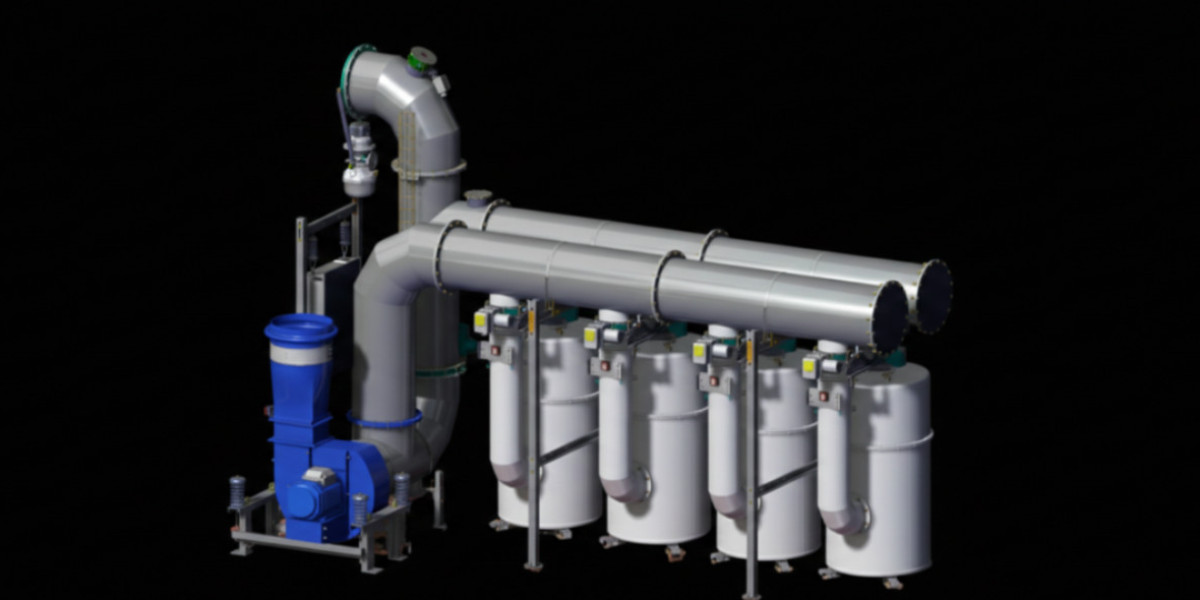

A nighttime alert sounds at a forward command post when sensors report a chemical plume outside. Operators close dampers, the HVAC control switches to shelter mode, and the air-handling unit ramps to containment. For occupants, survival depends on engineered air treatment — which brings us to the practical question: How does an NBC Filtration System work?
NBC threats — nuclear particulates, aerosolized biological agents, and toxic chemical vapors — remain core risks for military, industrial and critical-infrastructure sites. An NBC Filtration System forms the engineered barrier between those hazards and occupied spaces, combining staged filtration, adsorption media, pressurization and monitoring to maintain breathable, uncontaminated air within shelters or protected zones. This article explains how those components work together in operational settings.
How an NBC filtration system is structured
An NBC Filtration System is not a single device but an integrated assembly: intake and pre-filtration, particulate capture (HEPA/ULPA), chemical adsorption beds, fans and blowers, control and monitoring systems, ducting and pressure-control hardware. Redundancy, bypass isolation dampers and test ports are standard engineering features to ensure reliability under stress and during maintenance.
Filtration and adsorption stages — the technical chain
Pre-filtration: Coarse filters remove large particulates and extend service life of downstream media.
HEPA/ULPA stage: High-efficiency particulate filters capture radioactive dust and biological aerosols. HEPA rated at 99.97% for 0.3 µm remains the baseline; many defense-grade systems use ULPA or multiple HEPA stages.
Activated carbon and impregnated media: Deep carbon beds, sometimes impregnated with metal salts or catalytic coatings, adsorb and chemically neutralize volatile chemical agents and toxic industrial compounds. Bed depth, pellet size and residence time are engineered for target agent classes.
Optional catalytic or chemical scrubbers: For persistent or reactive agents, catalytic oxidation or specialty sorbents provide additional degradation pathways.
Final filters and bactericidal layers: Downstream UV, photo-oxidation modules, or antimicrobial coatings may be added for enhanced biological control.
Airflow engineering and pressurization
Effective protection requires more than filtration efficiency — it depends on controlled airflow. Systems are sized to provide required air changes per hour for occupants while maintaining a positive pressure differential across the shelter envelope. Positive pressure (typically a few pascals) prevents ingress of contaminated air through seams or access points. Fan arrays include redundancy and variable-speed drives to maintain pressure during partial system degradation.
Detection, controls and safety integration
Continuous monitoring with particle counters, CBRN detectors and gas sensors ties into control logic. On detector alarm, the system isolates outdoor intakes, increases recirculation through HEPA/carbons, and activates alarmed maintenance modes. Controls also manage back-pulse or reverse-flow cleaning for some media types and coordinate emergency power transfer to ensure uninterrupted operation.
Protection mechanisms for each threat class
Nuclear particulates: Physical capture via HEPA/ULPA filters and wash-down provisions for filtered exhaust minimize internal deposition. Sealable intake louvers and pre-entry decon locks reduce resuspension.
Biological agents: HEPA filtration removes spores and large virions; Paired with controlled air changes and laminar distribution, this reduces cross-contamination inside shelters. UVGI and controlled humidity can be design options for high-consequence environments.
Chemical agents: Adsorption is primary. Selecting the right carbon type, impregnant and bed geometry — and ensuring proper face velocity and contact time — determines protection for nerve agents, choking agents, and industrial toxicants.
Key features to expect
Integrated HEPA filtration and deep activated carbon beds.
Positive-pressure capable air-handling with redundancy.
Corrosion-resistant construction for harsh environments.
Compatibility with continuous CBRN monitoring systems.
Modular design for retrofit and scalable capacities.
Low-maintenance access and clear filter-replacement logistics.
Energy-efficient fans with emergency-power options.
Applications and operational contexts
NBC filtration systems serve military shelters, command-and-control centers, ammunition storage rooms, underground bunkers, nuclear and chemical plants, petrochemical facilities, and emergency operation centers. Systems described as NBC air filtration system for bunker are configured specifically for long-duration occupant protection and simplified maintenance under constrained access conditions.
Selection factors and lifecycle considerations
Selecting a system requires a threat-centric engineering assessment. Key inputs are contaminant types, required air-change rates, shelter leakage characteristics, environmental exposure, and compliance standards. Focus procurement on verified filtration efficiency, test reports, long-term maintenance support and operational lifecycle cost rather than upfront price alone. Indian buyers commonly search for " nbc air filtration system price in india " or " nbc filtration system price " — use price as one factor within a full engineering specification and lifecycle evaluation.
Buyer's checklist
Evaluate manufacturing defense experience, third-party testing, certification, field commissioning services, spare-parts strategy, and technical documentation. Confirm on-site testing and acceptance procedures and that the supplier can customize media for specific agent threats. For India-specific sourcing, compare regional expertise and compliance with national defense procurement protocols; check listings under Nbc filtration system india for examples of locally provided, tested solutions.
Common mistakes to avoid
Avoid selecting systems solely on cost or catalog ratings without a true threat assessment. Do not underestimate the role of airtight shelter envelopes and accurate airflow calculations. Plan maintenance access, filter-change logistics, and commissioning tests from the outset to ensure field performance mirrors design intent.
Conclusion
Understanding how an NBC Filtration System works clarifies why system selection must couple filtration science with airflow engineering, monitoring and lifecycle planning. Properly designed systems — integrating HEPA, activated carbon, positive pressure and validated controls — provide effective defense against radiological, biological and chemical threats. For critical facilities, investing in engineered NBC filtration is a mission-essential decision that preserves occupant safety, operational continuity and infrastructure resilience.
Ubicación del Autor
SCF/6, 2nd Floor, Ashoka Enclave Part-1, Sector 34, Opp. Kanishka Tower, PIN-121003, Faridabad, HR