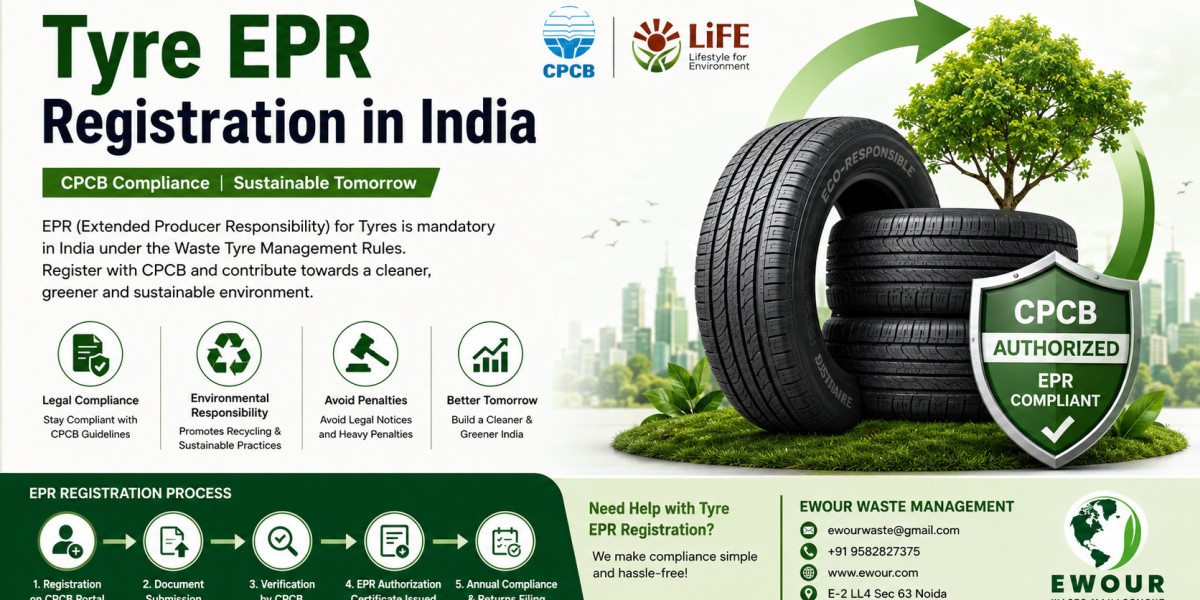

Tyre waste has become a growing environmental concern due to the increasing number of vehicles on roads. Improper disposal of used tyres can lead to land pollution, fire hazards, and other environmental issues. To address this challenge, the Government of India introduced the Extended Producer Responsibility (EPR) framework for waste tyres.
Under the EPR system, tyre manufacturers and importers are responsible for ensuring that waste tyres generated from their products are collected, recycled, and managed in an environmentally sound manner.
What is Tyre EPR Registration?
Tyre EPR Registration is a compliance requirement under India's waste management regulations. It requires producers and importers of tyres to register with the concerned authorities and fulfill their obligations related to the recycling and disposal of waste tyres.
The main objective is to create a sustainable waste management system where businesses take responsibility for the entire lifecycle of their products, including post-consumer waste.
Why is Tyre EPR Registration Important?
Tyres are made from materials that take a long time to decompose naturally. When discarded improperly, they can create serious environmental and public health concerns.
Some key benefits of Tyre EPR include:
- Reduction in environmental pollution.
- Promotion of recycling and resource recovery.
- Encouragement of a circular economy.
- Better management of end-of-life tyres.
- Improved compliance with environmental regulations.
Who Needs Tyre EPR Registration?
The following entities generally require Tyre EPR Registration:
Tyre Manufacturers
Companies engaged in the manufacturing of tyres within India are required to fulfill EPR obligations for the products they introduce into the market.
Tyre Importers
Businesses importing new tyres into India must comply with Tyre EPR requirements and ensure proper waste tyre management.
Brand Owners
Organizations selling tyres under their own brand name may also be subject to EPR compliance obligations.
Key Responsibilities Under Tyre EPR
After obtaining registration, businesses are required to meet certain responsibilities.
Collection and Recycling Targets
Entities must ensure that a specified quantity of waste tyres is collected and recycled through authorized recyclers.
Record Maintenance
Proper documentation and records related to production, imports, recycling certificates, and compliance activities must be maintained.
Periodic Reporting
Registered entities may need to submit reports and compliance information through the designated portal as required by regulatory authorities.
Benefits of Tyre EPR Compliance
Businesses that comply with Tyre EPR regulations can experience several advantages.
Regulatory Compliance
Proper registration helps avoid penalties and ensures adherence to environmental regulations.
Enhanced Corporate Reputation
Companies demonstrating environmental responsibility often gain greater trust from customers and stakeholders.
Sustainable Business Practices
EPR encourages organizations to adopt environmentally responsible waste management strategies.
Challenges Faced by Businesses
Many organizations face challenges while implementing Tyre EPR obligations, including:
- Understanding regulatory requirements.
- Finding authorized recyclers.
- Managing compliance documentation.
- Tracking recycling targets and certificates.
- Keeping up with changing regulations.
Conclusion
Tyre EPR Registration is an important step toward sustainable waste management and environmental protection in India. By ensuring the responsible collection and recycling of waste tyres, manufacturers and importers can contribute to a cleaner environment while maintaining regulatory compliance.
As tyre consumption continues to increase, effective implementation of EPR will play a vital role in reducing waste and promoting a circular economy. Businesses should stay informed about compliance requirements and adopt responsible recycling practices to support long-term environmental sustainability.
Ubicación del Autor
E-2 LL4 Sector 63 Noida Gautam Budha Nagar Uttar Pradesh India 201301