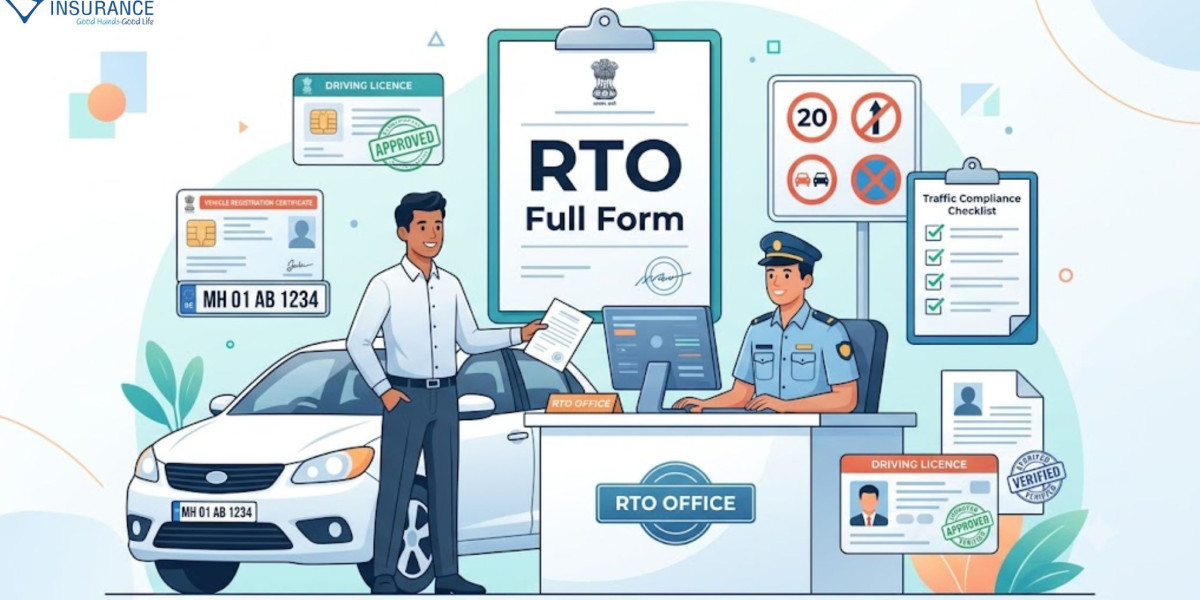

India's road transport system is regulated through a well-structured administrative framework that ensures vehicles and drivers comply with legal requirements. Among the most important authorities in this system is the Regional Transport Office. Understanding the rto full form and its significance can help every vehicle owner stay compliant with transportation laws and avoid legal complications.
Whether you own a car, bike, commercial vehicle, or are planning to obtain a driving licence, the RTO plays a crucial role in various vehicle-related services. From vehicle registration to licence issuance, road tax collection, and permit management, the RTO is involved in almost every aspect of road transport administration.
What Is the Full Form of RTO?
The RTO full form is Regional Transport Office.
It is a government organization established under the provisions of the Motor Vehicles Act, 1988. The primary responsibility of the RTO is to regulate and manage transport-related activities within a specific region, district, or state.
Every state in India has multiple RTO offices that operate under the supervision of the state's Transport Department. These offices ensure that all vehicles on the road meet legal requirements and that drivers possess valid licences.
What Is the Purpose of an RTO?
The Regional Transport Office is responsible for maintaining order and safety on roads by implementing transportation laws and regulations. It acts as the central authority for vehicle registration, licensing, taxation, and permit issuance.
The main purpose of an RTO includes:
- Ensuring legal registration of vehicles
- Issuing driving licences
- Collecting road taxes
- Maintaining vehicle records
- Enforcing road safety regulations
- Issuing transport permits
- Monitoring vehicle fitness standards
These responsibilities help create a safer and more organized transportation system across the country.
Key Functions of an RTO
The Regional Transport Office performs several essential functions that directly impact vehicle owners and drivers.
1. Vehicle Registration
Every new vehicle purchased in India must be registered with the RTO before it can legally operate on public roads.
The registration process involves:
- Verification of vehicle documents
- Allocation of a registration number
- Issuance of a Registration Certificate (RC)
- Recording vehicle details in government databases
Without registration, driving a vehicle on public roads is illegal.
2. Issuance of Driving Licences
One of the most recognized functions of the RTO is issuing driving licences.
The process generally includes:
- Learner's licence application
- Driving skill test
- Permanent licence issuance
- Licence renewal
- Duplicate licence issuance
The RTO ensures that only qualified individuals receive authorization to drive vehicles.
3. Collection of Road Tax
Road tax is a mandatory charge imposed by state governments on vehicle owners.
The RTO is responsible for:
- Calculating applicable road tax
- Collecting tax payments
- Maintaining tax records
- Issuing tax receipts
Road tax contributes to road development and maintenance projects across the state.
4. Vehicle Ownership Transfer
When a vehicle is sold or transferred, the ownership records must be updated.
The RTO facilitates:
- Ownership transfer applications
- Verification of buyer and seller documents
- RC updates
- Interstate vehicle transfer procedures
This ensures legal ownership is accurately recorded.
5. Issuance of Transport Permits
Commercial vehicles require permits to operate legally.
The RTO issues:
- Goods carriage permits
- Passenger vehicle permits
- National permits
- Tourist permits
- Contract carriage permits
These permits regulate commercial transportation activities.
6. Vehicle Fitness Certification
Commercial vehicles must undergo periodic fitness inspections.
The RTO verifies:
- Vehicle safety standards
- Emission compliance
- Roadworthiness
- Mechanical condition
Vehicles that meet the required standards receive fitness certificates.
7. Enforcement of Traffic Regulations
RTO authorities work alongside traffic police and transport departments to ensure compliance with transportation laws.
Their responsibilities include:
- Checking vehicle documentation
- Monitoring permit violations
- Verifying fitness certificates
- Conducting enforcement drives
These measures improve road safety and reduce violations.
Why Is the RTO Important?
The RTO plays a vital role in maintaining a safe, lawful, and efficient transport ecosystem.
Promotes Road Safety
By issuing licences only to qualified drivers and ensuring vehicles meet safety standards, the RTO contributes significantly to road safety.
Maintains Vehicle Records
The RTO maintains a centralized database containing:
- Vehicle registration details
- Ownership information
- Tax records
- Permit records
- Driving licence information
These records help authorities verify vehicle legitimacy when required.
Prevents Illegal Vehicle Operations
The registration and permit systems managed by the RTO help prevent:
- Unauthorized vehicle usage
- Tax evasion
- Fraudulent ownership claims
- Illegal transport operations
Supports Infrastructure Development
Road taxes collected by RTOs contribute to:
- Road construction
- Highway maintenance
- Traffic management projects
- Transportation infrastructure improvements
Facilitates Legal Compliance
Vehicle owners rely on the RTO for essential services that ensure compliance with Indian transport laws.
Common Services Offered by RTO
Modern RTO offices provide various services that can often be accessed online through state transport portals.
Popular services include:
- New vehicle registration
- Driving licence applications
- Licence renewals
- Duplicate RC applications
- Road tax payment
- Vehicle ownership transfer
- Permit applications
- Fitness certificate renewal
- No Objection Certificate (NOC) issuance
- Fancy number registration
These services have become more accessible through digital platforms, reducing paperwork and processing time.
Documents Commonly Required for RTO Services
Depending on the service requested, vehicle owners may need:
- Aadhaar Card
- PAN Card
- Address proof
- Passport-size photographs
- Vehicle invoice
- Insurance policy
- Pollution Under Control (PUC) certificate
- Existing Registration Certificate
- Driving licence
Keeping these documents updated can simplify future interactions with the RTO.
How Does RTO Benefit Vehicle Owners?
Vehicle owners benefit from the RTO in multiple ways.
Some key advantages include:
- Legal recognition of vehicle ownership
- Access to driving licences
- Easier ownership transfers
- Proper documentation support
- Road tax management
- Commercial permit facilitation
- Vehicle compliance verification
Without RTO services, vehicle ownership and road transportation management would become significantly more complex.
Digital Transformation of RTO Services
In recent years, many RTO services have shifted online, making them more convenient for citizens.
Digital services now include:
- Online licence applications
- Road tax payment
- Vehicle information lookup
- Appointment booking
- Permit applications
- Status tracking services
These improvements have enhanced transparency and reduced waiting times for applicants.
Frequently Asked Questions (FAQs)
Q1. What is the RTO full form?
The RTO full form is Regional Transport Office, a government authority responsible for vehicle registration, driving licences, taxation, and transport regulation.
Q2. What are the main functions of an RTO?
The RTO handles vehicle registration, driving licence issuance, road tax collection, permit management, ownership transfers, and vehicle fitness certification.
Q3. Is vehicle registration mandatory through the RTO?
Yes. Every motor vehicle must be registered with the RTO before it can legally operate on public roads in India.
Q4. Can I apply for a driving licence online through the RTO?
Yes. Many states offer online driving licence application services through their transport department portals.
Q5. Why does the RTO collect road tax?
Road tax is collected to support road construction, maintenance, transportation infrastructure, and related public services.
Q6. What happens if a vehicle is not registered with the RTO?
Operating an unregistered vehicle on public roads is illegal and may result in penalties, fines, or legal action.
Conclusion
Understanding the RTO full form and its importance is essential for every vehicle owner in India. The Regional Transport Office serves as the backbone of the country's transportation administration by managing vehicle registration, driving licences, road tax collection, permits, and compliance requirements. Its role helps ensure road safety, legal accountability, and efficient transportation management.
For vehicle owners, staying informed about RTO procedures can simplify various vehicle-related tasks and help avoid unnecessary legal issues. Alongside maintaining valid insurance coverage through trusted providers like Square Insurance, complying with RTO regulations is a crucial part of responsible vehicle ownership.
Ubicación del Autor
506, 5th Floor, V-Jai City Point, Ahinsha Circle, C-Scheme, Jaipur (Raj.)-302001