
Not All Fatty Acids Behave the Same Way
There is a common assumption in the chemical industry that if a product falls under the fatty acid category, it is largely interchangeable with others in the same group. In practice, that assumption gets formulators into trouble fairly quickly.
Isostearic acid is a strong example of why fatty acid type, structure, and origin matter enormously in the final application. It shares a carbon chain length with regular stearic acid. It is produced from the same vegetable oil raw material streams. It even carries a similar name. But its behaviour in a formulation is fundamentally different, and those differences are precisely what make it one of the most valued specialty products in the entire oleochemicals portfolio today.
This blog explains what isostearic acid actually is, how it is made, why its molecular structure drives its performance advantages, and which industries are now treating it as an ingredient they cannot easily substitute.
What Is Isostearic Acid?
Isostearic acid is an eighteen-carbon fatty acid, the same chain length as stearic acid. The difference lies in the arrangement of atoms along that chain. In stearic acid, the carbon atoms form a straight, linear chain. In isostearic acid, the chain is branched, meaning carbon atoms break off in a non-linear direction at one or more points along the molecule.
This branching is not a minor structural detail. It changes nearly everything about how the molecule behaves: its physical state, its melting point, its compatibility with other ingredients, its skin feel, and its performance in industrial systems.
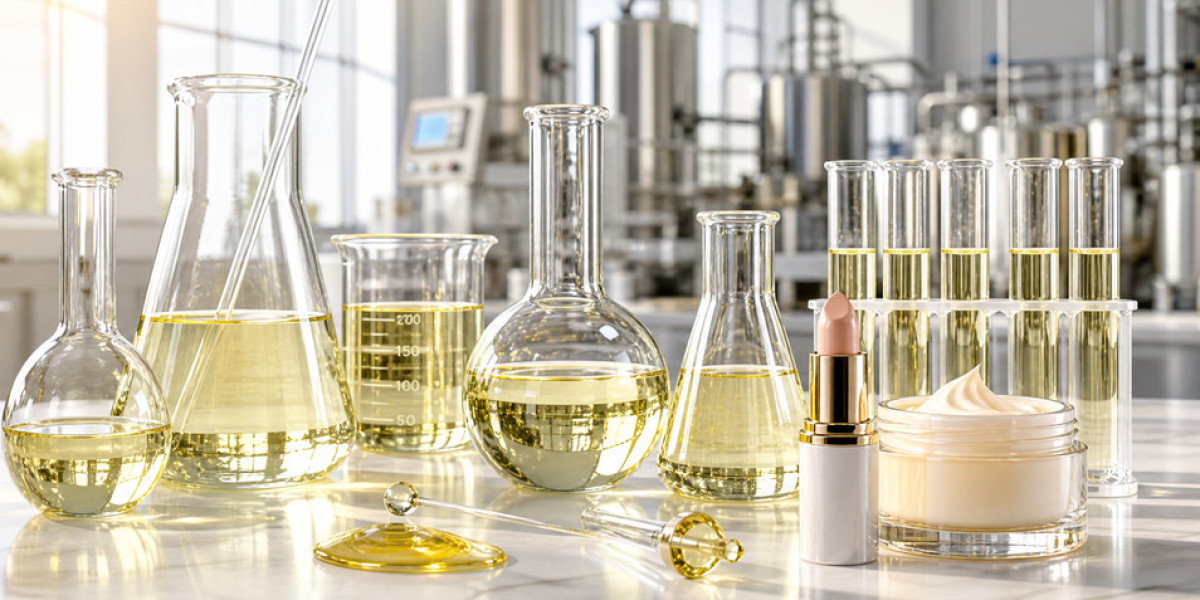
At room temperature, stearic acid is a white, waxy solid. Isostearic acid is a clear, pale yellow, free-flowing liquid. That single difference in physical form opens up a completely different set of formulation possibilities, because liquid fatty acids blend differently, spread differently, and perform differently from solid ones in both cosmetic and industrial systems.
How Is Isostearic Acid Produced?
Understanding the production route helps explain why isostearic acid is priced at a premium relative to standard fatty acid grades and why not every fatty acid manufacturer in the market produces it.
The primary production route involves two stages. First, unsaturated fatty acids from vegetable oil streams undergo a dimerisation process under controlled heat and pressure to produce dimer acid, a larger dicarboxylic acid molecule. This is the same dimer acid widely used in coatings, adhesive polyamides, and corrosion-resistant epoxy systems.
The second stage involves the isomerisation and hydrogenation of the unsaturated lighter fractions that come out of the dimerisation process. These isomerised fractions are refined and distilled to yield isostearic acid of the required purity and colour grade.
This two-stage process is technically demanding. It requires controlled dimerisation conditions, precise separation technology, and careful quality control at each step. This is why isostearic acid is produced by a smaller number of manufacturers compared to commodity fatty acids. The technical know-how and process infrastructure involved are significant entry barriers.
For buyers, this means the supplier you choose matters significantly. Product consistency, colour grade, acid value, and iodine value can all vary across producers, and those variations directly affect formulation performance.
What Makes Isostearic Acid Perform So Well?
The branched molecular structure of isostearic acid delivers four distinct performance benefits that make it stand apart from straight-chain alternatives.
It stays liquid at low temperatures. Because the branched chain prevents tight molecular packing, isostearic acid does not solidify or crystallise even at temperatures well below typical ambient conditions. This is a key advantage in cold-climate industrial applications and in cosmetic products that need to remain stable and pourable across different storage conditions.
It resists oxidation exceptionally well. The final isostearic acid molecule is resistant to oxidative degradation, which means products formulated with it maintain performance stability over time and tend to have longer shelf lives than those formulated with more reactive fatty acid types.
It spreads without leaving grease. In cosmetic applications, the branched structure translates into a light, non-occlusive spread on skin. It moisturises and conditions without the heavy, sticky finish associated with straight-chain fatty acids or mineral oil alternatives.
It blends with almost everything. Isostearic acid is highly compatible with silicones, esters, waxes, pigments, and emulsifiers. This broad compatibility makes it a preferred ingredient in multi-component formulations where ingredient interaction needs to remain predictable.

Isostearic Acid in Cosmetics and Personal Care
The cosmetics industry is where isostearic acid has built its strongest market position. Walk through any serious cosmetic formulation lab and you will find it listed as an ingredient across multiple product categories.
In lip products including lipstick, lip gloss, and lip balm, isostearic acid acts as a spreading agent and emollient that improves pigment dispersion, provides a smooth non-tacky finish, and enhances wear comfort. Its compatibility with waxes and pigments makes it particularly useful in anhydrous systems where water is absent and ingredient interaction is intense.
In skin care, it appears in creams, serums, sunscreens, and foundations as an emollient that improves texture without congesting the skin. Its non-comedogenic profile makes it suitable for sensitive and acne-prone skin formulations where heavier oils would be inappropriate.
In hair care, isostearic acid is used in conditioning treatments and serums where it improves detangling, adds shine, and leaves the hair surface smooth without the weighted-down feel associated with heavier conditioning agents.
For fatty acid suppliers serving personal care customers, the demand for isostearic acid in cosmetic-grade quality is consistent and growing, driven by the sustained expansion of premium skin care and colour cosmetic categories globally and in India.
Isostearic Acid in Lubricants and Industrial Applications
Outside of cosmetics, isostearic acid has built a strong second market in high-performance lubricants and industrial fluids.
Its thermal stability and lubricity make it an effective base component and additive in grease formulations, metalworking and cutting fluids, hydraulic system additives, and cold-rolling lubricants used in steel and aluminium processing. In these industrial environments, the ability to maintain consistent performance across a wide temperature range, without solidifying at low temperatures or breaking down at high ones, is a key selection factor.
As manufacturing sectors across India, particularly in automotive, engineering, and metal processing industries, move toward bio-based and more sustainable raw material inputs, isostearic acid is gaining ground as a preferred alternative to petroleum-derived lubricant additives.
Oleochemical suppliers who can provide industrial-grade isostearic acid with consistent viscosity, colour, and acid value specifications are finding growing demand from engineering and manufacturing customers who previously relied entirely on synthetic lubricant ingredients.
Isostearic Acid vs. Common Alternatives
Formulators evaluating isostearic acid often compare it against a few standard alternatives. Here is how it stands up:
Versus mineral oil: Mineral oil provides good lubricity but is petroleum-derived, non-biodegradable, and increasingly challenged in cosmetic formulations due to sustainability concerns. Isostearic acid is bio-based, biodegradable, and offers a lighter skin feel with better oxidation stability.
Versus standard stearic acid: Stearic acid is solid, which limits its use in liquid and semi-liquid systems. Isostearic acid stays liquid across a wide temperature range, making it usable in formulation types where solid stearic acid cannot function without melting and cooling steps.
Versus silicone oils: Silicones provide excellent slip and a non-greasy feel but face increasing regulatory scrutiny in Europe, particularly around restrictions in rinse-off products. Isostearic acid offers a natural-origin alternative with comparable sensory performance in many applications.
Why Raw Material Source and Supplier Quality Matter
Because isostearic acid is a specialty product with a technically complex production route, the quality gap between a well-produced batch and a poorly produced one is more visible than it is with commodity fatty acids.
Colour inconsistency across batches can cause visible variation in finished cosmetic products. An unstable acid value can affect emulsion performance and shelf life. Poor low-temperature behaviour in an industrial-grade product can cause issues in cold-weather manufacturing environments.
This is why buyers across personal care and industrial sectors consistently prefer oleochemicals manufacturers who have demonstrated production consistency over time, hold the relevant international certifications, and can provide full technical documentation with every batch.
When evaluating fatty acid manufacturers for isostearic acid supply, the questions worth asking are: How long have they been producing this specific product? What certifications do they hold? Can they provide batch-level documentation? Do they have technical support capability for application-specific queries?
These questions separate producers who truly understand the product from those who are simply reselling or producing it without the depth of process control the application demands.
Fairchem Organics Limited: Specialty Isostearic Acid from India
Fairchem Organics Limited, based in Sanand, Ahmedabad, is one of the established oleochemicals manufacturers in India producing isostearic acid from renewable vegetable oil sources including soya, sunflower, corn, rice bran, and rapeseed.
With a full oleochemicals products portfolio covering Isostearic Acid, Stearic Acid, Palmitic Acid, Linoleic Acid, Dimer Acid, and Distilled Fatty Acids, Fairchem serves both domestic and international markets across personal care, lubricants, coatings, and adhesive industries.
The company holds certifications including REACH Compliance, HALAL, Kosher, DUNS, and Bureau Veritas Certification, making it a qualified source for regulated industries in Asia, Europe, and the Americas. As one of the few distilled fatty acid manufacturers in India that also produces specialty branched-chain fatty acids at industrial scale, Fairchem bridges the gap between commodity oleochemical supply and specialty ingredient requirements.
Considering Isostearic Acid for Your Next Formulation?
Whether you are a cosmetic formulator working on a new skin care line, a lubricant manufacturer evaluating bio-based alternatives, or a procurement team assessing specialty fatty acid suppliers for your supply chain, isostearic acid deserves a closer look if it is not already part of your raw material portfolio.
Fairchem Organics Limited is ready to support your requirements with certified isostearic acid, full technical documentation, and consistent supply from its manufacturing base in Sanand, Ahmedabad.
For product enquiries: [email protected]
Call: +91 2717-687900 / 687901 | +91 90163 24095
Get in touch today for product specifications, certifications, samples, and pricing.
Frequently Asked Questions
Is isostearic acid natural or synthetic?
Isostearic acid is derived from natural vegetable oils through an industrial process involving dimerization and isomerization. It is considered bio-based and naturally derived, although it does not occur in significant quantities in its pure form in nature.
What is the difference between isostearic acid and stearic acid?
Both are eighteen-carbon fatty acids, but stearic acid has a straight carbon chain and is a white solid at room temperature. Isostearic acid has a branched chain and is a clear liquid at room temperature. This structural difference changes their physical form, melting behavior, skin feel, and formulation compatibility entirely.
Can isostearic acid be used in natural or clean beauty formulations?
Yes. Its vegetable oil origin and bio-based status make it suitable for natural and clean beauty formulations. Certification availability from suppliers, including HALAL and Kosher, further supports its use in certified product lines.
What industries in India use isostearic acid?
Personal care manufacturers, lubricant producers, coatings and adhesive companies, and specialty chemical formulators across Gujarat, Maharashtra, and Tamil Nadu are among the primary buyers of isostearic acid in India.
Ubicación del Autor
Delhi, India