
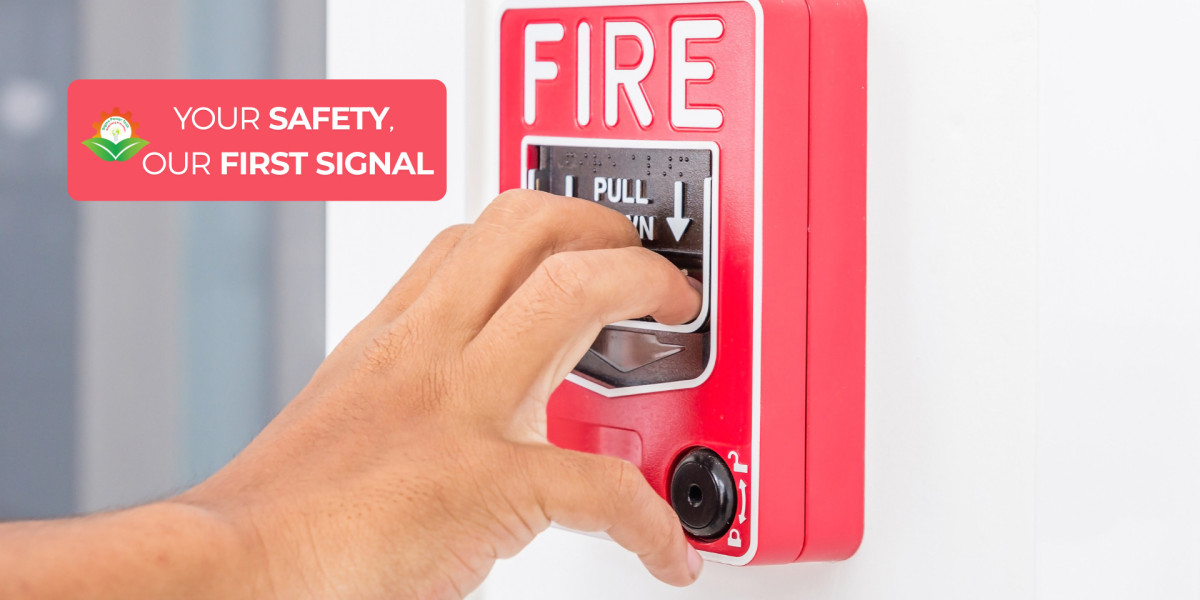

Carbon monoxide (CO) is invisible, odorless, and deadly—yet many assume a single sensor detects both fire and CO. In reality, a Fire Alarm System and a CO alarm solve different hazards with different detection physics. Understanding when CO detection is integrated into fire systems—and when it must remain separate—is essential for life safety, compliance, and avoiding false dispatches in commercial, industrial, and multi‑residential buildings across India.
Standard Fire Alarm Systems do not detect CO by default. CO detection requires dedicated CO sensors or multi‑sensor detectors that include CO, and system integration must be design‑approved and code‑compliant.
How CO Detection Works and Where It Fits
CO is a gas produced by incomplete combustion. Detection uses electrochemical sensors that generate a current proportional to CO concentration. Fire alarm systems typically detect smoke and heat using photoelectric, ionization, or thermal sensors. To add CO detection, the system must include:
Dedicated CO detectors (point sensors) or multi‑sensor detectors (smoke + heat + CO).
Input modules that translate CO alarm signals into the fire alarm control panel (FACP) logic.
Predefined response policies (e.g., alarm verification, staged notification, gas shutdown).
Electrochemical CO sensors have a recommended service life of 5–7 years and require periodic calibration. They respond to ppm levels (e.g., 30–150 ppm for occupant alerts), unlike smoke detectors that respond to obscuration.
Addressable vs Conventional for CO Integration
Addressable systems: each CO detector reports a unique device ID, enabling precise location tracking and condition monitoring. This reduces investigation time and avoids blanket evacuations.
Conventional systems: CO devices report at zone level. You lose device granularity and predictive maintenance data, which can delay CO incident response. For large buildings, addressable integration is preferred because it supports remote diagnostics and pattern analysis.
Integration Scenarios: When CO Is Included
CO detection is commonly integrated into Fire Alarm Systems in these contexts:
Parking garages and vehicular tunnels: CO from exhaust requires ventilation control and alarm thresholds.
Boiler rooms and HVAC plant areas: combustion equipment can produce CO leaks.
Residential high‑rises with gas appliances: localized CO alarms may tie to building management for monitored alerts.
Hospitals and laboratories: CO monitoring supports life safety and equipment protection.
Integration must define response thresholds and actions—for example, CO > 50 ppm triggers ventilation increase; CO > 150 ppm triggers evacuation per local code.
Where CO Detection Must Remain Separate
In many jurisdictions, standalone CO alarms are required for residential units and small commercial spaces. Codes often mandate:
Separate CO alarm devices in sleeping areas for homes and some multi‑unit dwellings.
CO alarms not integrated into the fire alarm panel to prevent conflicts or delayed occupant alerts.
Stand‑alone CO alarms are powered by mains with battery backup and must be installed per manufacturer spacing and height requirements.
Standards, Codes and Practical Compliance in India
NBC (National Building Code) and local fire authorities set requirements for life safety and detection. CO detection in parking and plant areas is often tied to ventilation control.
NFPA 72 (Fire Alarm Systems) and NFPA 720 (CO Warning Equipment) provide guidance on integration and sensor placement.
For commercial buildings, CO detection is often required where combustion sources or vehicular traffic exist. Always confirm with the local authority before integrating CO into the Fire Alarm System.
Key Features When Adding CO Detection
Multi‑sensor detectors with CO for reduced device count and improved false‑alarm filtering.
Addressable input modules for device-level diagnostics and CO concentration reporting.
Predictive maintenance: CO sensor drift and end‑of‑life signalling integrated into the fire alarm system panel.
Remote monitoring: fire alarm system remote monitoring platforms that display CO ppm trends.
Battery resilience: battery backup for fire alarm system and battery fire alarm systems to ensure operation during power loss.
Applications and Typical CO Integration Points
Common applications include commercial office buildings, hospitals, data centres with on‑site generation, shopping malls with parking levels, airports and transit infrastructure, industrial plants, hotels, educational institutions, government and defence buildings, smart city infrastructure, residential high‑rise complexes, and critical utility facilities.
System Selection Factors for CO Integration
When evaluating a fire alarm system supplier or fire alarm system companies, consider architecture compatibility, sensor type and lifecycle, integration requirements, software and licensing, installation and commissioning, AMC and support, compliance and certification, and lifecycle cost including sensor replacement cycles and battery backup planning.
Buyer's Checklist for CO Integration in India
Confirm CO detection is required by local authority, require a documented integration plan defining CO thresholds and response actions, verify open protocol compatibility, ensure staff training on CO alarm interpretation, select suppliers with field experience in CO integration, and check documentation quality including commissioning reports and calibration logs.
Common Mistakes to Avoid
Assuming smoke detectors detect CO, integrating CO alarms into the fire panel without code approval, placing CO sensors too close to ventilation outlets, ignoring sensor end‑of‑life and calibration schedules, using non‑addressable CO devices in large buildings, and neglecting cybersecurity for networked CO monitoring panels.
Practical Guidance for Hybrid Deployments
Many buildings use a hybrid approach: standalone CO alarms in residential units and integrated CO detection in parking and plant areas tied to the Fire Alarm System. For wireless installations, a wireless fire alarm system can deploy CO sensors in tenant areas with supervised battery power and cloud reporting. For professional design and integration of CO detection within fire and building systems, consult certified providers for guidance on fire alarm system installation and validation.
Conclusion
A standard Fire Alarm System does not detect carbon monoxide unless CO sensors are explicitly added and integrated per code. CO detection relies on electrochemical sensors with defined thresholds and service life, and integration must avoid false alarms while ensuring rapid response. Confirm local requirements, choose addressable architectures for clarity, and plan for sensor maintenance and battery backup. Correctly engineered CO integration strengthens occupant safety, supports ventilation control, and aligns with NFPA/NBC expectations.
Ubicación del Autor
SCF/6, 2nd Floor, Ashoka Enclave Part-1, Sector 34, Opp. Kanishka Tower, PIN-121003, Faridabad, HR