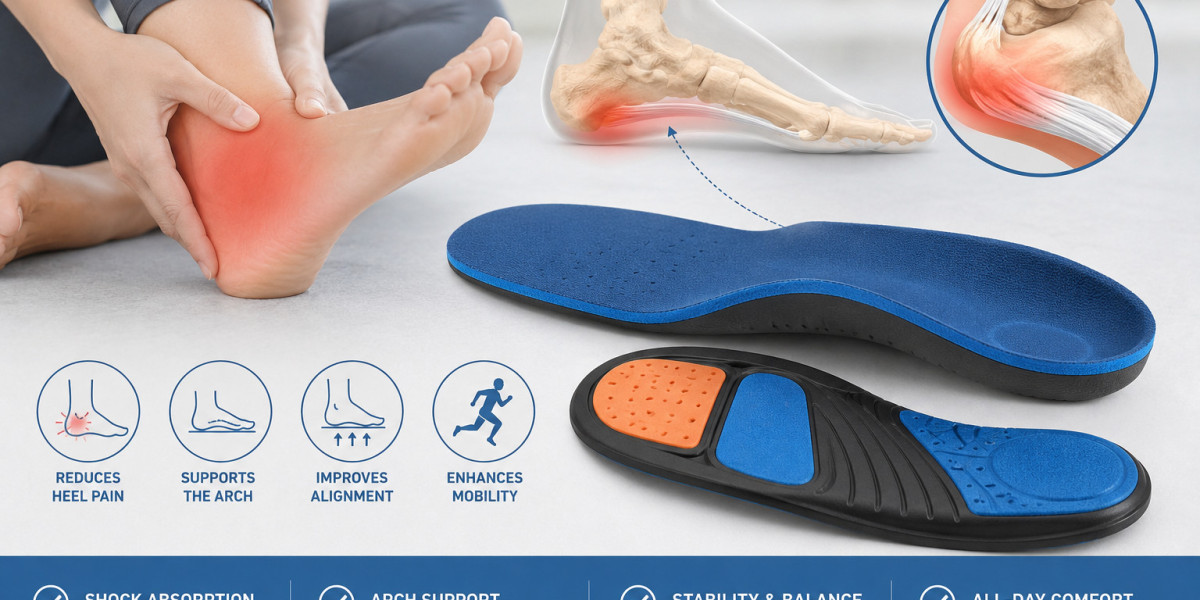

If you have ever taken your first steps out of bed and felt a sharp stab through your heel, you already know how disruptive plantar fasciitis can be. It is one of the most common causes of heel pain, affecting people who stand for long hours, runners, and everyday walkers alike. The good news is that the right pair of plantar fasciitis insoles can make a significant difference, often reducing pain within weeks and helping prevent it from returning.
This guide walks through what plantar fasciitis actually is, why it happens, and how to choose insoles that provide real, lasting relief rather than a temporary fix.
What Is Plantar Fasciitis?
The plantar fascia is a thick band of connective tissue that runs along the bottom of your foot, connecting your heel bone to your toes. It acts like a natural shock absorber, supporting your arch every time you stand, walk, or run.
Plantar fasciitis occurs when this tissue becomes irritated or inflamed, usually from repeated strain or excessive stretching. Over time, tiny tears can develop in the fascia, leading to pain, stiffness, and in some cases, the formation of a heel spur.
Common Symptoms
Plantar fasciitis presents in fairly recognisable ways. Common symptoms include:
Sharp, stabbing pain in the heel, especially with the first steps in the morning
Pain that eases with movement but returns after long periods of standing or sitting
Increased discomfort after exercise, not during it
Tenderness along the bottom of the foot, particularly near the heel
Stiffness that makes it hard to flex the foot upward
If these symptoms sound familiar, it is worth addressing the underlying cause rather than just managing the pain day to day.
What Causes Plantar Fasciitis?
Plantar fasciitis rarely has a single cause. It usually develops from a combination of biomechanical and lifestyle factors, including:
Fallen or flat arches: When the arch does not provide enough support, the plantar fascia has to work harder to stabilize the foot, leading to overstretching and inflammation.
High arches: On the other end of the spectrum, high arches can reduce the foot's natural shock absorption, putting extra strain on the fascia with every step.
Tight calf muscles or Achilles tendon: Limited flexibility in the lower leg increases tension through the plantar fascia.
Prolonged standing or walking on hard surfaces: Jobs in retail, hospitality, healthcare, and trades often involve hours on concrete or tile floors, which accelerates wear on the fascia.
Sudden increases in activity: Runners and athletes who ramp up mileage or intensity too quickly are especially prone to flare-ups.
Worn-out or unsupportive footwear: Shoes that lack proper arch support or cushioning fail to protect the fascia from repetitive impact.
Excess body weight: Extra load on the feet increases stress on the plantar fascia with every step.
Why Insoles Make Such a Difference
Because plantar fasciitis is fundamentally a biomechanical problem, biomechanical solutions tend to work best. Insoles designed for plantar fasciitis are built to correct the underlying issue, not just cushion the pain.
Effective insoles do three things:
Support the arch properly, redistributing pressure away from the heel and fascia
Stabilise the foot's alignment, reducing excess pronation or supination that strains the tissue
Absorb shock, softening the impact of each step on hard surfaces
Over time, this combination allows the inflamed tissue to rest and heal, while also preventing the repetitive strain that caused the problem in the first place.
What to Look For in Plantar Fasciitis Insoles
Not all insoles are created equal, and the flat foam pads sold at most pharmacies are rarely enough for moderate to severe plantar fasciitis. When evaluating options, look for:
Firm, contoured arch support: Soft cushioning alone will not correct alignment. The insole needs a rigid or semi-rigid arch shape that actively supports the foot rather than just padding it.
Deep heel cups: A well-designed heel cup cradles the heel and helps absorb shock exactly where plantar fasciitis pain concentrates.
Personalised or adjustable fit: Feet vary enormously in arch height, width, and pronation pattern. Insoles that can be fitted or adjusted to your specific foot shape tend to outperform generic, one-size-fits-all inserts.
Durable, supportive materials: Look for insoles built to hold their shape over months of daily use rather than compressing flat within a few weeks.
A gradual break-in approach: Because the foot's muscles and tissues need time to adapt to a new support structure, insoles that allow for a staged introduction, starting with shorter wear times and building up, tend to produce better long-term results with less discomfort during adjustment.
A Staged Approach to Arch Support
Many podiatrists recommend a phased approach rather than jumping straight into full-time wear of a rigid arch support. A common structure looks like this:
Phase 1: Strengthen
Begin with a firmer support that encourages the foot's muscles and ligaments to re-engage and rebuild strength, worn for shorter, gradually increasing periods.
Phase 2: Maintain
Once the foot has adjusted, transition to a support designed for all-day wear that maintains proper alignment through daily activities.
Phase 3: Relax
For evenings or moments of extended rest, a softer, more cushioned support can help the foot recover after a long day on its feet.
This kind of staged system mirrors how physical therapy works for other parts of the body: build strength first, maintain the improvement, then allow for recovery. It is a more sustainable approach than relying on a single static insole for every situation.
How to Choose the Right Insoles for Your Feet
Because plantar fasciitis can stem from different underlying foot types, the best approach is usually a proper fitting rather than guesswork. Here is a general process to follow:
Get your foot assessed. A gait analysis or arch assessment, whether in person or through a detailed foot scan, identifies your specific arch type and pressure points.
Match the insole to your foot type. Flat feet, high arches, and neutral arches each respond better to different support structures.
Break them in gradually. Start with shorter wear periods (often 1 to 2 hours a day) and build up over several weeks as your feet adjust.
Pair with supportive footwear. Even the best insoles cannot fully compensate for shoes with no structure or worn-out soles.
Reassess if pain persists. If discomfort continues beyond a few weeks of consistent use, consult a podiatrist to rule out other contributing factors.
Final Thoughts
Plantar fasciitis can feel relentless, but it is highly manageable with the right approach. Insoles that properly support your arch, stabilise your foot's alignment, and are introduced gradually tend to deliver the most lasting relief. If your pain persists despite trying supportive insoles, a professional foot assessment can help pinpoint what your feet specifically need to heal.
Ubicación del Autor
United States of America