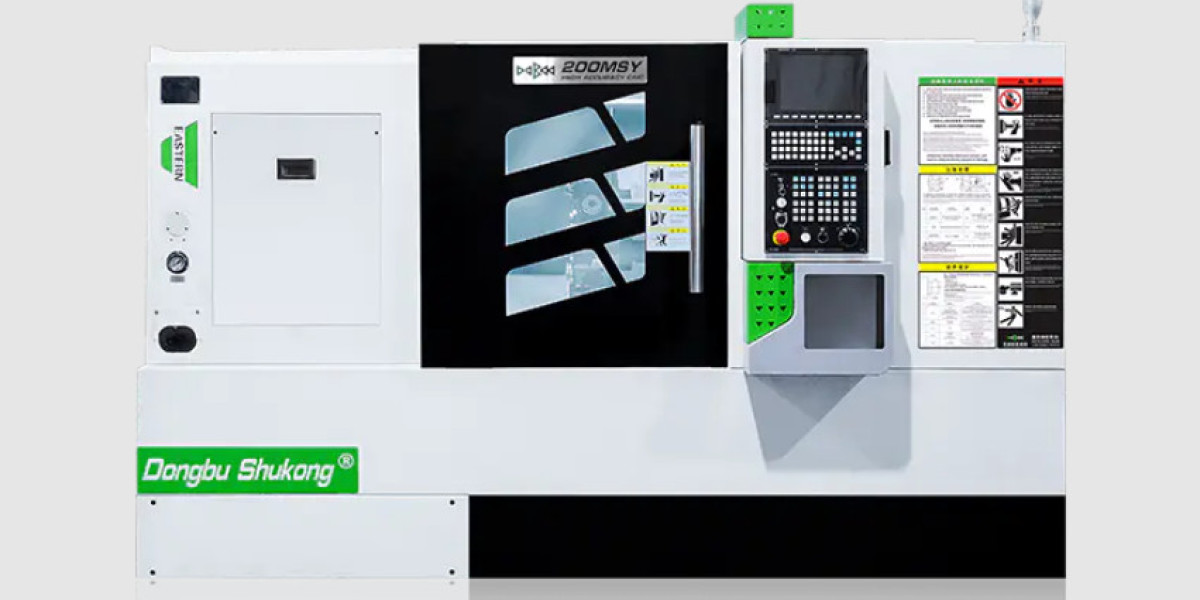

Precision means different things depending on who's asking. For a shop turning automotive shafts, holding a few thousandths of an inch might be routine. For a supplier producing components bound for hydraulic systems or precision fittings, tolerances get considerably tighter, and the metalworking lathe chosen for that work has to match those expectations from the outset.
Rigidity plays a bigger role in precision than many buyers initially assume. A bed casting that flexes under cutting load, even slightly, translates directly into dimensional drift across a production run. Heavier bed construction and well-supported ways tend to hold geometry better over time, which matters enormously when a batch of parts needs to interchange without hand-fitting.
Bearing quality in the headstock is another factor worth scrutinizing. Spindle runout affects both surface finish and roundness, and a metalworking lathe with poorly specified bearings will show its limitations quickly once cutting forces increase or spindle speeds climb. Buyers sourcing for precision work often ask suppliers directly about spindle runout figures rather than relying on general claims.
Application scenarios vary widely across sectors. Automotive component manufacturers often need a metalworking lathe capable of high-volume, repeatable turning for parts like axles, brake components, and fasteners. Hydraulic and pneumatic equipment producers lean on lathes for cylinder rods and fittings where surface finish directly affects sealing performance. Oil and gas suppliers frequently need machines that can handle longer workpieces and tougher alloys without sacrificing dimensional control.
Toolholding systems also shape what a shop can realistically achieve. Quick-change tool posts reduce setup time between operations, which matters for shops running smaller batch sizes across many different part numbers. For shops running longer single-part production, that flexibility matters less than raw stability and repeatability.
Ultimately, the right metalworking lathe for one shop might be a poor match for another, even within the same industry. Buyers who map out their actual part geometry, material range, and batch sizes before comparing machines tend to end up with equipment that fits real production needs rather than theoretical capability.
Ubicación del Autor
United States of America