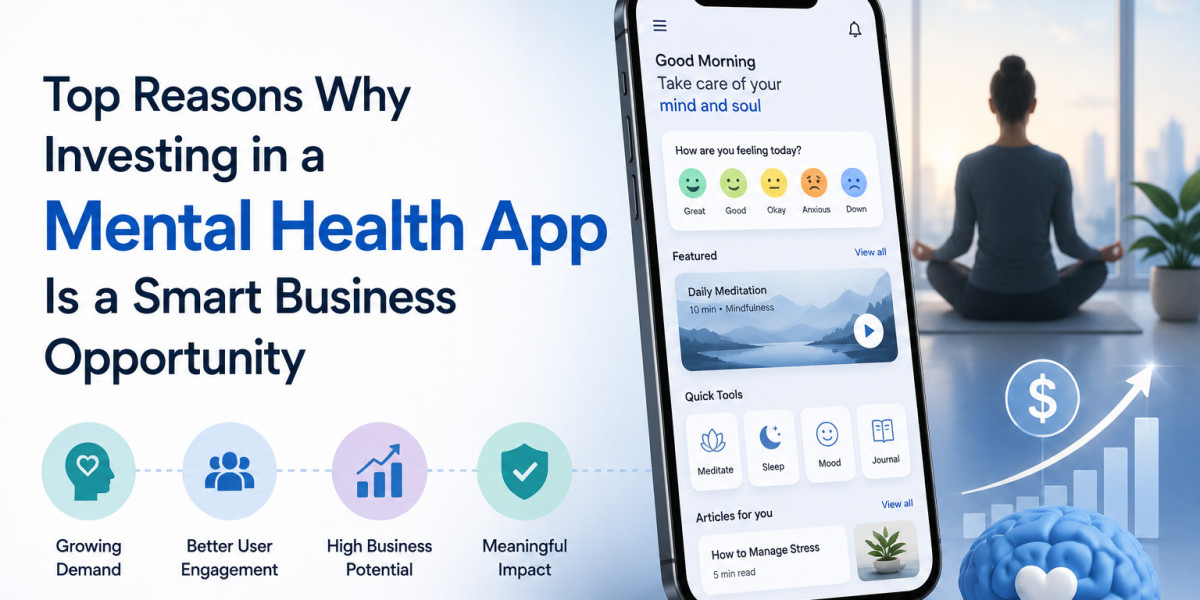

Mental health has become a global priority, with individuals, employers, healthcare providers, and governments recognizing the importance of accessible and timely mental healthcare. As digital health adoption continues to grow, mental health apps are emerging as practical solutions that bridge the gap between patients and professionals. From therapy sessions and mood tracking to meditation and AI-powered support, these applications offer convenient and personalized care.
For businesses, this shift presents a significant opportunity to enter a rapidly expanding market. By developing secure, scalable, and user-focused mental health platforms, organizations can address evolving healthcare needs while creating digital solutions that improve accessibility, engagement, and overall user experience.
Why Demand for Mental Health Solutions Is Growing
The growing awareness of mental well-being, combined with advances in digital healthcare, has created strong demand for accessible mental health solutions. Several factors continue to accelerate adoption across consumers, healthcare providers, and businesses.
Increased Awareness of Mental Health
Mental health discussions have become more open, reducing stigma and encouraging people to seek professional support. As awareness grows, users increasingly look for digital platforms that provide convenient access to counseling, therapy, and self-care resources.
Rising Prevalence of Mental Health Disorders
Conditions such as anxiety, depression, stress, and burnout continue to affect millions worldwide. This growing patient population is driving demand for digital solutions that offer timely support while reducing pressure on traditional healthcare systems.
Greater Adoption of Digital Healthcare
Consumers have become comfortable using mobile technology for healthcare services, including virtual consultations, appointment scheduling, and wellness tracking. This behavior naturally extends to mental healthcare, making dedicated mobile applications increasingly attractive.
Demand for Convenient and Private Support
Many individuals prefer receiving mental health support privately without visiting clinics. Mobile applications provide discreet access to therapists, guided exercises, educational content, and progress tracking from virtually anywhere.
Expansion of Corporate Wellness Programmes
Businesses are investing more in employee well-being to improve productivity, engagement, and retention. Many organizations now integrate mental wellness applications into their employee benefits, creating additional market opportunities for app developers.
10 Reasons Mental Health Apps Are a Smart Investment
Growing market demand, technological innovation, and changing healthcare expectations have made mental health applications an attractive business opportunity. Beyond improving patient outcomes, these platforms offer scalable revenue models and long-term growth potential.
1. Rapidly Expanding Market Size
The digital mental health market continues to grow as consumers seek affordable, convenient, and accessible care. Rising smartphone adoption and increasing healthcare digitization create favorable conditions for businesses entering this sector.
2. Increasing Consumer Demand
People want mental health support that fits their schedules and lifestyles. Mobile applications provide instant access to therapy sessions, mood tracking, meditation programmes, and educational resources without geographical limitations.
3. Recurring Revenue Opportunities
Mental health apps commonly generate recurring income through subscription plans, premium features, virtual therapy sessions, employer partnerships, and in-app purchases, creating predictable revenue streams for businesses.
4. Strong Corporate Adoption
Many organizations now prioritize employee well-being through digital wellness initiatives. Offering mental health applications to employers creates opportunities for enterprise partnerships while supporting healthier, more productive workforces.
5. Scalable Business Model
Unlike traditional healthcare services, digital platforms can expand their user base without significant infrastructure investments. Businesses can continuously introduce new services, features, and regional support as demand increases.
6. AI Enhances User Engagement
Artificial intelligence enables personalised care recommendations, mood analysis, chatbot assistance, and behavioral insights.
7. Growing Telehealth Integration
Mental health applications increasingly integrate with telemedicine platforms, allowing users to schedule appointments, attend virtual consultations, and communicate securely with licensed therapists through a single digital experience.
8. Valuable Data-Driven Insights
User engagement analytics help providers understand treatment progress, behavioral patterns, and platform performance. These insights support continuous service improvements while enabling more personalized healthcare experiences.
9. Opportunity for Global Reach
Digital platforms eliminate geographical barriers, enabling businesses to serve users across multiple regions. Localization, multilingual support, and regulatory compliance make international expansion increasingly achievable.
10. Continuous Innovation Potential
Emerging technologies such as wearable device integration, predictive analytics, virtual reality therapy, and personalized wellness programs continue to create new opportunities for businesses investing in digital mental healthcare solutions.
These benefits make mental health apps a promising investment opportunity for businesses looking to enter the growing digital healthcare market. Working with a healthcare mobile app development company can help organizations turn these opportunities into scalable platforms that deliver long-term value and meet evolving user expectations.
Challenges to Consider Before Investing
While mental health apps present strong business potential, successful development requires careful planning. Businesses must address technology, security, compliance, and user experience challenges to create a reliable platform that users trust.
Ensuring Data Privacy and Security
Mental health applications handle highly sensitive personal information, including emotional health records and therapy details. Implementing strong encryption, secure authentication, and privacy-focused practices is essential to protect user confidentiality.
Meeting Healthcare Compliance Requirements
Mental health platforms must follow healthcare regulations and data protection standards depending on their target market. Compliance with regulations such as HIPAA, GDPR, and local healthcare guidelines helps ensure secure and responsible operations.
Building User Trust and Engagement
Encouraging users to consistently interact with a mental health app can be challenging. Businesses need intuitive designs, personalized experiences, and meaningful features that motivate users to continue their wellness journey.
Integrating Professional Healthcare Support
Providing access to qualified therapists, counselors, or mental health professionals requires proper verification and management systems. A well-designed platform should balance automated support with human expertise when needed.
Managing Development Costs
Creating a secure and feature-rich mental health platform involves investment in design, technology, testing, compliance, and maintenance.
How to Build a Successful Mental Health App
Creating a successful mental health app requires more than just adding basic features or an appealing interface. Businesses need to focus on understanding user expectations, designing a seamless experience, integrating the right technologies, and maintaining healthcare standards. A well-planned mental health app development approach helps create a secure, scalable, and user-friendly platform that supports better engagement and delivers meaningful mental health experiences.
Define Your Target Audience and Purpose
Before development begins, businesses should identify their target users and define the app’s primary purpose. Whether focused on therapy, meditation, stress management, or workplace wellness, a clear goal shapes the entire development strategy.
Include Essential Mental Health Features
A successful app should offer features such as user profiles, mood tracking, appointment scheduling, guided exercises, secure messaging, progress monitoring, and personalized recommendations to create meaningful user experiences.
Prioritise User-Friendly Design
Mental health applications should provide simple navigation and a calming interface to make users feel comfortable. An accessible design improves engagement and ensures users can easily access important support resources.
Focus on Security and Compliance
Security should be considered from the beginning of development. Strong authentication, encrypted communication, secure cloud storage, and compliance-focused architecture help protect sensitive healthcare information.
Test and Improve Continuously
Launching the app is only the beginning. Regular testing, user feedback analysis, performance improvements, and feature updates help businesses maintain quality and adapt to changing user expectations.
Conclusion
The increasing focus on mental well-being has created significant opportunities for businesses to develop innovative digital healthcare solutions. A well-designed mental health app can improve accessibility, deliver personalized support, and create sustainable business value through scalable digital services.
However, success depends on building a secure, user-focused, and compliant platform that addresses real healthcare challenges. Businesses that invest in the right technology, thoughtful features, and reliable development expertise can create solutions that support both users and healthcare professionals.
With expertise in developing advanced digital healthcare solutions, EmizenTech helps businesses build secure and scalable healthcare applications that meet modern digital health requirements, enhance user experiences, and adapt to evolving healthcare expectations.
FAQs
Is the mental health app industry profitable?
Yes, the mental health app industry offers strong profitability potential due to increasing demand for digital wellness solutions, subscription-based models, and growing adoption among individuals, healthcare providers, and enterprises.
What monetization models work best for mental health apps?
Common monetization models include subscription plans, premium content, virtual therapy sessions, corporate wellness partnerships, in-app purchases, and paid access to mental health programs.
How much does it cost to build a mental health app?
The cost of building a mental health app depends on factors such as features, platform selection, technology requirements, security measures, compliance needs, and development complexity. A basic app may require less investment, while advanced platforms with AI, telehealth, and analytics capabilities require a larger budget.
What compliance requirements apply to mental health apps?
Mental health apps must follow relevant healthcare and data protection regulations based on their operating regions. Requirements may include HIPAA compliance in the US, GDPR in Europe, and other local privacy and healthcare standards to ensure secure handling of sensitive user information.
Ubicación del Autor
30 Ngould St Ste R Sheridan,WY 82801