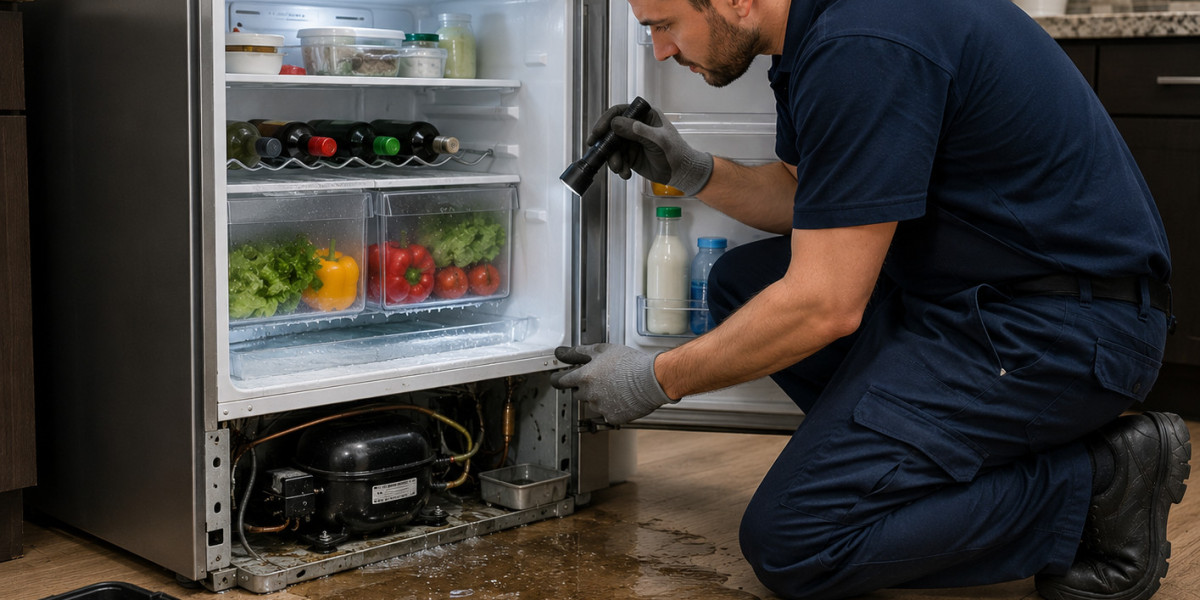

Water under or inside a fridge can come from a blocked drain, damaged tray, loose water line, poor door seal, or excess condensation. Some causes are simple to check, but an internal leak can damage flooring, cabinets, wiring, and other fridge parts.
The location of the water gives an important clue. Check whether it appears beneath the vegetable drawers, behind the appliance, under the freezer, or near the water dispenser.
1. The Defrost Drain Is Blocked
Modern fridges regularly melt frost from the evaporator during an automatic defrost cycle. The water should travel through a small drain into a tray near the bottom of the appliance.
Food particles, ice, or dirt can block this drain. Water then collects inside the fridge or freezes beneath the freezer drawers.
Common signs include:
Water beneath vegetable drawers
Ice on the freezer floor
Water returning after cleaning
An unpleasant smell near the drain
A thin sheet of ice under stored food
You may be able to clean an accessible drain opening with warm water, depending on the model instructions.
Do not pour boiling water into the fridge. Sudden heat can damage plastic parts and internal surfaces.
If the drain is frozen deep inside the appliance or keeps becoming blocked, the defrost system may need inspection.
2. The Drain Pan Is Damaged or Misaligned
Defrost water normally collects in a drain pan near the compressor. Heat from the refrigeration system helps the water evaporate.
A damaged or poorly positioned tray may allow water to leak onto the floor.
Possible signs include:
Water under the rear of the fridge
No water inside the main compartment
A tray that looks damaged or warped
Leakage after a defrost cycle
Water marks around the compressor area
Unplug the fridge before checking any accessible lower section.
Some drain pans can be inspected without removing major panels, while others sit behind electrical and cooling parts. Do not move pipes or disconnect wiring to reach the tray.
A damaged pan usually needs replacement rather than sealing.
3. The Fridge Door Is Not Sealing Properly
Warm room air contains moisture. When it enters the cold fridge, that moisture turns into condensation.
A weak door seal may lead to:
Water droplets on shelves
Moisture around food containers
Frost in the freezer
The fridge running longer
Water near the bottom of the compartment
Clean the rubber gasket with a soft cloth and mild soapy water. Look for splits, hardened sections, loose corners, and food residue.
Check that no container, shelf, or drawer is stopping the door from closing.
You can close the door over a thin piece of paper. If the paper slides out easily in several areas, the gasket may not be pressing firmly against the cabinet.
A damaged seal should be replaced before moisture creates heavier frost or places extra pressure on the cooling system.
4. The Fridge Is Not Level
A fridge needs to stand correctly so defrost water moves toward the drain.
If the appliance leans in the wrong direction, water may collect inside the cabinet or spill from the drain pan.
Check whether:
The fridge rocks when pressed
The doors swing open on their own
Water collects on one side
The appliance was recently moved
The front feet sit at different heights
Adjust the feet according to the installation guide.
The appliance should stand firmly, with a slight backward tilt if recommended by the manufacturer. This can also help the doors close properly.
5. The Water Supply Line Is Leaking
Fridges with water dispensers or ice makers connect to a household water supply.
The line may leak because of:
A loose fitting
A damaged plastic tube
A damaged connector
Excess water pressure
Wear behind the fridge
Damage caused while moving the appliance
Inspect the visible line and connection points for moisture.
Turn off the water supply if the pipe is damaged or leaking continuously. Do not rely on tape as a permanent repair because pressure can cause the leak to return.
Water lines may run close to electrical parts, so internal connections should be checked by a technician.
For support with refrigerators and other home equipment, you can review local appliance repair services in Sharjah and choose help based on the appliance fault.
6. The Ice Maker Is Overflowing
An ice maker can leak when too much water enters the tray or the ice does not release correctly.
Possible causes include:
A faulty inlet valve
Incorrect water pressure
A blocked fill tube
A damaged ice tray
A sensor problem
Ice stopping the mechanism
You may notice water or ice collecting beneath the ice maker.
Turn off the ice-making function and check whether the leak stops. If it does, the inlet valve, fill tube, or ice-maker controls may need testing.
Do not force frozen parts or use sharp tools to remove ice.
7. The Water Filter Is Incorrectly Installed
A loose, blocked, damaged, or unsuitable water filter can cause leakage inside the fridge.
Check whether:
The filter is fitted fully
The correct model is being used
The filter housing is damaged
A seal is missing
The leak began after filter replacement
Remove and reinstall the filter according to the manual.
A newly fitted filter may need flushing to remove trapped air. If water appears around the housing, stop using the dispenser until the connection is checked.
The small details are what make the biggest difference. A filter that looks fitted may still be slightly out of position.
8. Excess Condensation Is Building Up
Condensation may increase when:
The fridge door is opened frequently
Hot food is placed inside
Uncovered liquids are stored
The room is very humid
The door seal is weak
The temperature setting is incorrect
Air vents are blocked
Allow hot food to cool before placing it inside.
Cover liquids and moisture-rich food. Keep internal vents clear so cold air can move evenly.
A small amount of moisture may be normal in humid conditions. Puddles or repeated water buildup usually point to a drainage, sealing, or temperature problem.
9. Heavy Frost Is Melting
A freezer with heavy ice buildup may produce a large amount of water when the ice begins melting.
Frost may develop because of:
A door left open
A damaged gasket
A defrost-heater fault
A failed defrost sensor
A blocked fan
A control problem
Do not remove thick ice with a knife or screwdriver. Cooling lines may sit behind the inner wall.
You can allow the fridge to defrost naturally after moving food to another cold location. If the frost returns quickly, the original defrost fault still needs repair.
Safe Checks You Can Do
Before arranging professional help:
Unplug the fridge if water is near electrical areas.
Dry the floor and interior.
Check where the water first appears.
Clean the door gasket.
Make sure the door closes fully.
Check the temperature setting.
Keep internal air vents clear.
Inspect visible water lines.
Confirm the fridge stands level.
Look for heavy freezer frost.
Do not remove sealed cooling parts or electrical covers.
When to Stop Using the Fridge
Arrange an inspection when:
Water reaches the socket or cable
The fridge trips the circuit breaker
The leak comes from inside the rear panel
Water continues after the supply line is closed
Heavy frost keeps returning
The fridge is also not cooling properly
There is a burning smell
The compressor clicks repeatedly
Water damages nearby cabinets or flooring
Move perishable food to another cold place if the temperature is rising.
How to Choose the Best Affordable Fridge Leak Repair
A good repair should identify where the water starts, not only dry the visible puddle.
Ask the technician:
Is the defrost drain blocked?
Is the drain pan damaged?
Does the door seal need replacement?
Is the water line or inlet valve leaking?
Is the defrost system working correctly?
Will the fridge be tested after repair?
Are parts and labour included in the price?
The lowest quote may not be the most affordable choice if the underlying cause is missed.
For help with blocked drains, damaged trays, water lines, seals, ice makers, and internal leaks, affordable fridge repair in Sharjah may be useful when normal cleaning and positioning checks do not stop the water.
Repair or Replace the Fridge?
Repair may make sense when:
The drain is blocked
The drain pan is damaged
A hose or water line needs replacement
The door gasket is worn
The inlet valve is faulty
The fridge is otherwise cooling normally
Replacement may be worth considering when:
Several major systems are damaged
Water has affected multiple electrical parts
The cabinet has severe rust
The cooling system also has a major fault
Replacement parts are unavailable
The repair cost is close to a suitable new fridge
The amount of water does not always show how serious the problem is. A small internal leak can reach expensive electrical parts before it becomes visible.
Final Thoughts
A leaking fridge may have a blocked defrost drain, damaged drain pan, damaged door seal, loose water line, faulty ice maker, or condensation problem.
Start by finding the location and timing of the water. Check the door, drain area, temperature, water line, and fridge position.
If the leak continues or appears near electrical parts, arrange an inspection before it damages the flooring, cabinets, wiring, or cooling components.