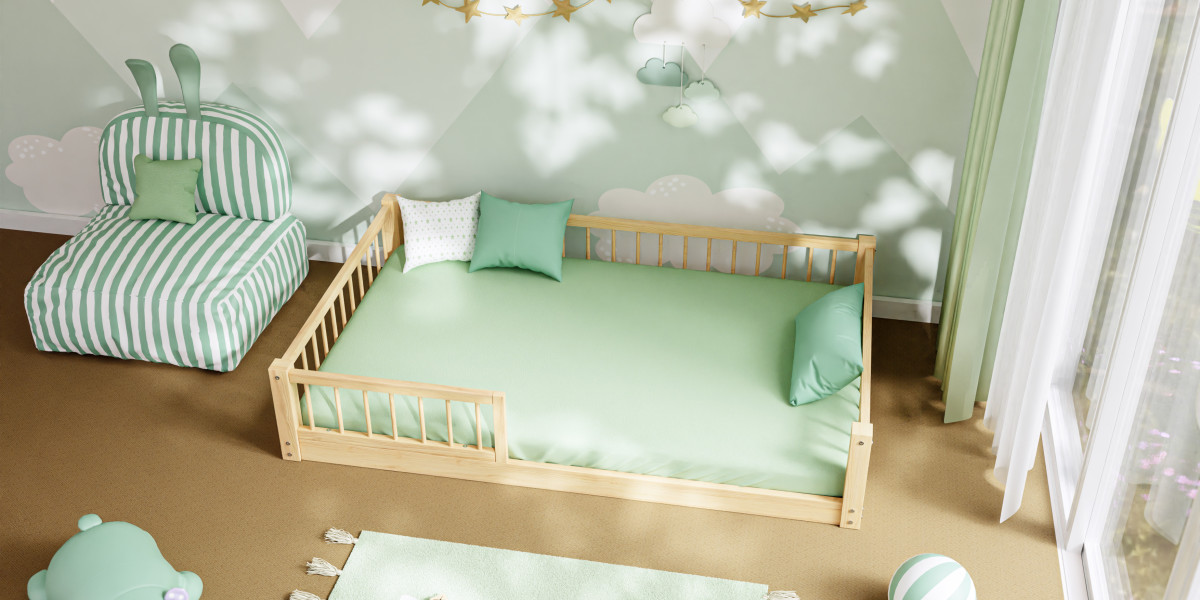

Not all toddler beds are created equal, and safety comes down to more than just having low sides. From frame construction to material choice, small design details can make a big difference in how safe — and how long-lasting — a bed really is.
Height is the first thing to consider. A well-designed toddler bed should sit low enough that even a restless sleeper faces minimal risk if they roll or climb out during the night. This is exactly why the floor bed style has become so popular in the UK: sitting just a centimeter or two off the ground, it removes fall risk almost entirely while still giving toddlers the freedom to get in and out independently.
Material is the second, often overlooked factor. Many budget toddler beds use painted MDF or particleboard, which relies on chemical finishes and tends to wear down faster under active toddler use. Solid, knot-free pine wood is a safer alternative — naturally splinter-free, sturdy enough to handle years of climbing and jumping, and free from added toxins since it doesn't need heavy varnish or paint.
Ventilation matters too. A proper bed frame uses a slatted base rather than a solid platform, allowing air to circulate beneath the mattress. This helps prevent moisture build-up and mould, a common issue in the UK's more humid indoor climates.
Snuglee's floor bed collection is built with all of this in mind — solid pine construction, a slatted base, and a low profile designed for both safety and independence. Parents wanting a full breakdown of safety standards before buying can also check this guide on UK kids bed safety standards.