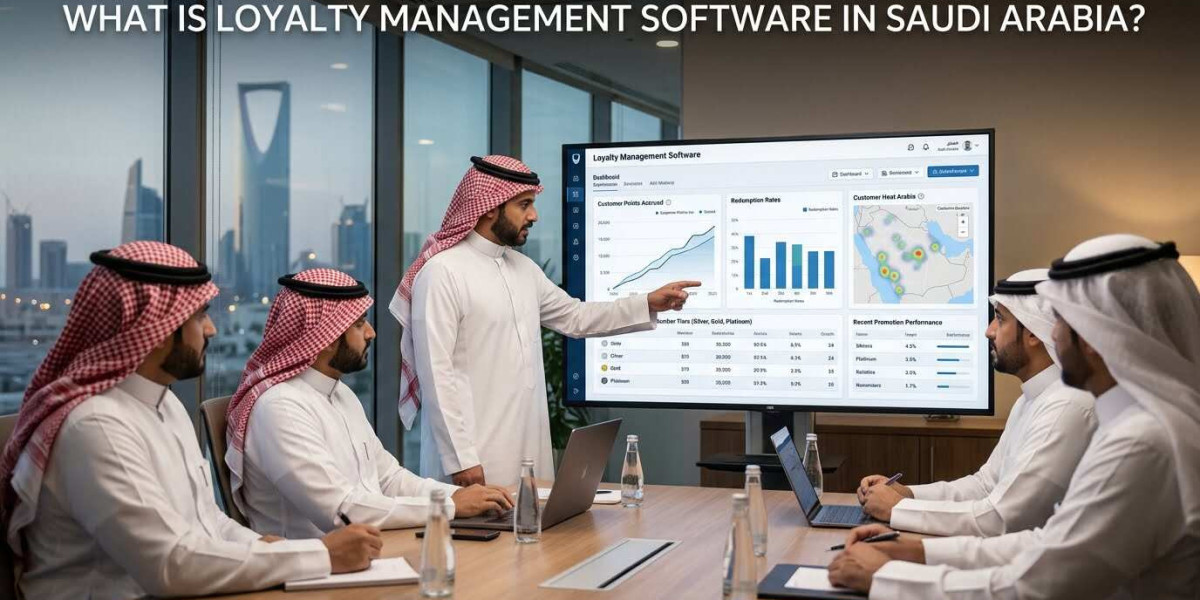

Customer loyalty is no longer limited to collecting points on a card or receiving a discount after several purchases. Businesses today need to manage customer information, purchases, rewards, membership levels, and interactions across different channels. This is where Loyalty Management Software in Saudi Arabia becomes useful. Loyalty Management Software provides businesses with a structured digital system for managing loyalty programs and understanding how customers interact with them.
In Saudi Arabia, businesses across retail, ecommerce, restaurants, hospitality, and other sectors are increasingly using digital systems to manage customer relationships. As customers move between physical stores, websites, mobile applications, and digital ordering platforms, businesses need reliable ways to keep loyalty information organized. Saudi Arabia's Vision 2030 also places strong emphasis on digital transformation and the development of the digital economy.
What Is Loyalty Management Software
Loyalty Management Software is a digital platform used to create and manage customer loyalty programs. It allows businesses to define how customers earn rewards, how benefits are provided, and how loyalty activity is recorded.
Instead of keeping customer rewards in spreadsheets or handling points manually, businesses can use software to automate these processes. Depending on the platform, the system may manage customer profiles, points, rewards, membership tiers, purchases, redemptions, referrals, and loyalty analytics.
The main purpose is to keep loyalty activities organized and connected.
What the Software Can Manage
A typical system may handle
Customer registration
Loyalty accounts
Points
Rewards
Membership levels
Purchase activity
Reward redemption
Customer segments
Referrals
Loyalty reporting
Not every business needs all of these functions. The required features depend on the type of loyalty program and the way customers interact with the business.
How Loyalty Management Software Works
The process usually begins when a customer joins a loyalty program. A customer profile is created, and the business defines the activities that qualify for loyalty benefits.
When the customer makes an eligible purchase, the software records the transaction and applies the relevant rules. Points or another type of benefit can then be added to the customer's account.
When the customer uses a reward, that activity is recorded as well. Over time, the business develops a history of loyalty activity that can be used to understand customer behavior.
For example, a customer may purchase from a store several times during a month. The system can record those transactions, calculate eligible points, update the customer's balance, and maintain the relevant membership information without requiring employees to calculate everything manually.
Why Businesses Use Loyalty Management Software
A loyalty program can become difficult to manage as the number of customers and transactions increases.
A small business may be able to maintain a simple rewards system manually. A business with multiple branches and thousands of customers has very different requirements.
Employees may otherwise need to keep track of points, customer accounts, reward usage, membership levels, and purchase history across different systems.
Loyalty Management Software brings these activities into a more structured environment. This can make it easier to maintain customer records and apply loyalty rules consistently.
From Manual Records to Automated Management
Without dedicated software, businesses may rely on spreadsheets, separate customer databases, physical cards, or manual calculations.
With a loyalty platform, many of these activities can be automated.
The difference is particularly noticeable when a business has
Large numbers of loyalty members
Multiple branches
Online and offline sales
Several reward types
Different membership levels
Frequent customer transactions
The larger the program becomes, the more difficult manual management can be.
Loyalty Management Software in Saudi Arabia
The relevance of loyalty software in Saudi Arabia is closely connected with the country's growing digital business environment.
A customer may discover a product online, purchase it through an ecommerce website, visit a physical branch later, and use a mobile application for another transaction. These interactions create customer data across several channels.
If each channel maintains separate loyalty information, the customer's history can become fragmented.
Loyalty Management Software can help connect eligible activity when the relevant business systems are integrated. This can allow customers to maintain a more consistent loyalty account across different touchpoints.
Businesses That Can Use Loyalty Software
Loyalty systems can be used across many industries, including
Retail
Ecommerce
Restaurants
Cafes
Hospitality
Travel
Financial services
Telecommunications
Consumer services
The loyalty model will differ between industries, but the underlying requirement is similar. Businesses need a way to record and manage customer participation.
Loyalty Software Saudi Arabia and Customer Experiences
Customers generally want loyalty programs to be simple.
They should be able to understand how they earn benefits, how many points they have, and how rewards can be used without needing to study complicated rules.
This is where software can support the customer experience. A loyalty account can provide information about available points, membership status, recent activity, and eligible rewards.
For businesses operating in Saudi Arabia, this can be especially useful when customers interact with the company through both physical and digital channels.
Connecting Different Customer Touchpoints
A loyalty system can potentially connect
Point of sale systems
Ecommerce websites
Mobile applications
Customer accounts
Digital ordering platforms
Physical branches
This creates a more connected loyalty experience when the underlying systems are properly integrated.
For example, a customer who purchases from one branch may be able to receive the same loyalty treatment at another participating branch, depending on the business rules.
Different Types of Loyalty Programs
Loyalty program management can take several forms. Businesses should choose a model that matches how customers actually interact with them.
Points Based Programs
Customers receive points for eligible purchases or activities.
Points can then be exchanged for defined rewards.
This model is commonly used in retail and ecommerce because purchases can be directly connected with points.
Tier Based Programs
Customers are assigned membership levels according to defined conditions.
A business might create different levels based on spending, purchase frequency, or other activities.
Each level can have different benefits.
Visit Based Programs
Customers receive a reward after completing a certain number of visits or transactions.
This model can work well for restaurants, cafes, salons, and other businesses where repeat visits are important.
Cashback Programs
Customers receive a monetary benefit based on eligible purchases.
The software can calculate the benefit and maintain the relevant customer balance.
Hybrid Programs
A business can combine multiple loyalty models.
For example, customers might earn points from purchases while also receiving additional benefits after reaching a certain membership level.
The choice depends on the business model and customer behavior.
Customer Loyalty Software and Customer Retention
Customer retention means keeping customers active with a business over time.
Loyalty programs can support retention by giving customers additional reasons to return. However, loyalty software does not replace the factors that normally influence customer decisions.
Customers still care about
Product quality
Service
Price
Convenience
Availability
Reliability
Trust
A loyalty program works alongside these factors.
For example, a customer may continue purchasing from a business because they are close to reaching a reward. Another customer may appreciate receiving benefits based on their previous activity.
The software provides a way to manage these interactions and measure what happens afterward.
Identifying Changes in Customer Activity
Loyalty analytics can help businesses identify customers whose activity changes over time.
A customer who purchases every week has a different relationship with the business from someone who has not purchased for six months.
Businesses can use customer loyalty software to examine patterns such as
Purchase frequency
Repeat purchases
Time between purchases
Reward usage
Membership activity
Customer inactivity
This information can help businesses better understand their existing customer base.
Loyalty Analytics and Customer Behavior
One of the most useful aspects of loyalty management is the information generated through customer activity.
A loyalty program can show more than how many people registered. It can show how those members actually participate.
For example, a business might have a large number of registered members but relatively few active members. Another business may have fewer members but much higher participation.
These differences can be important when evaluating a loyalty program.
What Businesses Can Measure
Useful measurements can include
Active loyalty members
Repeat purchase rate
Purchase frequency
Average order value
Reward redemption rate
Points issued
Points redeemed
Membership growth
Inactive customers
These figures can help businesses identify customer behavior patterns and review whether their loyalty program is being used as expected.
Customer Segmentation
Customers are not all equally active, and they do not necessarily value the same benefits.
Customer segmentation allows businesses to organize customers into groups based on relevant characteristics or behavior.
For example, a business might identify frequent customers, new members, inactive customers, or customers who regularly purchase a specific category.
Common Customer Groups
A loyalty platform may help identify
New customers
Frequent customers
Inactive customers
High spending customers
Returning customers
Category focused customers
Segmentation can make loyalty program management more organized because businesses can understand different customer groups rather than treating the entire customer base as one group.
Customer Data and Privacy in Saudi Arabia
Loyalty programs often involve personal information.
Depending on the program, businesses may collect customer names, contact information, transaction history, loyalty balances, membership information, and reward activity.
This makes data handling an important consideration.
Saudi Arabia's Personal Data Protection Law establishes requirements concerning the processing of personal data. Businesses handling customer information need to consider applicable obligations when designing loyalty programs and selecting technology.
Data Questions Businesses Should Consider
Before implementing a loyalty system, businesses should consider
What information is actually required
Why that information is collected
How consent is managed
Who can access the information
How information is protected
How long information is retained
How customers can exercise applicable rights
SDAIA also provides guidance related to minimizing the collection of personal data to information that is necessary for the intended purpose.
For loyalty programs, responsible data management should therefore be considered alongside rewards, analytics, and customer experience.
Loyalty Management Software Across Different Industries
The way loyalty software is used depends heavily on the industry.
Retail
Retailers can connect purchases with loyalty accounts and monitor purchasing patterns across products and branches.
A customer may earn points through purchases and later redeem them according to the program rules.
Restaurants and Cafes
Restaurants can create visit based, points based, or membership programs.
The system can record customer visits, purchases, rewards, and redemption activity.
Hospitality
Hotels can structure loyalty around stays, spending, membership levels, or other qualifying activities.
Customer history can provide information about how members use the program.
Ecommerce
Ecommerce businesses can connect online orders with loyalty accounts.
Because purchases already occur digitally, loyalty software can connect transaction information with points, rewards, membership status, and customer activity.
What Should Businesses Look For
Selecting loyalty software should begin with the business's requirements.
A single location business may need a relatively simple system, while a large organization may require multiple integrations, branch management, advanced reporting, and more complex loyalty rules.
Businesses can consider whether the software supports
Required loyalty models
Existing point of sale systems
Ecommerce platforms
Mobile applications
Multiple branches
Customer segmentation
Membership tiers
Reward configuration
Analytics
Reporting
Access controls
Customer data management
Integration is particularly important. If the loyalty platform cannot communicate with the systems that already contain customer and transaction information, the business may end up creating another isolated database.
Common Problems With Loyalty Programs
A loyalty program can fail to attract participation even when the software itself works correctly.
One common problem is complicated rules. Customers may not want to calculate several conditions just to understand what they will receive.
Another problem is irrelevant rewards. If the benefits do not provide meaningful value, customers may have little reason to remain active.
Redemption can also become a problem when customers encounter unnecessary steps or restrictions.
Issues That Can Reduce Participation
Complicated earning rules
Difficult redemption
Rewards with limited value
Unclear membership conditions
Too many communications
Inconsistent staff processes
Poor system integration
Limited program analysis
Good loyalty program management therefore requires both suitable technology and clear program design.
A Simple Loyalty Program Structure
Businesses planning a loyalty program can begin by defining a few basic elements.
First, determine what customer activity qualifies for benefits.
Next, decide what customers receive for that activity.
Then establish the rules for membership, points, rewards, redemption, and expiration where applicable.
Finally, determine which measurements will be used to evaluate customer participation.
The structure does not need to be complicated to provide useful information.
A simple program with clear rules can be easier for customers to understand and easier for employees to manage.
The Role of Loyalty Management Software in Digital Business
Saudi Arabia's digital transformation continues to influence how businesses operate and interact with customers. Vision 2030 identifies digital transformation as an important part of the Kingdom's economic development, including its role in supporting private sector growth.
As more customer interactions take place through digital channels, businesses have more opportunities to collect and analyze information about customer activity.
This makes Loyalty Management Software relevant not simply as a rewards system, but as a way to organize customer loyalty data across the customer journey.
Businesses can use the information to understand purchasing patterns, monitor program activity, manage membership structures, and evaluate reward usage.
The technology should remain connected to the actual customer experience. A loyalty system that is difficult to use or offers little value may not generate meaningful participation regardless of its technical capabilities.
Final Thoughts
Loyalty Management Software is a digital system that helps businesses manage customer loyalty programs, rewards, memberships, transactions, customer information, and program analytics.
For businesses in Saudi Arabia, its relevance is growing alongside digital commerce and connected customer experiences. Loyalty Management Software in Saudi Arabia can support businesses that need to manage loyalty across physical stores, ecommerce platforms, mobile applications, and multiple branches.
The software can simplify many operational tasks, but customer loyalty still depends on the fundamentals of a good business. Customers are more likely to return when they receive quality products, reliable service, convenience, fair value, and a consistent experience.
Customer loyalty software provides the structure around those relationships. It can record customer activity, apply loyalty rules, manage rewards, and provide information that helps businesses understand how customers participate.
For businesses considering loyalty program management, the most important considerations are therefore not only the available features. They also include the simplicity of the program, relevance of rewards, integration with existing systems, customer experience, analytics, and responsible handling of personal data.
When these areas work together, Loyalty Management Software can provide a practical foundation for managing customer loyalty in Saudi Arabia.
Ubicación del Autor
Suite# 215, 40 Street, Zahran Business Center, Jeddah, Saudi Arabia