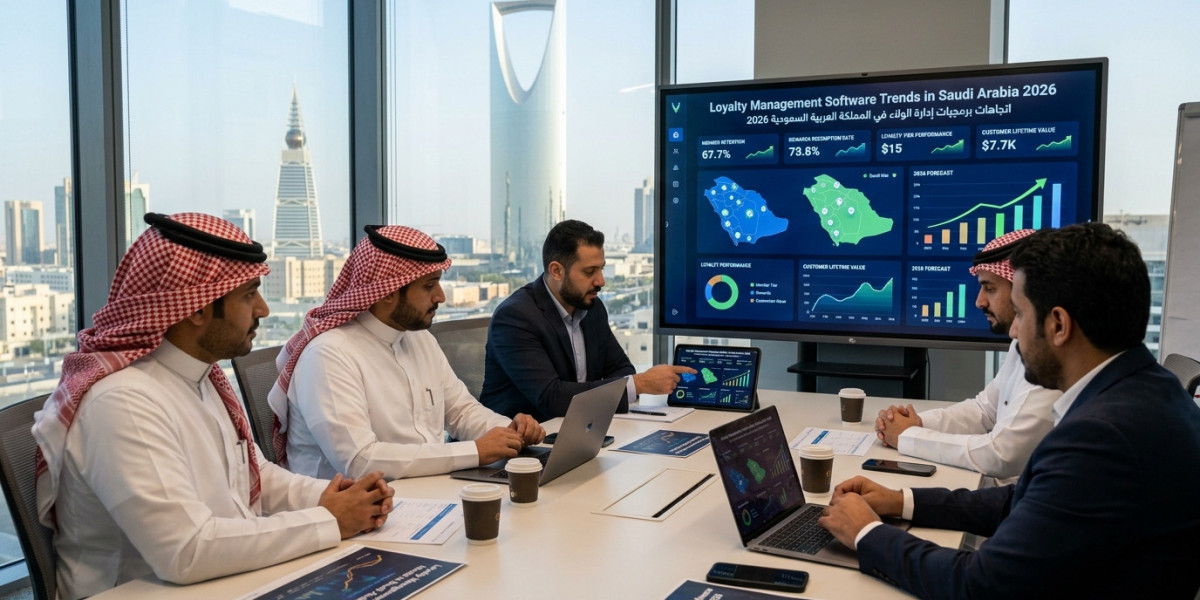

Customer loyalty is changing as businesses collect more customer data and interact with people across physical and digital channels. In 2026, Loyalty Management Software in Saudi Arabia is becoming more closely connected with artificial intelligence, customer data, personalization, mobile experiences, and real time analytics. Saudi Arabia's decision to designate 2026 as the Year of Artificial Intelligence also reflects the country's growing focus on AI and data driven technologies.
These developments are changing what businesses expect from loyalty platforms. A basic system that only records points may no longer cover the requirements of a business operating across stores, ecommerce, applications, and other digital channels. The following trends show where loyalty management is heading in Saudi Arabia during 2026.
AI Is Becoming Part of Loyalty Management
Artificial intelligence is one of the most noticeable loyalty software trends 2026. Instead of using loyalty systems only to record purchases and rewards, businesses can increasingly use AI based capabilities to analyze customer behavior and identify patterns within large amounts of customer data.
Saudi Arabia's national focus on artificial intelligence makes this trend particularly relevant. SDAIA states that 2026 has been designated as the Year of Artificial Intelligence, with the initiative supporting the development and adoption of AI across different sectors.
Where AI Can Be Used
AI loyalty software can potentially help businesses with
- Customer behavior analysis
- Purchase pattern identification
- Customer segmentation
- Reward recommendations
- Churn prediction
- Demand forecasting
- Loyalty activity analysis
For example, a system could identify differences between customers who purchase frequently and customers whose activity has gradually decreased. The business can then examine these groups separately instead of treating every loyalty member in the same way.
Personalization Is Moving Beyond Basic Rewards
Traditional loyalty programs often provide the same reward structure to every member. Modern customer loyalty software Saudi Arabia businesses use can support more detailed customer segmentation and personalized experiences.
Customers have different purchasing habits. One customer may regularly purchase a particular product category, while another may visit the business only during specific periods. A loyalty system that can analyze these differences can provide businesses with a clearer picture of individual customer behavior.
Personalization does not necessarily mean creating a completely different program for every customer. It can involve organizing customers into relevant groups and managing benefits according to their activity.
Customer Groups Can Include
- Frequent purchasers
- New members
- Inactive customers
- High value customers
- Category specific buyers
- Customers with recurring purchases
This type of segmentation can make loyalty program software more useful for understanding customer behavior.
Loyalty Data Is Becoming More Important
As loyalty programs become more digital, the amount of customer information generated through them can increase.
A single customer may have purchase records, reward activity, membership information, points balances, and interactions across several channels. Bringing relevant information together can help businesses understand the customer relationship more clearly.
However, more data also means greater responsibility.
Saudi Arabia's Personal Data Protection Law applies to the processing of personal data and covers information that can identify individuals directly or indirectly.
For loyalty platforms, this makes responsible data management an important part of the technology conversation.
Data Minimization Is Important
SDAIA's guidance on minimum personal data emphasizes avoiding the collection of personal information that is unnecessary for the intended processing purpose.
This means businesses evaluating loyalty management trends should not only ask how much data their software can collect. They should also consider which information is actually needed.
Mobile Loyalty Experiences Continue to Grow
Customers increasingly expect digital access to services they use regularly. Loyalty programs are following the same direction.
Mobile applications and mobile friendly loyalty experiences can allow customers to check points, view rewards, access membership information, and review their activity without relying on physical cards.
For businesses, mobile access can also create another connection between the loyalty program and the customer's regular interactions with the brand.
A loyalty platform Saudi Arabia businesses use may therefore need to work with mobile applications, ecommerce systems, point of sale technology, and customer databases.
Real Time Loyalty Information
Another important direction is the movement toward faster access to loyalty information.
Customers expect transactions and rewards to be reflected quickly. If someone completes a qualifying purchase, they may expect their loyalty balance to update without a long delay.
For businesses, real time information can also make customer service easier. Employees can potentially view relevant account information while handling customer questions about purchases, points, or rewards.
Real time systems can be especially useful for businesses operating across multiple branches where customers may interact with different locations.
Loyalty Programs Are Becoming More Flexible
Loyalty programs are no longer limited to simple points systems.
Businesses can use different structures depending on their industry and customer behavior.
Common models include
- Points based programs
- Tier based memberships
- Cashback
- Visit based rewards
- Referral programs
- Subscription based benefits
- Hybrid loyalty programs
A flexible loyalty platform can allow businesses to combine several of these approaches rather than relying on one fixed model.
For example, a retailer could use points for purchases while also offering additional benefits to customers who reach a specific membership level.
Loyalty Is Becoming More Connected Across Channels
Customers may not think about a business in terms of separate channels. They may browse through a website, purchase through an application, visit a physical store, and contact customer support about the same order.
This creates a need for connected loyalty systems.
A customer loyalty program can become more useful when relevant activity from different channels is associated with the same customer account.
Connected Channels Can Include
- Physical stores
- Ecommerce websites
- Mobile applications
- Digital ordering
- Customer service
- Point of sale systems
This type of integration can help businesses maintain more consistent loyalty information as customers move between channels.
Analytics Are Becoming More Practical
Loyalty analytics are moving beyond basic reports showing how many members have joined a program.
Businesses can examine customer activity through measurements such as purchase frequency, reward redemption, active membership, points usage, and changes in purchasing behavior.
A useful loyalty system should make these insights understandable to business teams rather than presenting data that requires extensive technical interpretation.
Important Loyalty Metrics
| Metric | What it shows |
|---|---|
| Active members | Current program participation |
| Purchase frequency | How often members purchase |
| Reward redemption | How customers use benefits |
| Points issued | Overall earning activity |
| Points redeemed | Reward usage |
| Inactive members | Reduced customer activity |
| Membership growth | Changes in program participation |
These measurements can help businesses evaluate how customers are interacting with their loyalty programs.
Customer Retention Software Saudi Arabia Businesses Can Use
Customer retention is another area where loyalty technology is becoming more data driven.
Instead of waiting until a customer stops purchasing completely, businesses can examine changes in activity. A reduction in purchase frequency or reward engagement may indicate that a customer's behavior is changing.
Loyalty management trends are therefore increasingly connected with customer behavior analysis.
The purpose is not to assume why a customer has become inactive. Instead, the data can help businesses identify patterns that deserve further examination.
Loyalty Platforms Need Stronger Integration
As businesses use more digital systems, loyalty software cannot always operate as an isolated platform.
A modern loyalty platform may need connections with
- CRM systems
- Ecommerce platforms
- Point of sale systems
- Mobile applications
- Customer databases
- Marketing systems
- Analytics tools
Better integration can reduce duplicate data and make customer information more consistent across systems.
This is particularly relevant for larger businesses that operate multiple branches or several customer facing channels.
Privacy Is Becoming Part of Loyalty Strategy
Customer loyalty programs depend on trust.
People may provide contact details and purchasing information because they expect businesses to handle that information responsibly. As loyalty platforms collect more data, privacy becomes increasingly important.
Saudi Arabia's data protection framework includes requirements related to personal data processing, and SDAIA provides guidance covering areas such as data protection, individual rights, and data minimization.
For businesses, this means privacy should be considered when designing the loyalty program, selecting technology, and deciding which customer information is necessary.
What These Trends Mean for Saudi Businesses
The major shift in 2026 is that loyalty management is becoming more closely connected with broader digital business systems.
AI can help analyze customer behavior. Analytics can provide information about participation. Mobile platforms can give customers easier access to their accounts. Integration can connect loyalty activity with purchases across different channels.
At the same time, businesses need to manage customer information responsibly.
The Saudi market is also continuing to expand its digital business environment. The Ministry of Commerce reported more than 1.8 million active commercial registrations at the end of 2025, reflecting the scale of commercial activity in the Kingdom.
For loyalty software Saudi Arabia businesses use in 2026, this creates a wider range of possible applications across retail, ecommerce, hospitality, restaurants, financial services, and other customer focused industries.
What to Expect From Loyalty Management in 2026
The direction of loyalty technology suggests that businesses will increasingly look for systems that can connect customer information, transactions, rewards, analytics, and digital experiences.
The focus is gradually moving away from simply asking how many points a customer has.
Businesses are asking broader questions about customer behavior, purchase patterns, engagement, retention, and the relationship between different customer touchpoints.
AI is likely to remain an important part of this development, especially given Saudi Arabia's national focus on artificial intelligence during 2026.
At the same time, data protection and responsible information handling will remain essential as loyalty programs become more dependent on customer data.
Final Thoughts
The main Loyalty Management Software in Saudi Arabia trends for 2026 revolve around AI, personalization, mobile experiences, real time information, analytics, integration, customer retention, and responsible data management.
Loyalty software is becoming more than a system for recording points. It can provide businesses with a structured way to manage customer accounts, understand purchasing activity, organize rewards, and connect loyalty interactions across different channels.
For Saudi businesses, the most relevant technology will depend on their industry, customer base, existing systems, and loyalty objectives. A small business may need a simple rewards system, while a large retailer or ecommerce company may require advanced analytics, AI capabilities, multiple integrations, and centralized customer management.
The important trend is not simply the addition of more technology. It is the growing connection between loyalty, customer data, digital experiences, and business operations.
Ubicación del Autor
Suite# 215, 40 Street, Zahran Business Center, Jeddah, Saudi Arabia