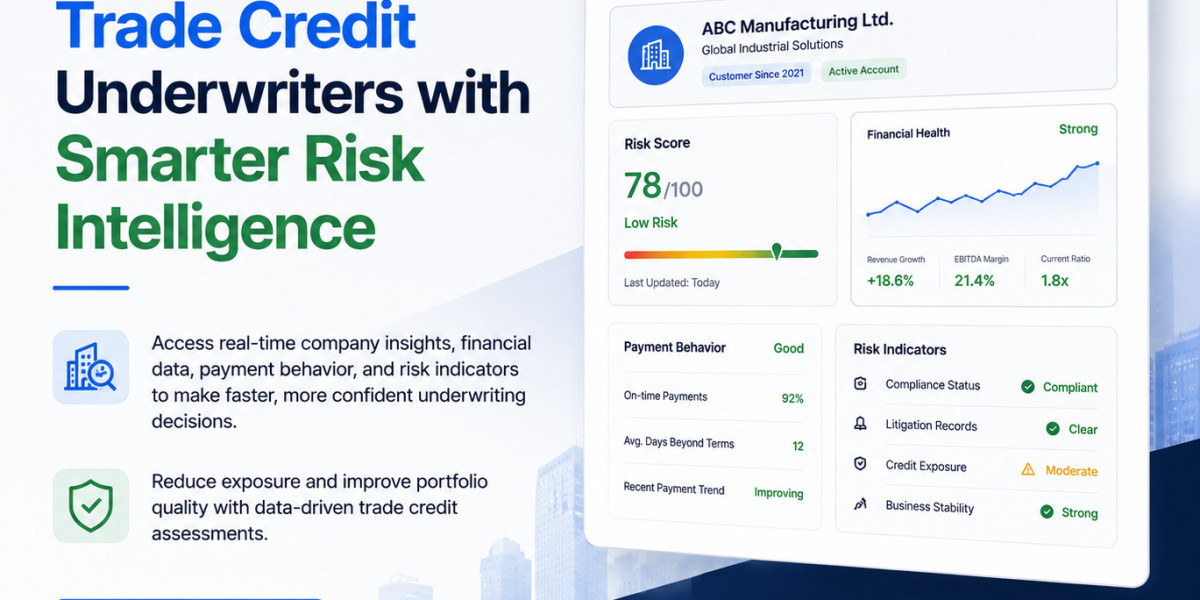

What Is SME Underwriting?
SME underwriting is the process lenders use to evaluate the creditworthiness, repayment capacity, financial health, and risk profile of small and medium-sized enterprises before approving financing.
For banks, NBFCs, fintech lenders, and other financial institutions, SME underwriting is more complex than assessing a standard consumer loan. Small businesses can have irregular cash flows, limited financial histories, seasonal revenue, multiple banking relationships, and significant dependence on business owners.
A strong underwriting process therefore needs to look beyond a single credit score or financial statement. It should provide a practical view of how the business generates cash, manages obligations, and is likely to repay the proposed facility.
Why SME Underwriting Matters
SME lending presents an important growth opportunity for financial institutions, but poor credit assessment can quickly translate into higher delinquencies, collection costs, and credit losses.
Effective SME credit underwriting helps lenders balance two objectives: approving viable businesses efficiently while controlling risk.
For example, a small manufacturer may report strong annual revenue but experience significant seasonal fluctuations. Looking only at yearly turnover could make the business appear financially stronger than it is during low-demand periods. Analysing monthly cash flows, repayment obligations, inventory cycles, and working-capital requirements can provide a more realistic assessment.
This distinction is particularly important for lenders offering working-capital loans, business loans, equipment finance, or other SME credit products.
Key Factors in SME Underwriting
Financial Health and Cash Flow
Revenue, profitability, liabilities, working capital, and cash-flow patterns are central to SME credit assessment. However, lenders should consider how these figures interact rather than evaluating them independently.
Cash-flow consistency can be especially important. A profitable business may still face repayment difficulties if receivables are delayed or cash is tied up in inventory.
Business and Promoter Profile
The strength and experience of business owners can influence the resilience of an SME. Lenders may assess business vintage, industry experience, ownership structure, management capability, and the relationship between the promoter and the business.
The objective is not simply to assess the individual owner. It is to understand the stability and operating structure of the enterprise.
Existing Credit Obligations
Existing loans, repayment behaviour, credit utilisation, and other financial commitments provide important context. A business with strong revenue but excessive leverage may have limited capacity to take on additional debt.
Credit bureau information and verified financial data can help lenders understand the borrower's existing obligations and repayment history.
Industry and Geographic Risk
SMEs can be highly sensitive to changes in their operating environment. A lender may therefore consider industry conditions, customer concentration, geographic exposure, regulatory factors, and supply-chain dependencies.
For example, a business dependent on one major customer may face greater cash-flow risk if that relationship changes.
The Role of Data in Modern SME Underwriting
Traditional SME underwriting can involve substantial document collection and manual verification. Financial statements, bank statements, tax records, business documents, credit reports, and other information may need to be reviewed before a decision is made.
Technology can make this process more efficient by consolidating permitted data sources and automating routine checks.
Digital SME underwriting can use structured financial data, transaction patterns, cash-flow analysis, and automated document processing to provide underwriters with a more consistent view of the applicant.
However, more data does not automatically mean better underwriting. Data quality, relevance, consent, security, and appropriate interpretation remain critical.
Balancing Speed and Risk
SMEs often require funding quickly, particularly when financing working capital, purchasing inventory, or managing short-term cash-flow gaps. Long approval cycles can result in lost business for both the borrower and lender.
This creates a practical challenge: how can lenders accelerate decisions without weakening risk controls?
A risk-based workflow can help. Straightforward applications that meet established criteria may move through automated checks, while complex or borderline cases can be routed to experienced underwriters.
This automated SME underwriting approach can reduce manual workload while preserving human judgement where it adds the most value.
SME Underwriting and Fraud Risk
Credit risk and fraud risk can overlap during business lending. Inaccurate financial information, identity issues, unusual transactions, or inconsistencies across submitted documents may require additional scrutiny.
Automated verification and anomaly detection can help identify applications that need further review.
For example, if reported turnover is inconsistent with verified financial information or transaction activity, the application can be flagged for investigation rather than automatically approved or rejected.
The goal should be targeted verification, not unnecessary friction for every applicant.
Improving Customer Experience Through Better Underwriting
Underwriting directly affects the borrower's experience. Repeated document requests, unclear requirements, and slow decisions can discourage SMEs from completing an application.
A well-designed process can improve this experience by clearly communicating required information, reducing duplicate requests, providing status visibility, and automating routine verification.
Faster decisions can also be commercially valuable. An SME that receives financing when it needs it is more likely to view the lender as a useful long-term financial partner.
Practical Example: Improving a Working-Capital Loan Process
Consider an NBFC receiving thousands of SME loan applications each month. Its traditional process requires manual review of financial documents and bank statements, resulting in long turnaround times.
The lender introduces a digital underwriting workflow that validates documents, analyses cash-flow patterns, checks existing obligations, and assigns applications to different risk pathways.
Low-complexity applications meeting predefined criteria can be processed faster, while exceptions receive detailed human review.
The result is not simply faster processing. The lender gains a more consistent decision framework, better allocation of underwriting resources, and improved visibility into portfolio quality.
Building an Effective SME Underwriting Framework
A strong SME underwriting process should combine financial analysis, business assessment, credit information, fraud controls, technology, and governance.
Lenders should define clear eligibility criteria, document requirements, risk thresholds, escalation rules, and approval authorities. Models and automated decision systems should also be monitored regularly to ensure they remain accurate and appropriate as market conditions and borrower behaviour change.
Most importantly, underwriting should connect with portfolio monitoring. The assumptions used to approve an SME should be tested against its actual repayment performance over time.
Conclusion
SME underwriting plays a central role in helping financial institutions expand business lending without taking unnecessary credit risk. By combining cash-flow analysis, borrower assessment, verified data, automation, and human oversight, lenders can make faster and more consistent decisions.
For banks, NBFCs, fintech companies, and other lenders, the most effective approach is not to choose between speed and risk control. Modern underwriting can support both when technology is applied to the right decisions and backed by strong governance.
FAQs
What is SME underwriting in lending?
SME underwriting is the process of evaluating a small or medium-sized business's financial health, repayment capacity, credit history, and overall risk before approving financing.
What factors do lenders consider in SME underwriting?
Lenders commonly consider cash flow, revenue, profitability, existing debt, credit history, business vintage, promoter experience, industry conditions, and other relevant business information.
How does digital SME underwriting work?
Digital SME underwriting uses technology to collect and verify permitted data, analyse financial information, apply credit rules, and route applications for automated or manual assessment.
Why is cash flow important in SME credit underwriting?
Cash flow indicates whether a business is generating sufficient funds to meet its operating expenses and debt obligations. It can provide a more practical view of repayment capacity than revenue alone.
Can automation reduce SME loan approval time?
Yes. Automated document processing, data verification, credit checks, and risk-based workflows can reduce manual effort and accelerate applications that meet predefined lending criteria.
Ubicación del Autor
Delhi