
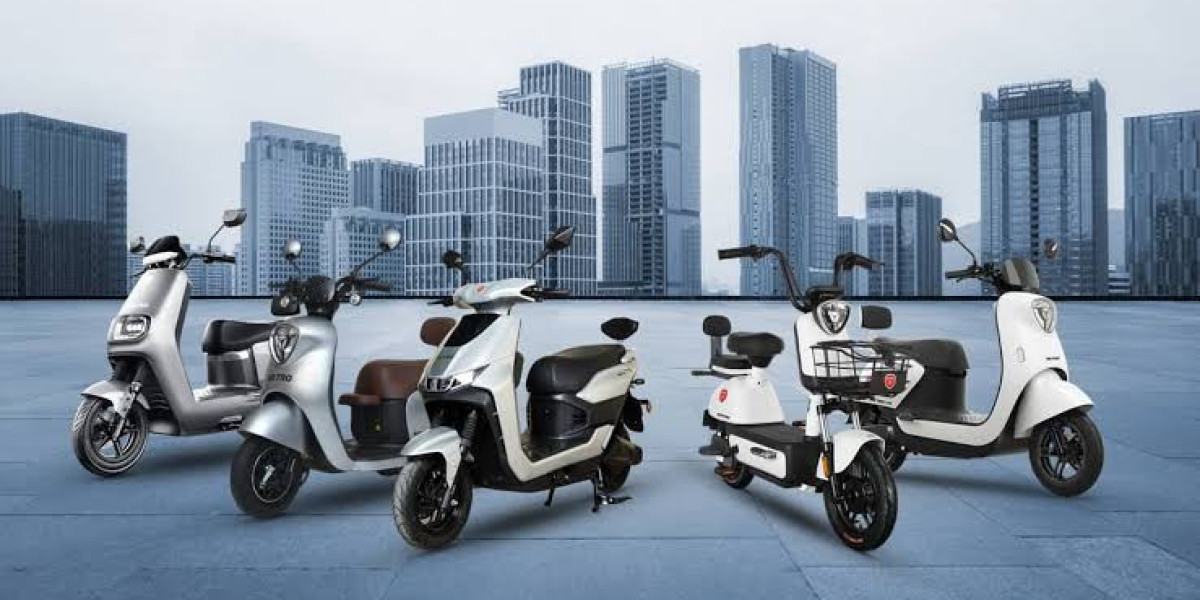

Artificial intelligence is changing the way we use cars, smartphones, cameras, and even home appliances. Now, AI is coming to electric bikes, too. What once sounded like science fiction—an e-bike that can understand how you ride, predict problems, improve battery use, and provide smarter assistance—is gradually becoming a practical possibility.
Modern e-bikes already use sensors and software to control motor assistance, monitor battery performance, and track riding information. As AI becomes more capable, these systems can become much smarter. Instead of simply responding to pedal movement, future electric bikes could analyze multiple types of information and make decisions based on the rider, road, traffic, weather, and battery condition.
Smarter Motor Assistance
One of the most obvious applications of AI in electric bikes is intelligent motor assistance. Traditional pedal-assist systems use sensors to determine factors such as pedal movement, torque, or speed and then provide a predefined level of assistance.
AI could take this much further. Imagine starting your morning commute and your e-bike gradually learning your riding style. It could understand when you normally accelerate, how much assistance you prefer on hills, and when you tend to conserve battery power.
Instead of manually switching between assistance modes, an AI-powered system could automatically adjust motor output according to the conditions. Going uphill? More assistance. Riding on a flat road? Less assistance. Approaching a crowded area? A smoother response could help provide better control.
Better Battery Management
The battery is one of the most valuable components of an electric bike, and AI could help riders use it more efficiently.
An intelligent system could analyze your speed, route, terrain, riding habits, battery condition, and historical usage to estimate how much energy you are likely to need. Rather than simply displaying an approximate battery percentage, future systems could provide more useful predictions, such as whether the remaining battery is enough to complete your planned journey.
AI could also help optimize charging. By learning your routine, an e-bike system might determine when the battery should be charged and how to manage charging in a way that supports battery health, depending on the manufacturer's battery-management system.
Predictive E-Bike Maintenance
What if your electric bike could tell you that something is likely to go wrong before it actually fails?
This is another area where AI could make a significant difference. E-bikes contain sensors that can provide information about the motor, battery, speed, temperature, and other components. An intelligent system could analyze unusual patterns and identify potential problems.
For example, if motor performance gradually changes or the battery behaves differently from its normal pattern, the system could alert the rider that professional inspection may be required.
Instead of waiting for a component to fail during a ride, riders could potentially receive an early warning. This approach is known as predictive maintenance, and it could make e-bike ownership more convenient and reliable.
AI-Powered Navigation
Navigation is another exciting possibility. Today's e-bike displays and smartphone applications can already provide route directions, but AI could make route planning more personalized.
An intelligent navigation system could consider factors such as distance, hills, traffic conditions, battery level, weather, and your riding preferences. Instead of simply finding the shortest route, it might select the route that gives you the best balance between travel time, safety, comfort, and battery consumption.
For example, if your battery is running low, the system could recommend a route with fewer steep climbs. If you prefer quieter roads, it could prioritize routes with less traffic where suitable.
Improved Safety Features
Safety could become one of the most valuable applications of AI technology in electric bikes.
Future e-bikes could potentially use cameras, sensors, GPS, and other technologies to identify nearby vehicles, pedestrians, obstacles, or unusual riding situations. An intelligent system could warn the rider when a potential hazard is detected.
AI could also help analyze riding behavior. If a system detects repeated hard braking, sudden acceleration, or unusual movements, it could provide safety suggestions.
However, AI should be viewed as an additional safety layer, not a replacement for helmets, traffic awareness, proper brakes, lights, or responsible riding.
Personalised Riding Experience
Every rider is different. Some people want maximum range, while others prioritize speed or acceleration. Some riders prefer strong motor assistance, while others want the experience to feel closer to traditional cycling.
AI could learn these preferences and personalize the e-bike accordingly. Over time, the bike could build a profile based on your riding patterns and automatically adjust certain settings.
This could make the e-bike feel less like a machine with fixed settings and more like a transportation system that adapts to its rider.
What About AI and Electric Bikes in Pakistan?
The growing interest in electric bikes in Pakistan creates an interesting opportunity for AI-powered mobility. Electric motorcycles and bicycles are increasingly being considered for daily commuting because of their potential to reduce fuel costs and provide convenient urban transportation.
For Pakistani riders, AI features could eventually be particularly useful for route planning, battery optimization, maintenance alerts, and adapting assistance to different road conditions. However, affordability will remain an important factor. Advanced sensors, cameras, processors, connectivity, and software can increase the overall cost of an e-bike.
The technology will become more useful as manufacturers find ways to bring intelligent features to affordable models rather than limiting them to expensive premium bikes.
Will AI Replace the Human Rider?
Probably not. AI can assist the rider, but the rider remains responsible for controlling the bicycle and making decisions.
The most useful future may not be an e-bike that tries to do everything automatically. Instead, it could be a bike that quietly works in the background—optimizing battery use, monitoring components, improving navigation, and warning you about potential problems while you remain in control.
Conclusion
AI is coming to electric bikes, and its impact could extend far beyond a smarter display. From adaptive motor assistance and battery optimization to predictive maintenance, navigation, personalization, and safety alerts, artificial intelligence could make e-bikes more intelligent and easier to use.
The technology is still developing, and not every AI feature will be necessary for every rider. But as sensors, software, connectivity, and battery technology continue to improve, the electric bike of the future could become much more than a bicycle with a motor. It could become a smart mobility companion that learns from its rider and helps make every journey more efficient, convenient, and enjoyable.