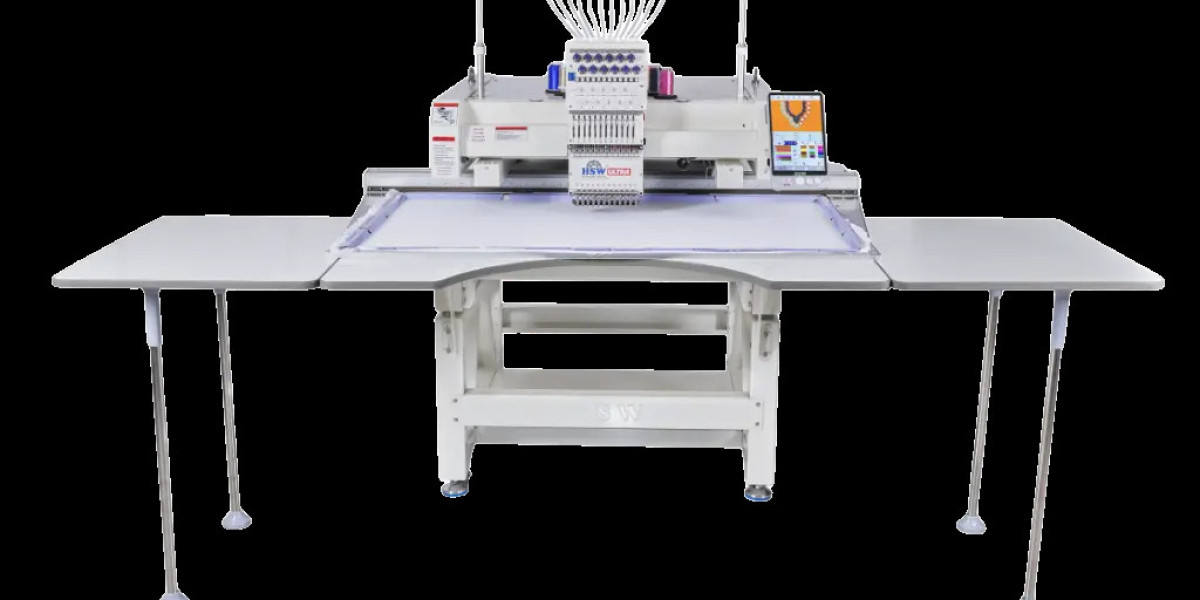

One of the most overlooked decisions when buying an embroidery machine is frame size, yet it's one of the factors that most directly determines what kind of work you can actually take on as a business. Many beginners focus heavily on speed or price and only realize the importance of frame size after they've already struggled to complete an order.
What frame size actually controls The frame area of an embroidery machine determines the maximum size of the design area you can stitch in a single hooping. A smaller frame might comfortably handle a shirt logo or cap embroidery, but the same frame would require multiple repositions to complete a full blouse back panel or a large saree border, adding time, effort, and room for alignment errors with every reposition.
Smaller frames: precision work and quick-turnaround items. Compact frame sizes are well suited to items like caps, shirt pockets, small logos, and name embroidery. These jobs don't need large stitching areas, and a smaller frame often means a more affordable machine, faster setup time, and simpler handling a practical starting point for businesses focused on smaller personalized or corporate branding work.
Mid-size frames: everyday garment versatility. For businesses handling a broader range of garment work kurtis, shirts, smaller blouse designs a mid-size frame typically strikes the best balance. It's large enough to reduce repositioning on moderately sized designs while remaining manageable in terms of machine size and cost.
Larger frames: full-garment and bulk production work. Businesses focused on full blouse embroidery, lehenga panels, or large saree work benefit significantly from bigger frame sizes, since they can complete an entire section of a garment in one continuous hooping rather than piecing it together across multiple repositions, which also improves design accuracy and consistency across the piece.
Why repositioning matters more than beginners expect: Every time a garment needs to be re-hooped to continue a design, there's a risk of slight misalignment, which can be especially noticeable on symmetrical designs or when working with intricate patterns. Choosing a frame size that comfortably fits your typical design work in as few hoopings as possible directly protects your finished product's quality and reduces production time per piece.
Matching frame size to your actual customer base. This is really the core question beginners should ask before choosing a machine: what does my typical order actually look like? A business planning to specialize in cap and shirt logo embroidery has very different frame size needs than one planning to take on saree and lehenga commissions. Buying a machine with a frame size mismatched to your real order type either limits what work you can take, or means you're paying for capacity you'll rarely use.
It's not just about the biggest frame available. There's a common misconception that a bigger frame is always the safer or more "future-proof" choice. In reality, larger frame machines tend to cost more and can be less practical for smaller, detail-focused work like caps or shirt logos, where a large working area isn't actually an advantage. The right frame size is the one that matches your realistic product mix, not necessarily the largest one on the price list.
Starting practically: For many new embroidery entrepreneurs, a well-chosen single head embroidery machine with a moderate, versatile frame size offers the best starting balance of enough range to handle a variety of garment work without overpaying for capacity that won't be used regularly. As the business grows and a clearer specialization emerges, whether that's uniform work, saree embroidery, or bulk shirt branding, a second, more specialized machine can be added rather than trying to force one frame size to do everything from day one.
Understanding frame size early, rather than treating it as a secondary spec, helps new embroidery business owners avoid one of the most common and costly mismatches between machine capability and real customer demand.
Ubicación del Autor
Surat, India