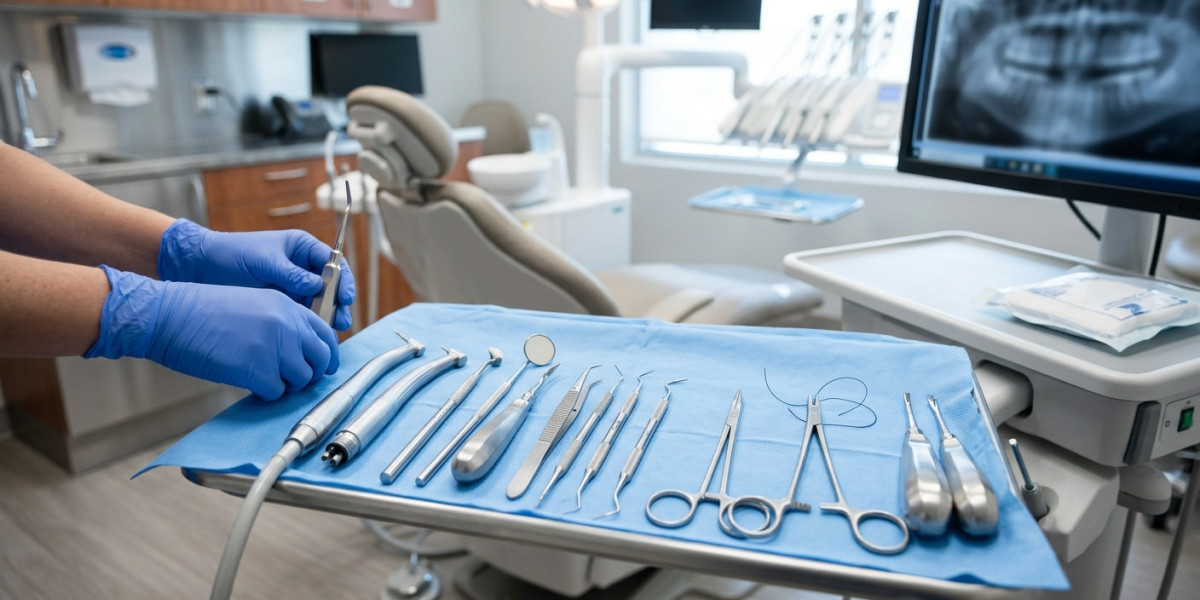

Dental treatment requires more than knowledge and experience. Dentists also need reliable tools that help them examine, treat, and manage different dental conditions. Dental surgical instruments are specially designed for procedures that involve teeth, gums, soft tissues, and other areas of the mouth. Each instrument has a specific purpose, helping dental professionals perform their work with better control and accuracy.
From routine tooth extraction to oral surgery and dental implant procedures, these tools are used in many areas of dental care. The right instrument can make a procedure easier to manage and help the dentist work in a controlled manner. Understanding the uses of dental surgical instruments can help dental clinics choose the right tools for their daily needs.
What Are Dental Surgical Instruments?
Dental surgical instruments are specialized tools used by dentists and oral surgeons during dental and surgical procedures. They are designed to perform tasks such as cutting, gripping, lifting, holding, separating, removing, and stitching tissues.
Common examples include extraction forceps, elevators, dental scalpels, retractors, tissue forceps, surgical scissors, and needle holders. Each instrument is made for a particular task, and its size and shape may vary depending on the procedure.
Most professional dental tools are made from stainless steel because it is strong, durable, and suitable for repeated cleaning and sterilization when handled according to the manufacturer's instructions.
Uses in Tooth Extraction
One of the most common uses of dental surgical instruments is tooth extraction. Dentists may need to remove a tooth because of severe decay, damage, infection, crowding, or other dental problems.
Extraction forceps are used to grip and remove teeth. Different forceps are designed for different teeth and positions in the mouth. Elevators may be used before forceps to loosen the tooth or root from the surrounding area.
The correct tools allow dentists to maintain better control during extraction. This can help make the procedure more organized and reduce the need for unnecessary force.
Uses in Oral Surgery
Oral surgery often requires several specialized tools. Dentists and oral surgeons use instruments to manage tissues, make controlled cuts, remove teeth or tissue, and close the treatment area.
Retractors can help move soft tissue away from the surgical area, giving the professional better access and visibility. Scalpels are used when a controlled cut is required, while tissue forceps can help hold soft tissues during treatment.
After surgery, scissors and needle holders may be used to manage sutures. These tools support different stages of the procedure and help the dental professional work in a more controlled way.
Uses in Gum Treatment
Dental surgical instruments are also useful during procedures involving the gums. Gum treatment may require careful handling of soft tissue and removal of unwanted material from affected areas.
Specialized curettes and tissue-handling instruments can help dental professionals work around the gums. The design of these tools allows dentists to reach specific areas while maintaining control.
Proper instrument selection is especially important because gum tissue can be sensitive. Suitable tools can help professionals perform treatment carefully and efficiently.
Uses in Dental Implant Procedures
Dental implants require careful planning and precise clinical work. During implant procedures, dental professionals may use different instruments to prepare the treatment area and manage surrounding tissues.
Surgical tools can be used for making controlled openings, handling soft tissues, and placing or managing components during the procedure. The exact instruments required depend on the implant method and the dentist's treatment plan.
Reliable tools can support the dentist throughout different stages of implant treatment. Proper handling and sterilization are also important because implant procedures require a clean clinical environment.
Uses in Tissue Handling
Soft tissue often needs to be held, moved, or protected during dental procedures. Tissue forceps and retractors are commonly used for these tasks.
Tissue forceps allow dental professionals to hold tissue carefully when required. Retractors help keep tissues away from the working area, improving access and visibility.
These instruments are useful in oral surgery, gum procedures, and other treatments where soft tissue needs to be managed. Their design helps professionals work within a limited space inside the mouth.
Uses for Cutting and Trimming
Some dental procedures require controlled cutting of tissue or other materials. Dental scalpels and surgical blades are used for precise cuts, while scissors can be used for cutting tissue or sutures depending on their design.
The shape and sharpness of the instrument are important for controlled work. Dentists should select instruments that are suitable for the specific procedure and follow proper safety and handling practices.
Using appropriate surgical instruments can help professionals complete cutting and trimming tasks with greater control.
Uses in Suturing
After certain dental surgeries, stitches may be required to close the treatment area. Needle holders are designed to hold surgical needles securely, allowing the dentist to place sutures with controlled movements.
Surgical scissors may then be used to cut the suture material to the required length. These instruments help make the closing stage of a procedure more manageable.
Good-quality needle holders should provide a secure grip and smooth movement. This is important because suturing often requires small and careful hand movements.
Uses in Impacted Tooth Removal
Impacted teeth, particularly wisdom teeth, may require surgical removal. These procedures can be more involved than a simple extraction because the tooth may be partly or fully covered by gum or bone.
Dentists and oral surgeons may use retractors, scalpels, elevators, forceps, surgical scissors, and other specialized tools during the procedure. Each instrument has a specific role in gaining access to the tooth and managing the treatment area.
The right combination of tools can help the professional perform the procedure in a controlled manner.
Uses in Dental Examination and Treatment Support
Although some dental instruments are mainly associated with surgery, other tools support examination and treatment preparation. Dental mirrors, probes, and explorers help professionals examine teeth and surrounding areas.
These instruments can help identify problems before a surgical procedure is planned. Proper examination allows the dentist to understand the condition of the treatment area and select suitable tools.
This shows that dental instruments are not limited to one type of treatment. Different tools work together to support the complete dental care process.
Uses in Emergency Dental Care
Dental instruments can also be used when urgent treatment is required. Broken teeth, dental injuries, severe infections, and other conditions may require quick professional attention.
Dentists need suitable instruments to examine the affected area and perform the required treatment. Having a properly maintained set of dental tools available can help clinics respond to different clinical needs.
Importance of Proper Instrument Selection
Choosing the correct instrument is important for every dental procedure. A tool should match the task, treatment area, and needs of the dental professional. Size, shape, grip, material, and working end are all factors that can affect instrument performance.
Clinics should also make sure their tools are properly cleaned, sterilized, stored, and inspected. Damaged instruments should not be used because they may affect the quality and safety of a procedure.
Reliable suppliers can help dental practices select suitable dental surgical instrument solutions for different treatment needs. These solutions can include instruments for extraction, oral surgery, implant procedures, gum treatment, and tissue management.
Benefits of Having a Complete Instrument Range
A dental clinic that has a suitable range of instruments can handle different procedures more efficiently. Having the required tools available reduces the need to delay treatment because of missing equipment.
A complete instrument range can also help dental professionals work more smoothly. When each tool is designed for a specific purpose, the dentist can select the appropriate instrument instead of depending on one general-purpose tool.
This is especially useful for clinics that provide several types of dental and oral surgical treatments.
Conclusion
Dental surgical instruments have many uses across modern dental care. They support tooth extraction, oral surgery, gum treatment, dental implants, tissue handling, suturing, impacted tooth removal, and other procedures. Each tool is designed to perform a specific task and provide dentists with better control during treatment.
Choosing high-quality instruments and maintaining them correctly is essential for consistent clinical use. Dental practices can also work with reliable suppliers to develop suitable dental surgical instrument solutions based on their procedures and daily needs. As dental care continues to develop, dependable surgical instruments will remain an important part of effective and organized dental treatment.