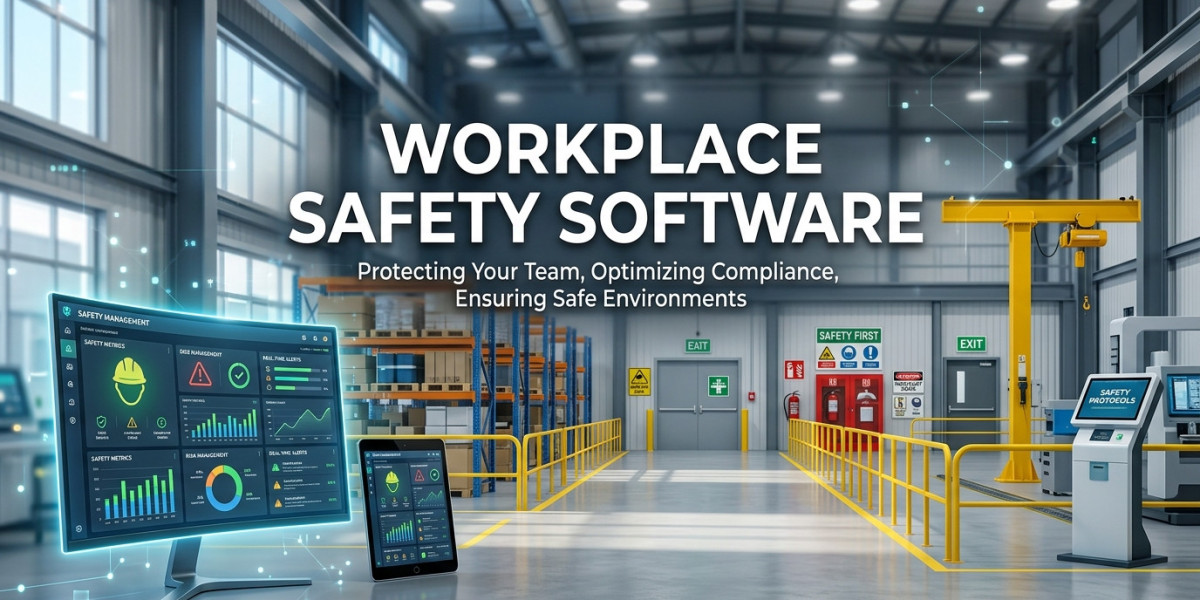

Workplace Safety Software helps businesses manage safety activities, identify workplace risks, record incidents, and maintain safer working conditions through one connected system. When safety teams depend on paper forms, spreadsheets, emails, and separate files, important information can be missed or delayed. A digital safety platform gives you a more organized way to manage inspections, hazards, corrective actions, training records, and safety reports. It also helps employees, supervisors, and managers work together on safety responsibilities.
What Is Workplace Safety Software
Workplace Safety Software is a digital solution designed to support the daily safety activities of an organization. It helps safety teams collect information, manage safety tasks, track workplace incidents, and monitor whether required actions have been completed.
Depending on the software, businesses may use it to manage
- Workplace safety inspections
- Hazard identification
- Risk assessments
- Incident reporting
- Corrective actions
- Safety audits
- Employee safety training
- Safety documents
- Compliance records
- Emergency preparedness
- Safety performance reports
The main purpose is to bring safety information into one accessible system. Instead of searching through different files, safety managers can review important records from a central dashboard.
Why Modern Safety Operations Need Digital Tools
Safety operations involve many activities that must be completed regularly. A company may need to inspect equipment, review work areas, investigate incidents, check employee training, and follow up on corrective actions.
When these tasks are handled manually, several problems may occur.
- Inspections may be missed
- Hazard reports may remain unresolved
- Incident information may be incomplete
- Corrective actions may be forgotten
- Safety records may be difficult to find
- Managers may not receive timely reports
- Employees may not know the status of reported issues
Modern safety operations need clear communication and reliable records. Digital software can help teams organize these responsibilities and make sure safety information reaches the right people.
Workplace Risk Management
Workplace risk management is one of the most important parts of any safety program. It involves identifying possible hazards, assessing the level of risk, and deciding what actions are needed to control those risks.
Workplace Safety Software can support this process by helping teams record
- Hazard descriptions
- Risk levels
- Affected work areas
- Responsible employees
- Recommended controls
- Due dates
- Corrective action status
- Review dates
For example, if a supervisor notices a damaged electrical cable, they can record the hazard in the system. The safety team can then assign the issue to the responsible department and set a deadline for correction.
This creates a clear record from the first report to the final resolution.
Hazard Management Software For Safer Work Areas
Hazards can appear in almost every working environment. Construction sites, factories, warehouses, offices, hospitals, and retail locations all have different safety concerns.
Hazard management software helps businesses record and manage these concerns in a structured way.
Common workplace hazards may include
- Slippery floors
- Unsafe machinery
- Electrical problems
- Poor lighting
- Blocked emergency exits
- Chemical exposure
- Manual handling risks
- Fire safety issues
- Unsafe work practices
- Inadequate protective equipment
Employees should have a simple way to report hazards when they notice them. If the reporting process is difficult, workers may ignore small issues until they become serious.
A digital reporting form can make it easier for employees to share information, attach photos, and describe the location of the problem.
Safety Inspection Software
Regular inspections help businesses identify unsafe conditions before they cause injuries or damage. However, inspection quality can suffer when teams use inconsistent forms or forget important checkpoints.
Safety inspection software can help standardize inspection activities.
Safety managers can create inspection checklists for different areas, equipment, and work activities.
For example, a warehouse inspection may include checks for
- Storage rack condition
- Emergency exits
- Fire extinguishers
- Forklift safety
- Floor conditions
- Lighting
- Personal protective equipment
- Material stacking
- Housekeeping
Once an inspection is completed, the system can record the findings and create follow up tasks.
This helps ensure that inspections are not treated as simple paperwork. The results can be connected to real safety actions.
Incident Management Software
Workplace incidents should be reported and reviewed carefully, even when no serious injury occurs. Near misses can also provide useful information because they may reveal a problem before someone gets hurt.
Incident management software helps safety teams record and investigate incidents through a consistent process.
A report may include
- Date and time
- Incident location
- People involved
- Incident description
- Witness information
- Injury details
- Property damage
- Immediate actions
- Root cause findings
- Corrective actions
A digital incident process can help teams move from reporting to investigation and resolution.
For example, after a near miss involving a forklift, the safety team may review traffic routes, employee training, equipment condition, and workplace layout. The findings can then be used to reduce the chance of a similar event happening again.
Managing Corrective Actions
Reporting a hazard or incident is only the beginning. The issue must also be corrected.
Corrective action management helps businesses assign responsibilities and track progress until the required action is complete.
A corrective action record may include
- Description of the issue
- Assigned person
- Department
- Priority level
- Target completion date
- Required action
- Supporting documents
- Completion status
- Verification details
Without a tracking system, corrective actions can remain open for too long.
Workplace Safety Software can send reminders, show overdue tasks, and help managers review which departments have completed their responsibilities.
This creates more accountability across the organization.
Supporting Safety Compliance
Safety compliance software helps businesses maintain records related to internal safety policies, industry requirements, audits, and regulatory responsibilities.
Compliance requirements vary depending on the country, industry, work environment, and type of activity. A company should always review the requirements that apply to its operations.
A digital safety platform can support compliance by organizing
- Safety policies
- Inspection records
- Training certificates
- Audit findings
- Incident reports
- Risk assessments
- Corrective action records
- Equipment checks
- Emergency procedures
When an audit takes place, employees can find relevant records more easily instead of collecting documents from different departments.
Digital records do not automatically guarantee compliance, but they can make it easier to demonstrate that safety activities are being performed and reviewed.
Employee Safety Training Records
Training is an important part of workplace safety. Employees need suitable instruction before performing tasks that involve machinery, chemicals, heights, vehicles, or other risks.
Workplace Safety Software can help businesses organize employee training information.
Records may include
- Employee name
- Training topic
- Training date
- Trainer details
- Assessment results
- Certificate information
- Renewal date
- Required refresher training
The system can also help managers identify employees whose training is expired or approaching its renewal date.
This is useful for businesses with large teams or multiple work locations because it can be difficult to monitor training records manually.
Improving Communication Between Teams
Safety responsibilities are shared across the organization. Employees report hazards, supervisors review work areas, safety officers investigate issues, and managers approve resources or corrective actions.
Poor communication can delay important safety decisions.
Workplace Safety Software can improve communication by giving relevant employees access to the same information.
For example
- An employee reports a workplace hazard.
- The supervisor receives the report.
- The safety team reviews the risk.
- A responsible department is assigned.
- The corrective action is completed.
- The safety team verifies the result.
Everyone involved can see the status of the issue according to their access permissions.
This reduces the need for repeated emails and unnecessary follow up calls.
Safety Reports And Performance Monitoring
Safety reports help management see whether the safety program is working effectively.
Workplace Safety Software may provide reports related to
- Number of reported incidents
- Near miss reports
- Open hazards
- Completed inspections
- Overdue corrective actions
- Training completion
- Audit findings
- Incident trends
- Department performance
- High risk work areas
These reports can help managers make decisions based on actual safety information.
For example, if one department reports repeated manual handling incidents, management may review staffing, equipment, work methods, and training.
Reports should not be used only to count incidents. They should help teams identify patterns and take practical action.
Mobile Access For Field Safety Teams
Many safety activities take place outside a main office. Safety officers may work at construction sites, warehouses, production areas, facilities, or customer locations.
Mobile access can make safety software more useful for these teams.
With a suitable mobile application, employees may be able to
- Complete inspections
- Report hazards
- Upload photos
- Record incident details
- Review assigned tasks
- Check safety procedures
- Update corrective action status
This allows information to be recorded closer to where the activity happens.
It also reduces the need to complete paper forms first and enter the information into a system later.
Security And Safety Data Management
Safety records can contain sensitive information about employees, incidents, injuries, equipment, and business operations. Businesses should select software with suitable security and access controls.
Useful features may include
- User permissions
- Role based access
- Secure login
- Activity history
- Data backup
- Document control
- Controlled report access
For example, employees may only need permission to report hazards, while safety managers may need access to investigations and compliance reports.
Clear access rules help protect information and reduce the chance of unauthorized changes.
Choosing Workplace Safety Software
When selecting Workplace Safety Software, businesses should consider their safety goals, workforce size, industry, and existing processes.
Important areas to review include
Ease Of Use
Employees should be able to report hazards and complete safety tasks without unnecessary difficulty.
Flexible Workflows
The system should support different inspection forms, incident types, approval processes, and corrective action rules.
Mobile Functionality
Field teams should be able to use the software where safety activities take place.
Reporting
Managers should receive clear reports that help them identify risks and monitor progress.
Integration
The software should connect with relevant HR, maintenance, asset management, or enterprise systems where needed.
Scalability
The system should support additional employees, departments, sites, and safety activities as the business grows.
Security
Safety and employee information should be protected through suitable technical controls.
How To Implement Workplace Safety Software
A successful implementation begins with a review of current safety processes.
Businesses can follow these steps
- Identify the main safety problems.
- List current inspection and reporting activities.
- Review existing safety documents.
- Select software that fits the organization.
- Configure safety forms and workflows.
- Set user roles and permissions.
- Import important records.
- Train employees and supervisors.
- Test the reporting and approval process.
- Monitor results after launch.
It is often better to begin with a few important workflows, such as hazard reporting and safety inspections. Once employees become comfortable with the system, the business can add incident management, training records, audits, and advanced reporting.
Final Thoughts On Workplace Safety Software
Workplace Safety Software can help businesses build a more organized approach to modern safety operations. By bringing hazard reporting, inspections, incident management, corrective actions, training records, and compliance documents into one platform, safety teams can reduce manual work and improve communication.
Workplace risk management becomes easier when hazards are recorded clearly and assigned to responsible employees. Safety inspection software helps standardize inspections, while incident management software supports consistent reporting and investigation. Safety compliance software also helps businesses maintain records that may be required for internal reviews and external audits.
The right system should be simple for employees, practical for safety managers, and useful for business leaders. When safety information is available at the right time, teams can respond faster, track responsibilities, and take meaningful steps toward safer working conditions.
Ubicación del Autor
Suite 215, ZBC Building 40 Street Jeddah, Saudi Arabia