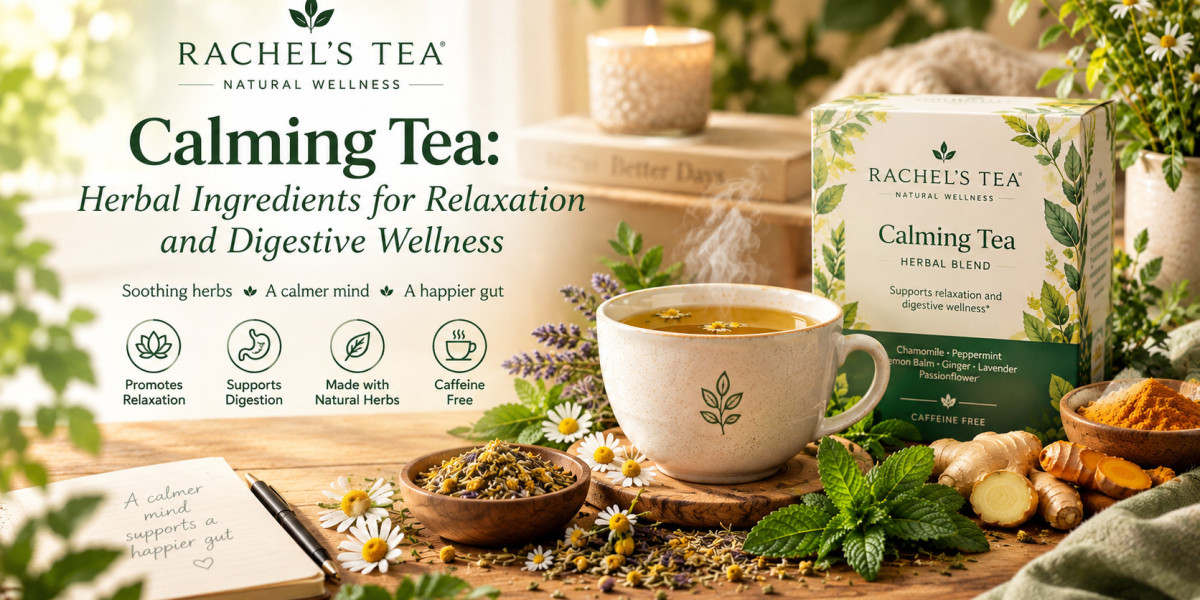

A busy day can make it difficult to slow down. Between work, meals, responsibilities, and screen time, many people look for a simple ritual that creates a little space to relax. A warm cup of calming tea can be an easy addition to an evening routine, especially when you prefer a caffeine-free herbal beverage.
Beyond relaxation, certain herbs commonly used in calming teas are also associated with traditional digestive wellness. This makes herbal tea a natural fit for people who want to combine a relaxing beverage ritual with everyday digestive care.
What Makes a Tea Calming?
The experience of drinking tea involves more than its ingredients. Preparing a warm beverage, taking a few minutes away from distractions, and slowly enjoying the cup can all contribute to a relaxing routine.
For an herbal tea, ingredients such as chamomile are particularly popular because of their mild flavor and traditional use in relaxing beverages.
Choosing a caffeine-free blend can also make sense for an evening routine, since caffeine may interfere with sleep for some people.
Chamomile for a Relaxing Evening
Chamomile is one of the most recognizable ingredients in herbal calming teas. Its delicate floral flavor makes it easy to enjoy on its own or alongside other botanicals.
Traditionally, chamomile has been used in beverages intended for relaxation and general comfort. A cup of chamomile tea can therefore become part of a nighttime ritual when you want something warm without caffeine.
Chamomile is not a treatment for anxiety, insomnia, or other medical conditions, but it can provide a pleasant beverage experience as part of a healthy routine.
Ginger Brings Warmth to the Cup
Ginger may not be the first ingredient people associate with relaxation, but its warm flavor makes it a useful addition to herbal blends. Ginger has also been traditionally used in digestive preparations.
For people who like to have a warm beverage after dinner, a blend containing ginger can combine a comforting flavor with a digestive-focused tea routine.
The strength of ginger matters, however. Some people prefer a mild preparation, particularly when drinking tea in the evening.
Fennel for an After-Meal Ritual
Fennel seeds have traditionally been enjoyed after meals and are commonly found in digestive herbal preparations. Their naturally sweet and aromatic flavor can balance stronger herbs in a blended tea.
If your preferred evening routine includes a post-meal beverage, fennel can be a flavorful addition to a stress relief tea designed around both relaxation and digestive comfort.
Peppermint: Refreshing but Individual
Peppermint creates a cooling, refreshing cup and is widely used in traditional digestive teas. It can make an herbal blend taste lighter and more refreshing after a meal.
However, peppermint may aggravate heartburn or acid reflux in some people. If you are prone to reflux, pay attention to your individual response before making peppermint tea part of your evening routine.
The Connection Between Relaxation and Digestion
Stress and digestion are closely connected through communication between the brain and digestive system. When you're tense or rushed, you may also eat quickly, overlook hunger cues, or develop habits that don't support comfortable digestion.
A regular comfort tea ritual does not directly treat stress-related digestive conditions, but it can encourage you to pause and slow down.
For example, instead of drinking a beverage while working or scrolling through your phone, you might set aside a few minutes to sit comfortably and enjoy your tea. That small change can make the beverage feel like a deliberate wellness ritual rather than just another drink.
Choosing the Right Herbal Blend
When shopping for calming tea, consider more than the name on the package.
Look for:
Naturally caffeine-free ingredients
A flavor profile you genuinely enjoy
Clearly listed herbs
Minimal unnecessary additives
Ingredients appropriate for your personal sensitivities
A blend that fits your preferred time of day
Rachel’s Tea Digestive Relief Tea includes chamomile, ginger, fennel, peppermint, slippery elm, marshmallow leaf, turmeric, and wild yam root. Its caffeine-free formula can fit into a digestive wellness routine, particularly for people who enjoy herbal beverages after meals.
Because individual responses vary, review the ingredient list carefully and consider any known allergies, medications, or sensitivities.
Simple Ways to Create a Calming Tea Ritual
You don't need an elaborate routine to enjoy herbal tea. Try preparing your cup at approximately the same time each evening. Give yourself a few minutes without multitasking, and drink it slowly.
You can also pair tea with other relaxing habits such as reading, journaling, gentle stretching, or simply sitting somewhere quiet.
The goal is consistency rather than complexity.
When Stress or Digestive Symptoms Need Professional Support
A calming beverage can be part of everyday wellness, but it should not replace professional care for persistent stress, sleep problems, anxiety, or digestive symptoms.
If digestive discomfort is frequent, severe, or accompanied by symptoms such as unexplained weight loss, vomiting, blood in the stool, persistent abdominal pain, or significant changes in bowel habits, speak with a healthcare professional.
Likewise, persistent sleep or stress-related problems may benefit from appropriate medical or mental health support.
Final Thoughts
Calming tea can turn an ordinary beverage into a simple daily ritual for slowing down. Herbal ingredients such as chamomile, ginger, and fennel can provide appealing flavors and are traditionally associated with relaxation or digestive comfort, while peppermint offers a refreshing option for people who tolerate it well.
The best approach is to choose a caffeine-free blend that suits your individual preferences and make it part of a broader routine that includes healthy eating, adequate hydration, regular movement, and time to unwind. To buy calming tea visit Rachel’s Tea.