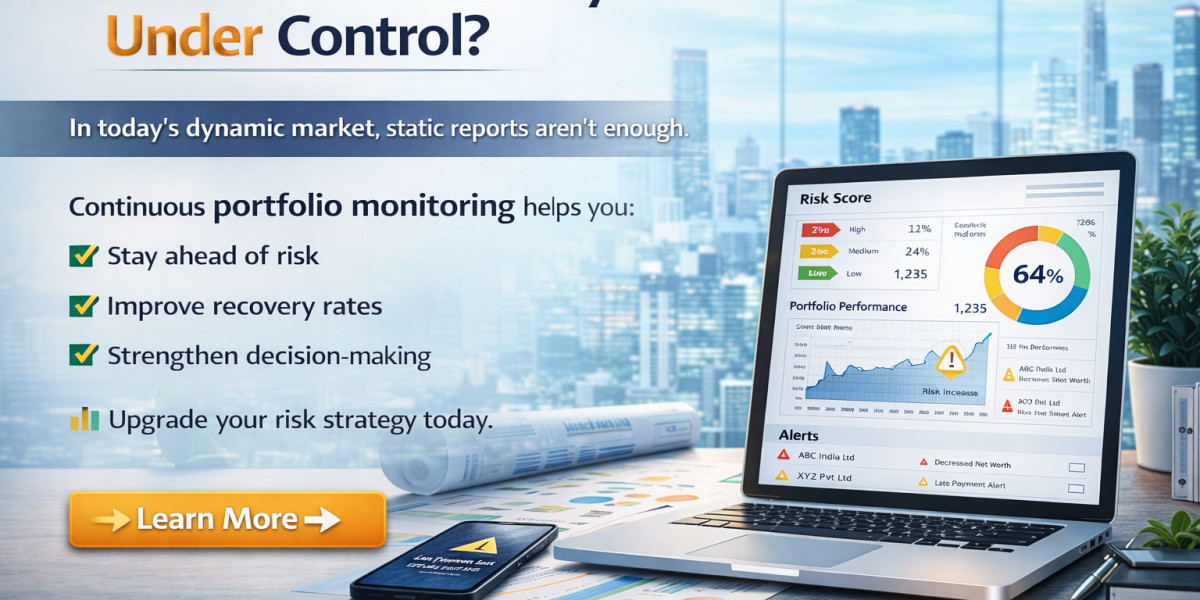

Approving a loan or adding a customer to a financial portfolio is only the beginning of the credit relationship. A borrower's financial position, ownership, compliance status, and business environment can change significantly after approval. Without regular visibility into these changes, lenders may discover emerging risks only after they begin affecting repayment.
Portfolio Monitoring provides a structured approach to tracking borrowers, customers, counterparties, or investments after onboarding or credit approval. For banks, NBFCs, fintech lenders, insurers, and corporate finance teams, effective monitoring can support early risk identification, timely reviews, and better portfolio management.
What Is Portfolio Monitoring?
Portfolio Monitoring is the ongoing process of tracking businesses or financial exposures to identify changes that could affect risk, performance, or compliance.
Instead of reviewing a borrower only when a loan comes up for renewal, lenders can continuously track relevant business signals. These may include:
- Financial performance
- Company status
- Compliance information
- Litigation and legal matters
- Directors and ownership
- Business relationships
- Credit or repayment indicators
- Industry and market developments
The objective is to identify meaningful changes early and determine whether further investigation or action is required.
Why Is Portfolio Monitoring Important?
Credit Risk Does Not Remain Static
A company that meets underwriting requirements today may have a different risk profile six or twelve months later. Revenue may decline, debt may increase, management may change, or legal issues may emerge.
Ongoing monitoring gives credit teams an opportunity to identify these developments instead of relying entirely on historical information.
Better Risk Prioritization
Large financial institutions may have thousands of borrowers and counterparties. Reviewing every account manually at the same frequency can be inefficient.
Portfolio monitoring systems can help prioritize accounts based on changes and risk indicators, allowing credit professionals to focus their attention where it is most needed.
Faster Response to Emerging Problems
Early identification gives lenders more time to investigate an issue, contact the borrower, reassess exposure, or adjust monitoring frequency.
Key Areas Covered in Portfolio Monitoring
1. Financial Performance
Financial trends can provide important insight into a company's changing position. Lenders may track revenue, profitability, debt, liquidity, cash flow, and other available indicators.
For example, a borrower showing declining revenue for several reporting periods may warrant closer review, particularly if its outstanding exposure is significant.
2. Company and Compliance Changes
Changes in company status, statutory information, filings, or regulatory compliance can affect the overall risk profile.
Monitoring these changes helps lenders identify situations where a previously approved borrower may require updated due diligence.
3. Litigation and Legal Developments
New lawsuits, disputes, or regulatory proceedings can create financial or operational uncertainty.
A monitoring system can alert relevant teams when significant legal developments occur, allowing them to assess the potential impact on the relationship.
4. Director and Ownership Changes
Changes in directors, promoters, ownership, or control may be relevant to credit and counterparty risk.
For example, the resignation of a key director or a significant change in ownership may trigger additional review, particularly when the individual or entity has a major role in the business.
Early Warning Signals in Portfolio Monitoring
One of the most valuable functions of modern portfolio monitoring is identifying early warning signals.
An early warning signal does not necessarily mean that a borrower will default. Instead, it indicates a change that deserves attention.
Potential signals can include:
- Significant deterioration in financial performance
- New or increasing legal disputes
- Changes in company status
- Major management changes
- Ownership restructuring
- New financial charges
- Compliance concerns
- Unusual changes in business activity
The importance of each signal depends on the borrower, industry, exposure, and overall risk context.
Portfolio Monitoring for Banks and NBFCs
Banks and NBFCs can use portfolio monitoring throughout the lending lifecycle.
After loan origination, monitoring can help credit teams track borrowers until repayment or renewal. Accounts showing significant changes can be moved into enhanced review, while stable accounts can continue under standard monitoring.
For MSME and SME portfolios, this can be particularly useful because business conditions may change quickly and financial information may not always be available at the same frequency as for larger companies.
Portfolio Monitoring for Fintech Lenders
Fintech lenders typically operate with high transaction volumes and digital lending workflows. Automated monitoring can help them maintain visibility without creating a large manual workload.
A fintech lender, for example, could configure alerts for significant company changes, compliance events, litigation, ownership changes, or financial deterioration. Credit teams can then investigate flagged accounts rather than manually reviewing every borrower.
Role of Business Intelligence
Portfolio monitoring becomes more useful when it is supported by reliable business intelligence.
A company profile can provide context around financial performance, directors, ownership, charges, litigation, compliance, and related entities. Combining these data points helps lenders understand why a particular account may require attention.
For example, a decline in financial performance may have a different significance if the company has also taken on substantial new liabilities or experienced a major management change.
From Monitoring to Portfolio-Level Risk Management
Monitoring individual borrowers is only one part of the process. Financial institutions also need to understand broader portfolio patterns.
Portfolio-level analysis can help identify concentration by industry, geography, borrower type, or connected entities. This can help risk teams understand where multiple exposures may be affected by similar developments.
For example, if several borrowers within the same sector experience deteriorating business conditions, the lender may decide to increase monitoring frequency across that segment.
Best Practices for Effective Portfolio Monitoring
Organizations should establish clear monitoring policies based on exposure and risk level.
Important practices include:
- Define which signals require monitoring
- Set clear alert and escalation criteria
- Segment borrowers by risk and exposure
- Use reliable and regularly updated data
- Connect monitoring with credit workflows
- Document actions taken after significant alerts
- Periodically review whether monitoring rules remain relevant
Automation should support—not replace—professional judgment. Not every alert represents a material risk, so credit teams should evaluate the context before taking action.
FAQs
What is Portfolio Monitoring?
Portfolio Monitoring is the continuous tracking of borrowers, customers, counterparties, or other exposures to identify changes that may affect financial, credit, legal, or compliance risk.
Why is Portfolio Monitoring important for lenders?
It helps lenders identify emerging risk after credit approval and prioritize accounts that may require additional review.
What are early warning signals in Portfolio Monitoring?
Early warning signals are changes such as financial deterioration, litigation, ownership changes, compliance issues, or new liabilities that may indicate a need for closer assessment.
How does Portfolio Monitoring help banks and NBFCs?
It provides ongoing visibility into borrowers and can help credit teams prioritize reviews, investigate significant changes, and manage portfolio exposure more effectively.
Can Portfolio Monitoring be automated?
Yes. Technology can automate data collection, change detection, alerts, and reporting while allowing credit professionals to make the final assessment and determine appropriate action.
Conclusion
Portfolio Monitoring has become an important part of modern credit risk management because borrower risk can change long after the initial underwriting decision. Continuous visibility into financial, legal, compliance, ownership, and business developments can help lenders identify potential concerns earlier.
For banks, NBFCs, fintech companies, insurers, and corporate finance teams, the objective is not to react to every change. It is to identify meaningful signals, understand their context, and focus attention on exposures that may require action. When supported by reliable business intelligence and clear escalation processes, portfolio monitoring can contribute to stronger risk management and more informed portfolio decisions.
Ubicación del Autor
Delhi