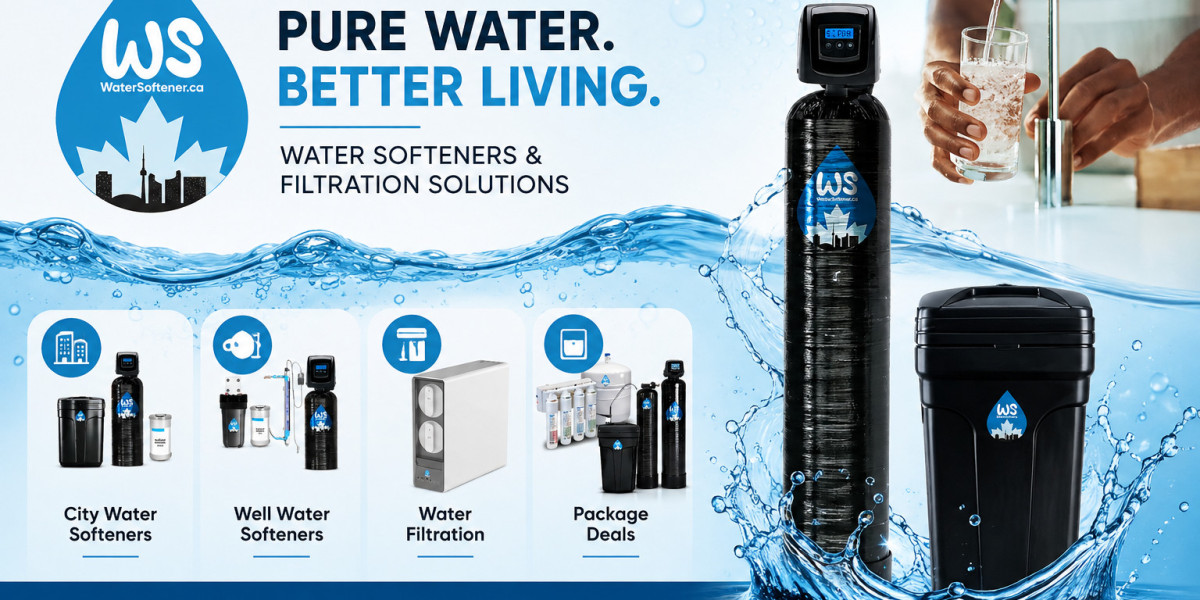

Water is one of the most frequently used resources in any household, yet many homeowners do not think about its mineral content until problems begin to appear. Water that looks completely clear can contain substantial amounts of calcium and magnesium. When these minerals are present in higher concentrations, they can create hard water, which may contribute to limescale, soap residue, appliance buildup, and plumbing maintenance challenges. A modern Water Softener can help manage these concerns by reducing the minerals responsible for water hardness before the water travels throughout the home.
For homeowners exploring residential water treatment solutions, Water Softener Canada provides valuable information about hard water and the technologies used to manage it. Understanding how a softening system operates, what it can accomplish, and how it should be selected can help property owners approach water treatment with greater confidence.
Why Water Quality Matters Inside a Home
Household water is used for far more than drinking. It flows through showers, sinks, toilets, washing machines, dishwashers, water heaters, and numerous other fixtures and appliances. Because water comes into contact with so many surfaces, its mineral composition can have a noticeable effect on household maintenance.
When water contains elevated levels of calcium and magnesium, those minerals can remain behind as water evaporates. The result may be a layer of mineral residue on faucets, shower doors, sinks, and other surfaces.
The effects can also occur inside appliances and plumbing components where deposits are difficult to see. Over time, mineral accumulation can become a recurring maintenance concern.
What Causes Hard Water?
Hard water is primarily caused by dissolved calcium and magnesium. These minerals are naturally present in many geological formations. As groundwater travels through soil and rock, it can dissolve minerals and carry them into wells and water supplies.
The hardness of water depends on the geological environment and source of the water. This means that water quality can vary significantly between regions.
Some households may experience only mild hardness, while others may have water with considerably higher mineral content. Testing the water is therefore an important way to determine the actual hardness level before choosing a treatment system.
How a Water Softener Treats Hard Water
A Water Softener is specifically designed to reduce hardness minerals. Most traditional residential softeners rely on ion exchange technology.
The system contains a tank filled with small resin beads. When hard water enters the tank, calcium and magnesium ions are attracted to the resin. The resin exchanges these ions for sodium or potassium, reducing the concentration of hardness minerals in the treated water.
Once the resin has collected a certain amount of hardness minerals, it needs to be regenerated. During regeneration, a brine solution passes through the resin and removes the accumulated minerals. The system then rinses the resin and prepares it for another treatment cycle.
Modern systems can automate this process, allowing regeneration to occur based on actual water usage.
Understanding Limescale Formation
Limescale is one of the most obvious consequences of hard water. It commonly develops when mineral-rich water dries on a surface or is heated.
Faucets and showerheads are frequently affected because water droplets can remain on their surfaces. Over time, these droplets evaporate and leave mineral deposits behind.
Limescale can also occur in hot water appliances. Water heaters, dishwashers, and other equipment that heats water can provide conditions that encourage mineral precipitation.
Reducing hardness can help lower the amount of mineral material available to form new scale.
How Hard Water Influences Household Cleaning
Cleaning is often one of the areas where homeowners notice hard water most clearly. Mineral-rich water can interact with soap and cleaning products, contributing to residue on surfaces.
Bathroom surfaces may develop a combination of soap scum and mineral deposits. Shower glass can become cloudy, while sinks and taps may require frequent cleaning to maintain their appearance.
With softened water, there are fewer hardness minerals available to interact with soap. This can make some cleaning tasks easier and may reduce the amount of mineral residue left behind.
Although cleaning results vary according to the household and products used, managing water hardness can be a practical part of reducing recurring buildup.
The Effect of Hard Water on Laundry
Laundry is another area where water hardness can influence everyday results. Calcium and magnesium can interact with detergent and affect how effectively cleaning products work.
When hardness is reduced, detergent can perform in a different water environment. Some homeowners notice changes in how fabrics feel after washing, particularly when moving from very hard water to softened water.
The overall laundry experience also depends on detergent formulation, washing temperature, machine settings, and fabric type. However, reducing mineral content can help create conditions in which detergents can work more effectively.
Protecting Water-Using Appliances
Household appliances can represent a significant investment, making their long-term care important. Many appliances use water repeatedly and can therefore be exposed to hardness minerals over their entire operating life.
Water heaters are especially relevant because they heat water and can accumulate scale around internal heating surfaces. Dishwashers and washing machines can also experience mineral exposure during repeated cycles.
A Water Softener can reduce the hardness entering these appliances. This can help limit the mineral deposits associated with hard water, although normal cleaning and manufacturer-recommended maintenance are still necessary.
Choosing the Correct Softening Capacity
Choosing the right system requires careful consideration of the home's water conditions. A softener should have sufficient capacity to handle the expected hardness load without unnecessary regeneration.
Household water consumption is another important consideration. A property occupied by several people will generally use more water than a small household, increasing the amount of water that the softener needs to treat.
The water hardness level and daily consumption can be considered together to determine an appropriate system capacity.
Installation requirements should also be evaluated. The system needs adequate space, suitable plumbing connections, and access for maintenance and salt replenishment when applicable.
The Importance of Water Hardness Testing
Water hardness testing can remove much of the guesswork from the selection process. Rather than purchasing a softener based on assumptions, homeowners can identify the actual concentration of hardness minerals in their water.
This is particularly useful for homes supplied by private wells because groundwater characteristics can vary significantly. Testing may also be valuable for municipal water users when there are visible signs of hard water.
Once the hardness level is established, homeowners can compare treatment options based on measurable requirements.
Water Softener Technology for Canadian Homes
Canadian homes can experience a wide range of water conditions. Regional geology, groundwater sources, municipal supplies, and local treatment practices can all influence water quality.
For households dealing with hard water, selecting a system based on the property's actual conditions is more practical than assuming that one solution works equally well everywhere.
Water Softener Canada is focused on helping homeowners understand water softening and the role that treatment technology can play in managing household hardness.
Whether the property is supplied by municipal water or a private source, evaluating water quality before installation can help homeowners choose a suitable approach.
Salt-Based and Alternative Softening Approaches
Traditional ion exchange systems commonly use salt during regeneration. The salt is not simply added directly to the household water; instead, it is used to create a brine solution that regenerates the resin.
Some homeowners also encounter products marketed as salt-free water conditioners. These technologies are different from conventional ion exchange softeners and may address scale formation through conditioning rather than removing calcium and magnesium in the same way.
Understanding the distinction between softening and conditioning is important when comparing products. Homeowners should examine what a system is actually designed to do rather than relying solely on marketing terminology.
Maintenance for Reliable Performance
Even a high-quality softener needs proper care. Salt-based units require regular monitoring of the salt supply, while the brine tank and other components may need periodic inspection.
Homeowners should also monitor changes in water quality. If limescale begins appearing again or the system seems to be using unusually large amounts of salt or water, it may require inspection.
Following the manufacturer's maintenance recommendations can help keep the system operating efficiently.
Professional servicing can be useful when a system requires technical adjustments or component replacement.
Can a Water Softener Purify Water?
A Water Softener should not be confused with a complete water purification system. Its primary function is to reduce hardness minerals such as calcium and magnesium.
Different contaminants require different treatment methods. Sediment, chlorine, microorganisms, metals, and other substances may require specialized filtration or treatment technologies.
Homeowners who have concerns beyond hardness should consider water testing to determine what treatment is actually required.
In some situations, a softener may be installed alongside a filtration system so that different aspects of water quality are addressed separately.
The Connection Between Soft Water and Plumbing
Plumbing systems are exposed to household water every day. If that water contains significant hardness, mineral deposits can develop on internal and external components.
Faucet aerators, showerheads, valves, and other fixtures can become affected by scale. In severe situations, mineral deposits can contribute to reduced flow through small openings.
Reducing hardness can help limit the formation of new mineral scale. While it cannot repair damaged plumbing, it can help create a less mineral-intensive environment for the home's water system.
Improving the Shower Experience
For many homeowners, the shower is where the difference in water quality becomes most noticeable. Hard water can leave mineral residue on shower walls, glass, fixtures, skin, and hair.
Softened water contains fewer hardness minerals, which can reduce the mineral film left behind after water evaporates. Soap and shampoo may also rinse differently.
This does not mean that softened water is a cosmetic treatment, but the reduction in mineral residue can contribute to a different bathing experience.
Why Long-Term Water Management Matters
Water treatment is most effective when it is approached as part of ongoing household maintenance. Instead of waiting until mineral deposits become severe, homeowners can monitor water hardness and address the issue according to the property's requirements.
A suitable Water Softener can help reduce the mineral load entering the home's plumbing and appliances. Regular maintenance then helps ensure that the treatment system continues to perform as intended.
This combination of appropriate equipment and ongoing care can make water hardness easier to manage over the long term.
Finding the Right Water Treatment Approach
Every property has its own water characteristics. A suitable solution should take into account the source of the water, hardness level, household consumption, installation conditions, and desired maintenance requirements.
Homeowners can begin by testing their water and identifying whether hardness is actually the primary concern. From there, they can evaluate the capacity and technology of different treatment systems.
Water Softener Canada can help homeowners explore the fundamentals of water softening and understand the factors that influence system selection.
A thoughtful approach can prevent homeowners from choosing equipment that does not match their actual requirements.
Conclusion
Hard water can create a variety of household challenges, from visible limescale and soap residue to mineral exposure inside plumbing and appliances. Although calcium and magnesium are naturally occurring minerals, high concentrations can make everyday water use more difficult.
A properly selected Water Softener can reduce these hardness minerals and help homeowners manage the effects of hard water. By treating the water before it moves through the property's plumbing, a softening system can support cleaner fixtures, easier household maintenance, and reduced mineral exposure for water-using appliances.
For Canadian homeowners looking for reliable information about hard water and treatment options, Water Softener Canada provides a useful resource for understanding softening technology and making informed choices.
Testing the water, evaluating household consumption, selecting an appropriate system, and maintaining the equipment correctly are all important parts of successful water treatment. With the right approach, homeowners can take control of hard water and create a more comfortable, manageable water environment throughout their property.
Ubicación del Autor
Alabama, Estados Unidos