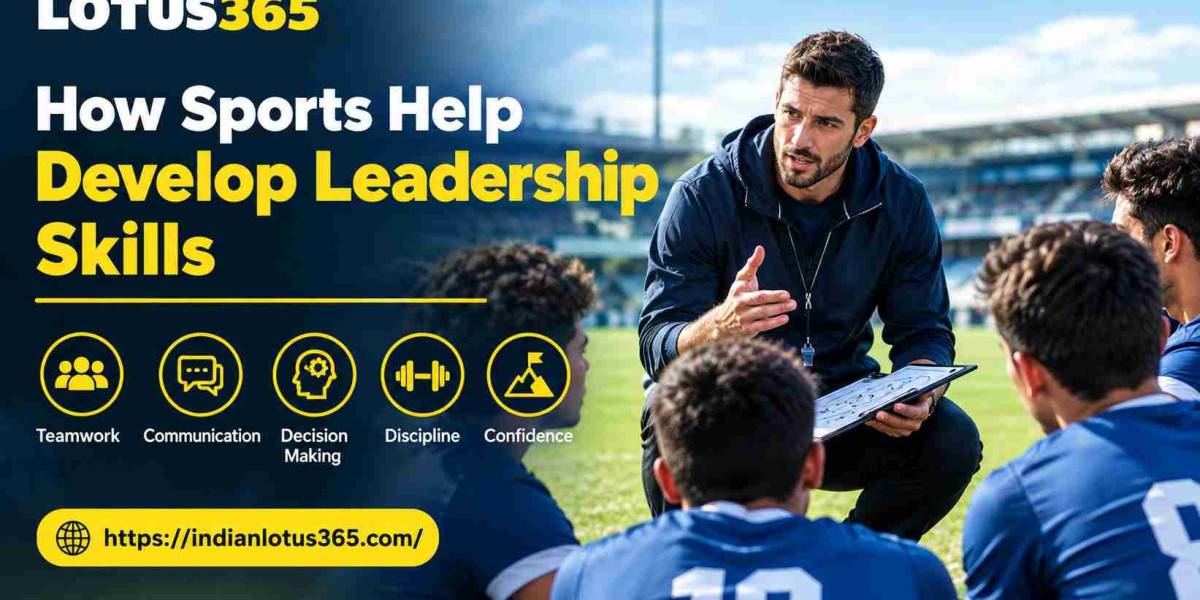

Sports are often associated with fitness, competition, and entertainment, but their value goes far beyond physical activity. Regular participation in sports can give people practical opportunities to develop communication, teamwork, discipline, decision-making, and responsibility. These qualities are closely connected with effective leadership.
Recent research on youth development in India highlights sports as a useful setting for practising leadership and life skills such as communication, teamwork, resilience, goal setting, and decision-making. However, these benefits depend on the quality of the sporting environment and the guidance provided by coaches, teachers, and parents.
Building Confidence Through Sports
Confidence is an important part of leadership. Sports give players regular opportunities to test their abilities, learn from mistakes, and improve through practice. A player may initially struggle with a particular skill but gradually become more comfortable through consistent training.
This process can teach an important lesson: improvement takes time. As players see their abilities develop, they may become more willing to take responsibility and participate actively in group situations.
Confidence does not mean believing that every decision will be correct. Instead, it involves being willing to make a decision, learn from the outcome, and try again.
Learning Teamwork and Cooperation
Most team sports require people to work toward a shared objective. Cricket, football, basketball, volleyball, and hockey all depend on players understanding their individual responsibilities while supporting their teammates.
Leadership in such situations is not simply about giving instructions. It also involves listening, helping others, sharing responsibilities, and understanding different viewpoints. Players learn that individual performance is only one part of team success.
For example, a player who encourages a teammate after a mistake can help maintain team confidence. Someone who listens to different ideas before making a decision can also contribute to a healthier team environment.
Improving Communication Skills
Good communication is essential for effective leadership. Sports create many situations where players need to communicate quickly and clearly. They may need to call for a pass, discuss a strategy, provide encouragement, or respond to instructions from a coach.
Players also learn the importance of listening. Understanding what teammates and coaches are saying helps individuals respond appropriately during training and competition.
These communication habits can be useful beyond sports. The ability to explain an idea clearly, listen to others, and respond respectfully can support relationships at school, work, and in everyday situations.
Developing Decision-Making Abilities
Sports frequently require players to make decisions within a limited amount of time. A cricket player may need to decide whether to attack or defend. A football player may need to choose between passing and taking a shot. These decisions require players to assess the situation and consider possible outcomes.
Such experiences can encourage strategic thinking. Players learn that decisions have consequences and that not every outcome will be successful.
Leadership also involves making decisions when information may be incomplete. Sports provide a practical environment where players can experience this process and learn from both successful and unsuccessful choices.
Learning Responsibility and Accountability
Leadership requires responsibility. In sports, every player has a role to perform. Arriving on time, attending training, following rules, preparing properly, and supporting teammates are simple examples of responsibility.
When players understand that their actions can affect the wider team, they begin to recognise the importance of accountability. A missed training session or lack of preparation may influence teammates as well as individual performance.
This sense of responsibility can become valuable in other areas of life. It can encourage better organisation, reliability, and commitment to shared goals.
Developing Resilience After Setbacks
Losses, mistakes, injuries, and difficult performances are natural parts of sports. Learning to respond to setbacks can help players develop resilience.
Instead of viewing one poor result as the end of progress, athletes can analyse what happened and identify areas for improvement. Coaches can support this process by encouraging constructive reflection rather than focusing only on mistakes.
Research on sports and youth development also identifies resilience and emotional skills among the life skills that can be practised through sporting activities.
This experience can help future leaders remain focused when situations do not go according to plan.
Understanding the Value of Fair Play
Leadership is also connected with character. Respecting opponents, following rules, accepting decisions, and treating teammates fairly are important aspects of sportsmanship.
Players who understand that competition does not justify disrespect can develop a more balanced approach to leadership. They learn that achieving a goal is important, but the way they behave while pursuing it also matters.
This principle can be applied to everyday situations where people must cooperate with others who have different opinions, abilities, or backgrounds.
Practising Leadership Through Different Roles
Leadership opportunities do not have to be limited to team captains. Coaches can allow players to take responsibility for warm-ups, organise small activities, lead practice groups, or help newer teammates.
Rotating these responsibilities can give more players the opportunity to practise leadership. A person who is quiet during regular activities may become more confident when given a specific responsibility.
A structured approach can make sports more useful for leadership development. Recent research in India suggests that coaches and physical education teachers can deliberately include communication, decision-making, teamwork, reflection, and rotating leadership roles in sporting activities.
Sports and Everyday Leadership
The leadership lessons learned through sports can extend beyond the playing field. A young person who learns to communicate with teammates may become more comfortable working on group projects. Someone who learns to manage time for training may develop better organisational habits.
Digital sports platforms such as Lotus365 can also make sports information more accessible to people who enjoy following matches and learning more about different sporting activities. However, active participation and real-world interaction remain important parts of developing practical leadership skills.
Similarly, using a Lotus365 login may provide access to a digital sports environment, but leadership qualities are developed through experiences such as teamwork, responsibility, communication, and decision-making.
A Lotus365 app can be part of a person's wider interest in sports, while actual sporting participation provides opportunities to practise interpersonal skills directly.
Conclusion
Sports can provide a practical environment for developing leadership skills. Through teamwork, communication, decision-making, responsibility, resilience, and fair play, players can learn lessons that extend beyond competition.
Leadership does not develop simply because someone participates in a sport. Supportive coaches, positive team environments, meaningful responsibilities, and opportunities for reflection can make these experiences more valuable. When sports are approached as both physical activities and learning experiences, they can help individuals build skills that are useful in education, work, relationships, and everyday life.
Ubicación del Autor
India