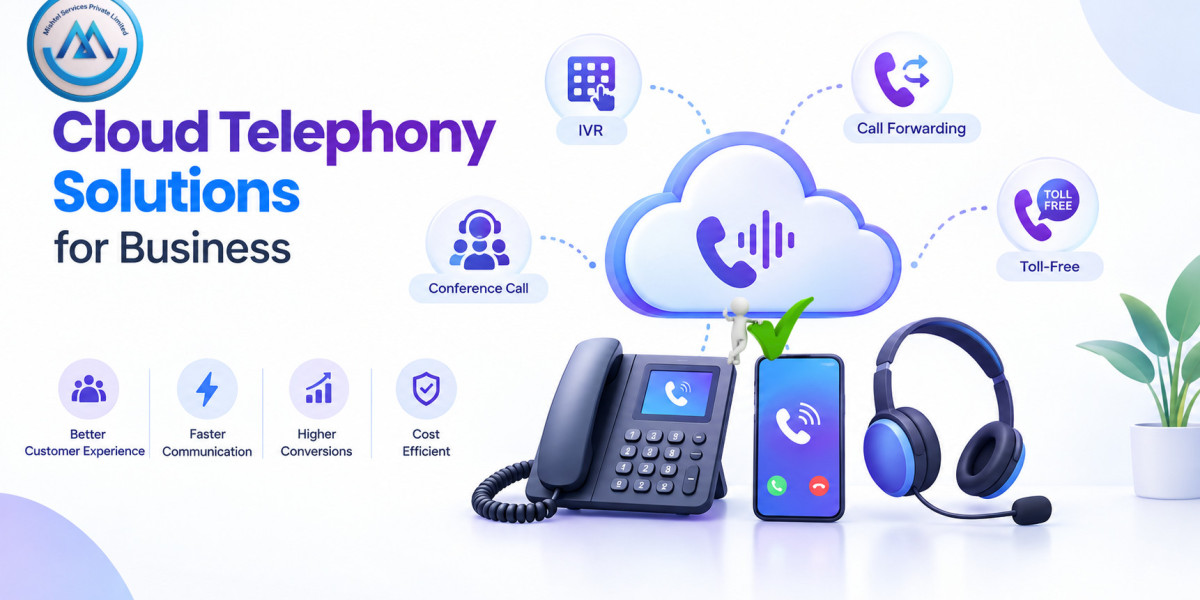

Cloud Telephony Solutions for Business: Complete Guide to Smart Communication
Introduction
A customer tries to reach your business three times in one day and gives up after the third failed attempt. That customer probably will not try again. This kind of lost communication happens across small and large businesses every single day. Cloud Telephony Solutions solve this exact problem by making sure every call is answered, routed, and tracked properly. In 2026, with customers expecting instant responses, businesses that rely on outdated phone systems are falling behind their competitors.
Mishtel offers a complete range of cloud telephony tools built for Indian businesses. This guide explains what cloud telephony is, how it works, and how it can help your company communicate better.
What Is Cloud Telephony?
Cloud telephony is a system that manages business calls through the internet instead of traditional phone lines. It includes tools like call routing, automated voice menus, and toll-free numbers, all managed from a single online dashboard.
Startups, enterprises, banks, hospitals, and government offices use cloud telephony to handle large call volumes without needing physical phone infrastructure. The IVR Service is one of the most common examples, allowing businesses to greet callers automatically and guide them to the right department.
Businesses need this technology because manual call handling is slow, expensive, and prone to human error. Cloud-based systems fix these issues by automating repetitive tasks and giving teams better control over every customer interaction.
How Does Cloud Telephony Work?
Setting up a cloud telephony system is simpler than most business owners expect. Here is the typical process:
Choose the right service based on your need, such as call routing, bulk calling, or a toll-free number.
Connect your existing phone numbers or activate new ones through the platform.
Build your call flow, including menu options and team routing rules.
Record voice prompts for greetings, menus, or automated announcements.
Go live, and the system starts handling incoming and outgoing calls automatically.
Monitor performance through real-time reports and adjust the setup as needed.
Most businesses can complete this setup within a single day, without needing any technical team.
Key Features to Look For
A strong cloud telephony platform should offer more than just basic calling. Here are the features that matter most.
Smart call routing ensures customers reach the right department quickly. A reliable IVR Service makes this possible by offering simple keypad-based menus.
Backup call handling prevents missed opportunities. The Call Forwarding Service automatically redirects unanswered calls to another number or team member.
Instant website connection helps convert online visitors into customers. The Click to Call Service lets a website visitor connect with your team in a single click, without dialing manually.
Low-cost lead capture works well for budget-conscious campaigns. The Missed Call Service lets customers give a missed call, and the business follows up automatically.
Free-to-call access builds customer confidence. A Toll-Free Service allows customers to reach support without paying anything themselves.
Group call support is useful for internal coordination. The Conference Service allows several team members to join one call for meetings or planning sessions.
Pre-recorded information delivery saves agent time. The Playback Service plays recorded details, such as order status or account information, without needing a live agent.
Read the full article to learn more about the features and benefits.
Source: Cloud Telephony Solutions for Business: Complete Guide to Smart Communication
Ubicación del Autor
Noida