
Choosing the right Shopify theme is more than a design decision. Your theme affects how shoppers browse products, understand your offers, navigate collections, and move from product pages toward checkout. A visually attractive store can still struggle if important information is difficult to find or the mobile experience feels slow and confusing.
The best Shopify themes for conversion provide a strong foundation for product discovery, clear calls to action, mobile usability, and a smooth shopping journey. However, no theme automatically guarantees better sales. Product pricing, trust, copy, photography, offers, checkout experience, and overall user experience also play important roles.
If you are planning a new Shopify store or considering a redesign, these themes are worth evaluating based on their features, flexibility, and suitability for different ecommerce businesses.
What Makes a Shopify Theme Conversion-Friendly?
A conversion-focused Shopify theme should make it easy for visitors to understand what you sell and take the next step. This starts with a clean layout, readable typography, strong product imagery, and clear navigation.
Features such as quick buy, product filtering, sticky carts, product recommendations, size guides, reviews, promotional banners, and recently viewed products can also reduce friction during shopping.
Mobile performance is equally important. Many ecommerce visitors browse from smartphones, so buttons, menus, product images, filters, and checkout elements should remain easy to use on smaller screens.
A theme should also give you enough flexibility to build landing pages and product sections without adding unnecessary code or third-party applications.
1. Dawn: A Flexible Free Starting Point
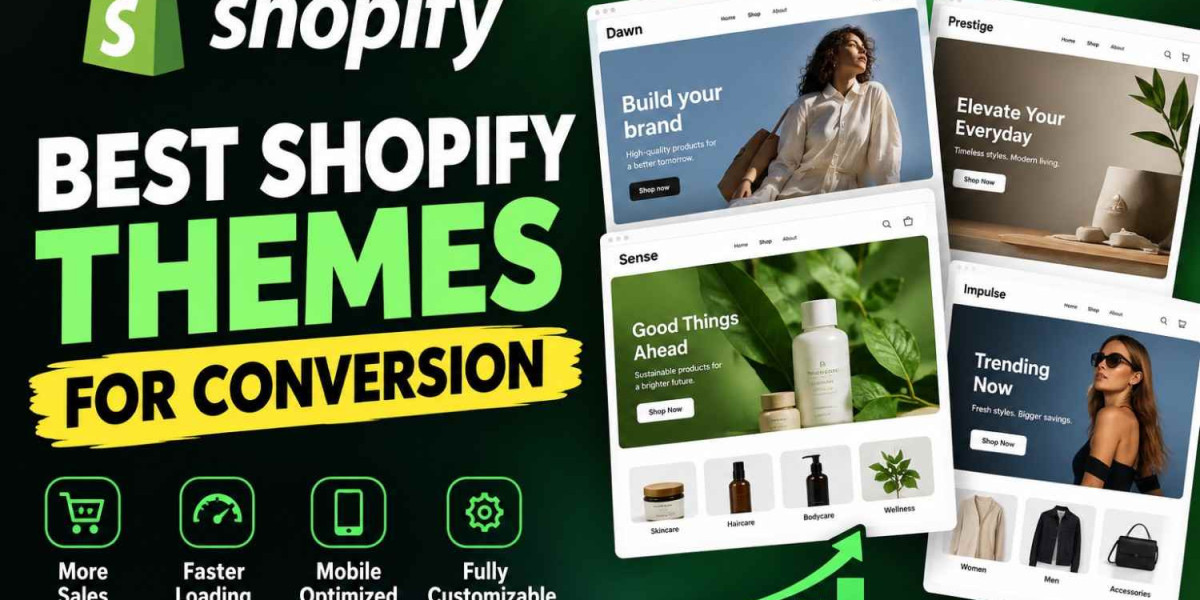
Dawn is Shopify's free theme and remains a practical starting point for many stores. Shopify describes it as a minimalist theme designed to put product imagery at the center of the shopping experience. It includes features such as quick buy, product recommendations, cross-selling, enhanced search, product filtering, mega menus, image galleries, and sticky headers.
Its clean structure makes it suitable for businesses that want to focus on products rather than excessive visual effects. It can work particularly well for smaller stores, new brands, and businesses that want to keep their initial theme investment low.
The main advantage is flexibility. You can build a polished storefront with the theme editor and add custom sections where required.
2. Impulse: Built for Promotions and Product Discovery
Impulse is designed around fashion-forward ecommerce stores and promotional merchandising. Shopify's Theme Store highlights features including quick buy, promotional sections, product filtering, recently viewed products, recommended products, sticky headers, and mobile-focused design.
This combination can be useful for stores that frequently run promotions, seasonal campaigns, collections, or limited-time offers.
Its quick-buy functionality can also shorten the journey between browsing and adding products to the cart. Instead of forcing shoppers to open every product page, customers can review key information and purchase directly from collection pages.
Impulse is worth considering when merchandising and promotional flexibility are important parts of your ecommerce strategy.
3. Prestige: Designed for Premium Brands
Prestige focuses heavily on premium visual presentation. Shopify currently lists it at $400 and describes it as a theme designed for premium, high-end brand appeal. It includes more than 30 configurable sections along with features such as quick view, recommended products, recently viewed products, sticky carts, product badges, promotional tiles, mega menus, filtering, and product videos.
This makes Prestige particularly relevant to fashion, beauty, jewellery, luxury, and lifestyle brands where presentation plays an important role in the buying process.
However, a visually rich theme still needs careful implementation. Large images, animations, and media should be optimised so that the storefront remains responsive, especially for mobile shoppers.
4. Impact: Strong Visuals With Conversion Features
Impact takes a more expressive approach to ecommerce design. Its Shopify Theme Store listing highlights more than 35 sections, quick buy, sticky add-to-cart, complementary products, promotional banners, product badges, quick view, and a slide-out cart.
The theme can be useful for brands that want a distinctive storefront without building every component from scratch.
Its conversion-related features are especially useful on product and collection pages. Quick-buy functionality can reduce unnecessary navigation, while complementary products can encourage shoppers to consider additional items.
Impact is a strong option for businesses where branding and merchandising need to work together rather than treating the product catalogue as a simple grid.
5. Symmetry: Useful for Larger Product Catalogues
Symmetry is built around extensive customization and product discovery. Its current Shopify listing includes mega menus, enhanced search, product filtering, quick buy, sticky carts, recommended products, quick view, promotional tiles, trust badges, and collection navigation.
These features can become particularly useful when a store has many products or multiple categories.
Good navigation matters because shoppers should not have to search through several pages to find the right product. Filters, clear collections, search functionality, and well-organised menus can make the browsing experience easier.
Symmetry may therefore suit fashion, lifestyle, home, beauty, and other stores where customers need to explore a sizeable catalogue.
How to Choose the Right Shopify Theme for Your Store
The best Shopify theme depends on your business rather than simply choosing the theme with the most features.
For a new store with a limited budget, Dawn provides a strong foundation without an upfront theme purchase. For fashion and promotion-heavy businesses, Impulse provides merchandising and promotional tools that can support frequent campaigns.
Premium brands may prefer Prestige because of its editorial and visual presentation, while Impact offers extensive sections and conversion-oriented shopping features. Stores with larger catalogues may benefit from Symmetry's filtering, search, mega-menu, and product-discovery capabilities.
Before choosing, create a list of your actual requirements. Consider your product count, average order value, mobile traffic, collection structure, promotional strategy, product photography, and required integrations.
Conversion Features to Check Before Buying a Theme
Do not judge a theme only from its homepage demo. Visit the collection and product pages as well.
Look for a clear add-to-cart button, easy variant selection, useful product information, product recommendations, visible shipping information, reviews or trust elements, and a cart experience that does not create unnecessary friction.
Also test the theme on a smartphone. Check whether menus are easy to use, filters open correctly, images load efficiently, and important buttons remain accessible.
Page speed should also be considered before launch. Third-party apps, large images, custom scripts, animations, and tracking tools can affect real-world performance even when the underlying theme is well built. Current third-party data shows that real-store performance varies considerably by theme and by the amount of app and customization load added to a store.
Theme Features Alone Do Not Create Conversions
A common mistake is expecting a premium theme to solve every conversion problem.
A theme can provide useful functionality, but customers still need compelling products, accurate information, competitive pricing, strong photography, transparent shipping policies, social proof, and a straightforward checkout experience.
For example, a sticky add-to-cart button will not fix a product page where shoppers cannot understand the product's benefits. Similarly, a beautiful homepage cannot compensate for confusing navigation or unexpected shipping costs.
Your theme should support your conversion strategy rather than become the strategy itself.
Keep Your Shopify Theme Fast and Simple
Adding every available feature can make a store harder to maintain and potentially affect performance. Instead, enable features that support genuine customer needs.
Compress product images, avoid unnecessary animations, review third-party apps regularly, and remove scripts that are no longer required. Test important templates after making major theme changes.
A lightweight implementation of a suitable theme can be more useful than a heavily customised premium theme filled with features that shoppers rarely use.
Final Thoughts on Shopify Themes for Conversion
The best Shopify themes for conversion are the ones that make shopping easier while supporting your brand and product catalogue.
Dawn offers a flexible free foundation, Impulse focuses strongly on merchandising and promotions, Prestige suits premium visual brands, Impact combines distinctive design with built-in ecommerce features, and Symmetry provides extensive product discovery and navigation options. These are not automatic conversion guarantees; Their value depends on how effectively they are configured and combined with good ecommerce practices.
Before making your final choice, test the theme on mobile, review product and collection pages, check its built-in features, assess its customization requirements, and consider how much third-party functionality you will need.
A theme should ultimately make it easier for customers to find products, understand their options, trust your store, and complete their purchase.
Frequently Asked Questions
1. What is the best Shopify theme for conversions?
The right theme depends on your store. Dawn offers a flexible free foundation, while Impulse, Prestige, Impact, and Symmetry provide additional merchandising and conversion-focused features.
2. Does a Shopify theme improve conversion rates?
A theme can support conversions through better navigation, mobile usability, product discovery, and calls to action, but pricing, products, trust, offers, and checkout also matter.
3. Is Dawn a good Shopify theme for ecommerce?
Yes. Dawn provides a clean foundation with quick buy, recommendations, product filtering, enhanced search, mega menus, image galleries, and other useful ecommerce features for growing stores.
4. Are premium Shopify themes worth the investment?
Premium themes can be worthwhile when their built-in features, design flexibility, and merchandising tools match your requirements and reduce the need for extensive custom development or additional apps.
5. How should I test a Shopify theme before launching?
Test homepage, collection, product, cart, and mobile experiences. Check navigation, filtering, product options, loading performance, checkout flow, and important conversion elements before publishing.