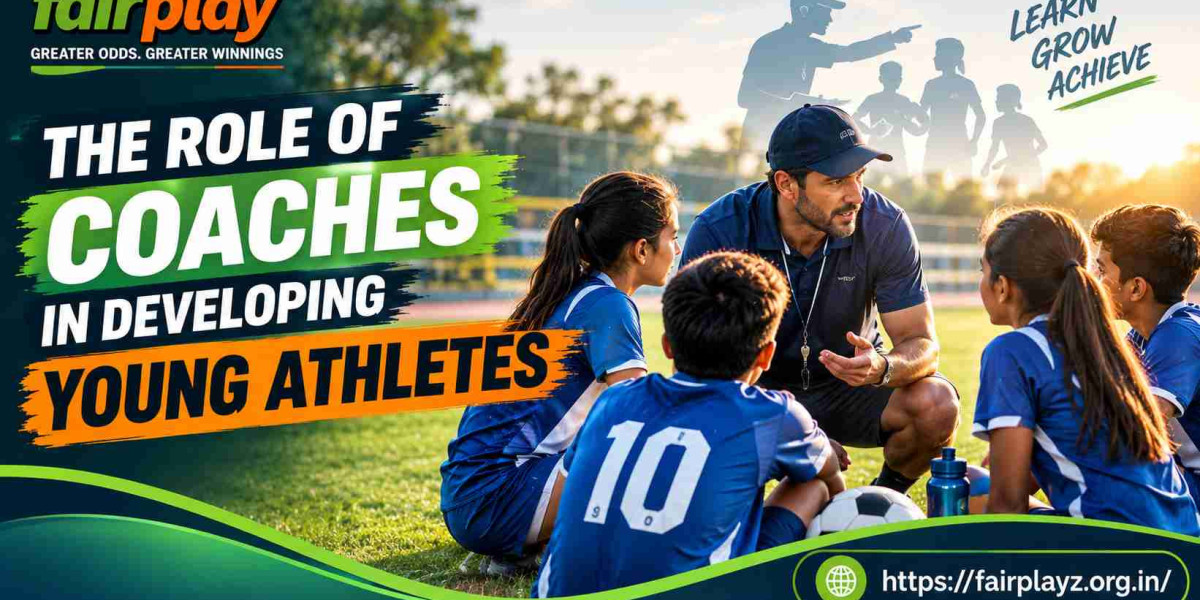

Young athletes need more than physical training to succeed in sports. They need guidance, encouragement, discipline, confidence, and opportunities to learn from both success and failure. This is where coaches play an important role. A good coach does not simply teach an athlete how to run faster, score more points, or improve technique. A coach can also influence how young players think, communicate, handle pressure, and work with others.
Youth sports can support physical, social, and psychological development, but the experience is strongly influenced by relationships within the sporting environment. Research has found that coach interpersonal skills can contribute to positive youth sport experiences, including enjoyment, self-esteem, social cohesion, and a healthier motivational environment.
Coaches Help Young Athletes Build Fundamental Skills
The first responsibility of a coach is to help young athletes understand the fundamentals of their chosen sport. Depending on the activity, this may include movement, balance, coordination, technique, tactics, fitness, and game awareness.
However, young athletes do not all develop at the same speed. Some may learn a particular skill quickly, while others may need more time and practice. A good coach understands these differences and adjusts training accordingly.
Instead of expecting every athlete to perform at the same level, coaches can create realistic development plans. This allows young players to improve gradually without feeling unnecessary pressure.
Regular feedback is also important. Constructive feedback helps athletes understand what they are doing correctly and where they can improve. When feedback is specific and encouraging, young players are more likely to view mistakes as part of learning.
Coaches Build Confidence and Self-Belief
Confidence can have a major influence on how young athletes approach training and competition. A player who is afraid of making mistakes may hesitate to try new skills or take responsibility during a match.
Coaches can help build confidence by recognising effort, progress, and improvement rather than focusing only on results. Celebrating small achievements can make young athletes feel that their hard work is meaningful.
Confidence does not mean believing that an athlete will always win. Instead, it means developing the belief that they can learn, improve, and respond to challenges.
Research examining coach development programmes has found positive effects on some youth outcomes, including self-esteem, enjoyment, and anxiety, although the evidence varies across different outcomes.
Coaches Teach Discipline and Consistency
Talent can help an athlete, but consistent effort is essential for long-term development. Coaches teach young athletes the importance of attending training, arriving prepared, following instructions, practising regularly, and taking care of their equipment.
These habits can gradually become part of an athlete's everyday routine.
A disciplined training environment also helps young players understand that improvement usually takes time. There may be days when progress feels slow, but continuing to practise can eventually produce meaningful results.
The lessons learned through this process can extend beyond sports. Young athletes can apply similar habits to school, personal goals, and other responsibilities.
Coaches Encourage Teamwork and Communication
For team sports, technical ability alone is not enough. Players must communicate with teammates, understand different roles, support one another, and work toward a shared objective.
Coaches can encourage these behaviours through training exercises that require cooperation and communication. They can also teach athletes to listen to their teammates and respect different perspectives.
Even in individual sports, communication remains important. Athletes often work with coaches, training partners, officials, and support staff. Learning to communicate clearly can therefore benefit athletes across different sporting environments.
A systematic review of youth sport coaching programmes found improvements in some measures of team social cohesion, suggesting that interpersonal coaching practices can contribute to stronger social connections among young athletes.
Coaches Help Athletes Handle Failure
Failure is an unavoidable part of sports. A young athlete may lose a match, miss an important opportunity, make a technical mistake, or fail to achieve a personal target.
The coach's response can influence how the athlete interprets that experience.
Instead of treating every mistake as a major problem, coaches can help athletes understand what happened and identify what can be learned from it. This approach encourages resilience and helps young players return to training with a constructive mindset.
A loss can become an opportunity to review technique, improve preparation, or develop a better strategy. Over time, athletes can learn that setbacks do not have to prevent future progress.
Coaches Develop Leadership Skills
Young athletes can develop leadership skills through sport when coaches provide them with appropriate responsibilities. These opportunities may include leading warm-ups, helping younger players, communicating with teammates, or taking responsibility for specific roles during training.
Leadership should not be limited to the team captain. Every athlete can learn how to take responsibility and contribute positively.
Coaches can also demonstrate leadership through their own behaviour. When coaches remain calm under pressure, communicate respectfully, and accept responsibility for their decisions, young athletes can observe these behaviours and learn from them.
UNESCO recognises sport as an environment that can support values education, including responsibility, equality, inclusion, respect, and fairness.
Coaches Promote Fair Play and Respect
One of the most important responsibilities of a youth coach is to create an environment where players understand that winning is not the only measure of success.
fairplay teaches young athletes to respect opponents, follow rules, accept decisions, and compete honestly. Coaches can reinforce these values by rewarding responsible behaviour rather than encouraging players to win at any cost.
Respect should apply to everyone involved in sport. Young athletes should learn to respect teammates, opponents, referees, coaches, volunteers, and spectators.
UNESCO identifies equality, inclusion, respect, and fairness as important values that can be developed through sport.
Coaches Create a Positive Training Environment
The atmosphere created by a coach can have a significant effect on how young athletes experience sport. A training environment that is supportive, organised, and encouraging can make players more comfortable asking questions and learning from mistakes.
A positive environment does not mean that coaches should avoid high standards. Young athletes can still be challenged while receiving appropriate support.
The key is to make expectations clear and development-focused. Athletes should understand what they are working toward and why certain training activities are important.
Research on youth athletes has highlighted the importance of relationships with coaches and peers in development and decisions about continuing participation in sport.
Coaches Support Healthy Motivation
Motivation can change throughout an athlete's development. Some young players may initially participate because they enjoy the sport, while others may be motivated by competition, recognition, or encouragement from family and friends.
Coaches can help maintain healthy motivation by making training enjoyable and meaningful. They can set challenging but realistic goals and encourage athletes to focus on personal improvement.
Young players should understand that development is not always measured by medals or tournament results. Improving a personal record, mastering a new skill, communicating better, or becoming more consistent can also represent meaningful progress.
Coach development research has found evidence that interpersonal coaching approaches can improve aspects of the motivational climate and enjoyment for youth athletes.
Coaches Help Young Athletes Manage Pressure
Competition can create pressure, particularly when young athletes feel that their performance is being closely judged. Coaches can help by teaching players how to prepare for competitions and manage expectations.
Simple approaches such as setting process-based goals, maintaining consistent routines, and focusing on the next action can help athletes stay focused.
Coaches should also recognise signs that an athlete may be struggling with excessive pressure. Creating an environment where players can communicate their concerns can make it easier to address problems early.
A coach does not need to solve every personal or psychological challenge alone. When appropriate, coaches can work with parents, schools, medical professionals, or qualified expert to provide additional support.
Coaches Work With Parents and Families
Young athletes often depend on parents or guardians for transportation, equipment, scheduling, financial support, and emotional encouragement. Coaches and families therefore have an important relationship.
Clear communication can help ensure that everyone understands the athlete's development goals. Parents can support training by encouraging healthy habits without placing excessive pressure on results.
Research has examined coach and parent development programmes together because relationships among coaches, parents, and young athletes can influence sporting experiences.
The best approach is usually one where people work together while keeping the young athlete's development and well-being at the centre.
Coaches Should Lead by Example
Young athletes often observe their coaches closely. The way a coach speaks to officials, reacts to mistakes, treats opponents, and handles difficult situations can become an example for players.
For this reason, coaches should demonstrate the standards they expect from athletes.
If a coach asks players to show respect but regularly argues aggressively with officials, the message becomes inconsistent. Similarly, asking athletes to remain disciplined while frequently arriving unprepared can weaken the importance of those expectations.
Good coaching therefore involves both instruction and example.
Technology Can Support Athlete Development
Technology has become increasingly useful in sports training. Coaches can use video analysis, performance data, digital training plans, and communication tools to understand athlete development and provide more detailed feedback.
However, technology should support rather than replace the human relationship between coach and athlete. Young players still need encouragement, communication, and personal guidance.
For people who follow sports through digital platforms, fairplay login can provide convenient access to sports-related content and information. Responsible use of digital services should remain part of a balanced approach to sports participation.
A fairplay app can similarly provide convenient access to sports information through a mobile device, but young athletes should continue to prioritise training, education, healthy routines, and guidance from trusted people.
Coaches Help Prepare Athletes for Life
The influence of a good coach can extend well beyond sport. Young athletes can learn lessons about discipline, responsibility, teamwork, communication, patience, leadership, and resilience.
UNESCO describes sport as a useful setting for values education and youth development, including efforts that support socio-emotional resilience and inclusive sporting environments.
These lessons can become useful in education, professional life, relationships, and other areas of personal development.
A young athlete may eventually stop competing at a particular level, but the habits and values developed through positive sporting experiences can remain valuable for many years.
Qualities of an Effective Youth Coach
An effective youth coach does not need to have one specific personality or coaching style. However, several qualities can contribute to a positive development environment:
Strong knowledge of the sport and appropriate training methods
Clear and respectful communication
Patience with different learning speeds
Ability to provide constructive feedback
Commitment to fair play and ethical behaviour
Understanding of age-appropriate development
Ability to motivate without creating unnecessary pressure
Willingness to listen to young athletes
Consistent and responsible behaviour
Focus on both sporting and personal development
Coach education can also improve interpersonal skills. A systematic review of 33 studies found that coach and parent development programmes produced statistically significant effects for some youth athlete outcomes, although not every measured outcome showed a significant change.
Conclusion
Coaches have an important role in developing young athletes because their influence extends far beyond technical training. They teach skills, encourage confidence, promote discipline, develop teamwork, support healthy motivation, and help young players respond to setbacks.
Most importantly, coaches can help create an environment where young athletes enjoy sport while learning valuable life skills. A strong coach understands that every player is still developing and that progress should involve more than scores, medals, and rankings.
When coaching focuses on skill development, respect, communication, safety, responsibility, and personal growth, sports can become a powerful learning environment. The goal is not simply to create better athletes but to help young people become more confident, disciplined, respectful, and responsible individuals.
Ubicación del Autor
usa