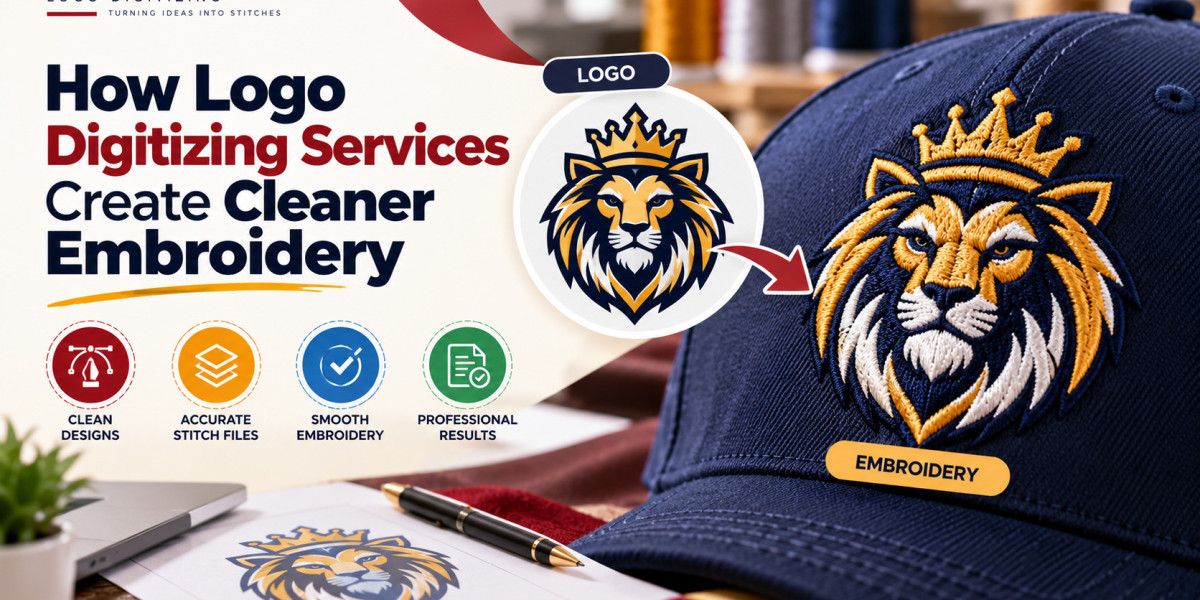

Clean embroidery depends on more than having attractive artwork. Your logo needs stitch instructions that tell the embroidery machine how each part of the design should be built. Through our Custom Logo digitizing Services, we prepare artwork with its size, lettering, shapes, stitch direction, and embroidery application in mind. Our Logo Digitizing Services help translate visual artwork into an organized embroidery file rather than simply converting one digital format into another.
At iDigitize, we also consider where your logo will be embroidered. A small left chest design, cap logo, sleeve design, and large jacket back do not provide the same embroidery area. Understanding the final application gives us useful context when planning the digitized file.
??? ?????????? ??????? ??? ????? ? ???? ?????
Embroidery machines work with stitches, not pixels.
Your original PNG, JPG, PDF, or vector artwork shows what the logo should look like visually. An embroidery file needs different information. It must describe how the design should actually be constructed with thread.
That can include:
Stitch types
Stitch direction
Stitch density
Underlay
Stitch sequence
Start and stop points
Color changes
Edge compensation
This is where Logo Digitizing Services become important. Digitizing connects the visual artwork with the physical embroidery process.
The cleaner the stitch structure is planned, the easier it becomes to maintain separation between important logo elements.
????? ?????????? ?????? ???? ???? ??????? ?????????
Not every detail visible on a screen will work in exactly the same way when reproduced with thread.
A logo might contain thin outlines, tiny lettering, gradients, narrow gaps, overlapping shapes, or detailed icons. These features can look perfectly clear in digital artwork because pixels can display very fine information.
Embroidery has physical limits.
Before digitizing, we look at which parts of the artwork define the identity of the logo. Important lettering, recognizable shapes, borders, and major visual elements need enough space to remain clear.
This does not mean every detailed logo needs to become simple. It means the artwork and final embroidery size need to be considered together.
??? ?? ????? ? ??????? ?????? ?????????
Creating an embroidery file involves several connected decisions. Each decision can affect how the next part of the logo is constructed.
?. ?? ???????? ??? ???? ???? ????????
We first identify the main components of the artwork.
For example, a business logo might contain:
A symbol
Company name
Small tagline
Background shape
Outer border
Multiple colors
Breaking the artwork into logical sections makes it easier to decide how each area should be represented in stitches.
?. ?? ?????? ?????? ????? ????? ?? ??? ??????
Different logo elements may require different stitch structures.
Narrow columns, larger filled areas, lettering, and detailed shapes do not necessarily need to be constructed in the same way.
The choice should support the shape and dimensions of each element instead of applying one stitch treatment across the entire logo.
?. ?? ???? ?????? ?????????
Stitch direction influences how thread follows the shape of an embroidered element.
Changing direction can help separate neighboring areas visually and support the natural form of curves, letters, and larger shapes.
Our Logo Digitizing Services use stitch direction as part of the overall design structure rather than treating it as an isolated setting.
?. ?? ???????? ??? ?????? ????????
Sequence means the order in which different areas of a logo are embroidered.
A logo should not simply be divided into random shapes and sent to the machine. We consider how different elements connect and which sections should be completed before others.
An organized sequence also helps keep the embroidery file easier to understand from a production perspective.
?. ?? ???????? ??????? ??? ????????
More stitches do not automatically create better embroidery.
Stitch density needs to suit the individual design area. Underlay provides supporting stitches beneath visible embroidery and is another part of the digitizing structure.
These settings need to work together rather than being increased simply to make the design appear more solid.
??? ????? ????????? ????? ????? ?????????
Small text is one of the areas where the difference between digital artwork and embroidery becomes easy to see.
A tagline may look sharp on a computer screen but have very limited physical space when the entire logo is only a few inches wide.
Letters need enough room to remain separate from one another. Narrow spaces inside letters also need consideration.
For that reason, we need to know the final embroidery dimensions before preparing detailed lettering.
With Custom logo digitizing Services, providing the actual production size helps us assess the logo in the context in which it will be embroidered.
??? ?????? ??? ????????? ??????
The embroidery file does not exist separately from the item being embroidered.
A logo can appear on shirts, hats, jackets, uniforms, hoodies, bags, towels, aprons, pockets, cuffs, and sportswear. These applications do not all provide the same surface or embroidery area.
For example, a large jacket back gives a design more room than a small left chest position. A cap introduces a curved embroidery surface.
When you order Logo Digitizing Services, tell us the intended placement and fabric along with the final dimensions. These details help provide the correct context for the digitizing process.
?????? ?????????? ?????? ???? ??? ?????? ???????
Cleaner embroidery often comes from avoiding problems before production begins.
Some common issues include:
Too much detail for the final size: Small embroidery areas have less room for fine lines and tiny shapes.
Very small lettering: Text that is easy to read digitally may become difficult to reproduce clearly at a small embroidery size.
Crowded design elements: Shapes placed very close together can lose visual separation.
Excessive stitch density: Adding more stitches is not always the answer and can create an unnecessarily heavy design area.
Poor stitch sequencing: The order in which elements are constructed needs to be considered as part of the complete file.
Missing production information: Size, placement, fabric, and required machine format provide important context.
Our Logo Digitizing Services consider these factors before the final embroidery file is prepared.
???? ?????? ??? ??????? ?????? ???? ???????????
You do not need to prepare the embroidery stitches yourself. However, accurate project information gives us a clearer starting point.
Send us:
Your clearest available artwork
Final embroidery dimensions
Intended garment or fabric
Logo placement
Required embroidery machine format
Important color information
Any essential details that must remain visible
If your logo includes small lettering or fine elements, point them out when submitting the artwork.
Providing these details helps us prepare Custom logo digitizing Services around your actual application rather than guessing how the logo will be used.
????? ??????? ?????????? ???? ??? ????????? ????
At IDigitize, our Logo Digitizing Services prepare your artwork as stitch based instructions while considering size, lettering, stitch direction, density, underlay, sequence, and intended placement. Cleaner embroidery begins by planning how the design should work in thread rather than simply copying how it appears on a screen.
Send us your logo artwork along with the final size, placement, fabric information, and required embroidery format. With the right project details available from the start, we can prepare the file around its intended embroidery application.
?????????? ????? ?????????
??? ???? ???? ?????????? ??????? ???????????
Logo digitizing creates the stitch instructions used to construct your artwork with thread. It defines details such as stitch type, direction, sequence, density, and underlay. Planning these elements around the actual logo size and placement helps create a more organized embroidery file.
?? ? ???? ? ??????? ???? ?????? ???? ???????????
No. You can provide your available logo artwork, and we can use it as the visual reference for digitizing. The information about final size, placement, fabric, and required embroidery format is also important because it helps define how the design is intended to be used.
??? ???? ?????????? ???????? ???? ???? ????? ?????
Small text can be digitized, but its clarity depends partly on the available embroidery space and the design itself. Very small lettering has less room for individual stitches and internal spaces. We therefore consider the final logo dimensions when preparing lettering for embroidery.
??? ?? ??? ???? ??? ????? ?????????? ?????
The final size tells us how much physical space is available for lettering, borders, gaps, and other logo details. A design prepared for a large jacket back may require different decisions from the same artwork prepared for a small chest position.
???? ?????? ? ????? ?????? ??????? ?? ?????
Check that you have the clearest artwork available and know the intended size, placement, fabric, and required embroidery file format. You should also identify any small text, colors, or important design elements that need particular attention during digitizing.