
Self pierce riveting is a mechanical joining process used to connect compatible sheet materials without requiring a pre-drilled hole. Heron Welder provides industrial joining equipment and manufacturing solutions that businesses can evaluate according to their component designs, material combinations, and production requirements. For manufacturers working with lightweight structures or dissimilar sheet materials, selecting an appropriate joining process can help improve assembly efficiency and product consistency.
How Self Pierce Riveting Works
Self pierce riveting uses a specially designed rivet and a controlled pressing operation to join material layers. The rivet penetrates the upper material and flares within the lower layer without passing completely through it.
The resulting mechanical interlock creates a joint when the materials and rivet geometry are compatible. The process is used in selected automotive, appliance, and sheet-metal applications.
Heron Welder helps manufacturers explore industrial joining equipment according to their production objectives and application requirements.
Benefits of Self Pierce Riveting
Joining Compatible Material Combinations
Self pierce riveting can be suitable for certain combinations of aluminum, steel, and other sheet materials, depending on their thickness and mechanical properties. It can be particularly useful when conventional welding presents challenges.
However, not every material combination or stack-up is suitable. Manufacturers should validate joint strength and durability through appropriate testing.
No Pre-Drilled Hole Required
The process creates the joint during the riveting operation, eliminating the need for a separate pre-drilling step in compatible applications. This can simplify production workflows and support efficient assembly.
The actual benefit depends on component geometry, tooling requirements, and the surrounding manufacturing process.
Consistent Mechanical Joining
When the rivet, tooling, and material stack are properly matched, the process can produce repeatable joints. Monitoring installation force and checking joint geometry help maintain quality.
Heron Welder supports businesses evaluating joining technology according to their component requirements and production conditions.
Selecting Suitable Riveting Equipment
Assess Material Stack-Up
Material type, thickness, layer count, and component geometry influence the rivet and tooling selection. Manufacturers should provide accurate specifications and evaluate representative samples before finalizing the process.
Review Production Requirements
Businesses should consider daily output, cycle time, part variety, fixture design, and integration with existing assembly lines. Automated or semi-automated equipment may be appropriate for repetitive high-volume production.
Plan for Quality Control
Joint inspection should reflect the application and required performance. Manufacturers may assess rivet position, remaining bottom-layer thickness, joint geometry, and mechanical strength according to relevant specifications.
Applications Across Manufacturing Industries
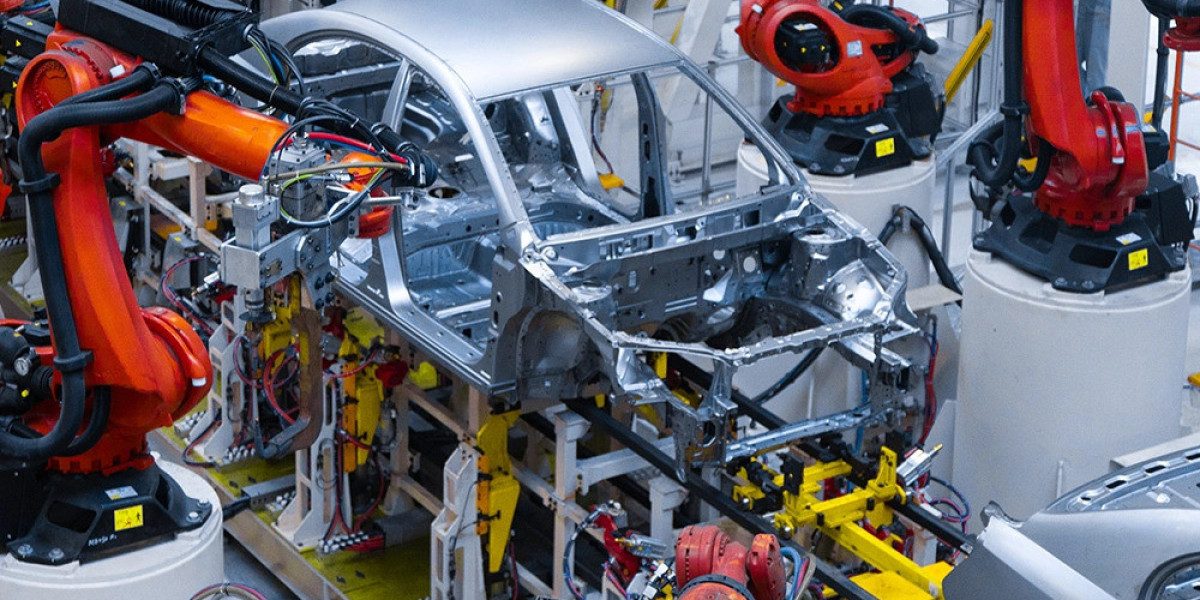
Self pierce riveting is used in suitable automotive body structures, lightweight assemblies, appliance components, and other sheet-metal products. The process can support designs that require mechanical joining of compatible material layers.
Heron Welder helps manufacturers explore industrial joining equipment and assess whether a particular process fits their production needs.
Maintenance and Operational Reliability
Riveting equipment requires routine inspection of tooling, punches, dies, feeding systems, and other relevant components. Worn tooling or incorrect setup can affect joint quality.
Manufacturers should follow maintenance guidance, monitor installation results, and investigate recurring defects promptly. Documented inspection records help support consistent production.
Why Consider Heron Welder?
Heron Welder focuses on industrial joining equipment and manufacturing solutions. Businesses can evaluate available technologies according to their material stack-ups, component designs, output targets, and production integration needs.
A careful application review helps manufacturers identify a suitable joining method and establish appropriate quality checks.
Strengthen Your Manufacturing Process
Self pierce riveting offers a useful joining option for compatible sheet materials when the rivet, tooling, and material stack are properly matched. Selecting suitable equipment and maintaining consistent process control can support reliable assembly.
Heron Welder helps businesses explore industrial joining solutions aligned with their manufacturing objectives, supporting an informed approach to production efficiency and joint quality.