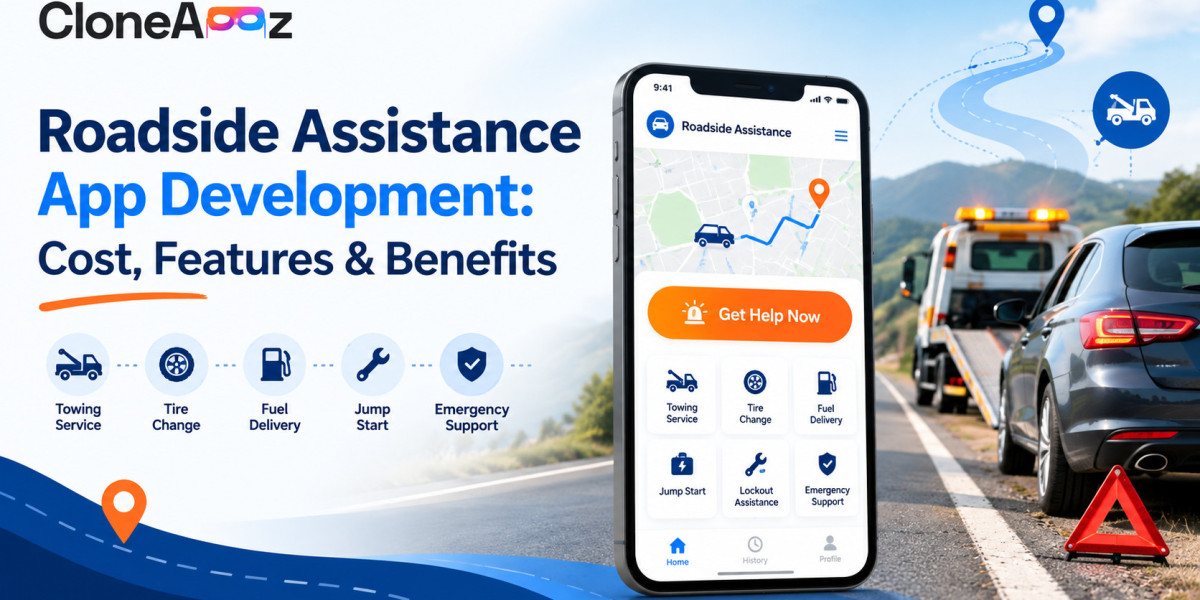

A vehicle breakdown can happen at any time, whether a driver is commuting to work, travelling on a highway, or heading out on a long journey. When a car stops unexpectedly, drivers need quick access to towing, fuel delivery, battery assistance, or flat tire repair. This creates an opportunity for businesses to offer convenient roadside support through mobile technology.
Roadside assistance app development allows businesses to connect drivers with service providers through a single digital platform. Instead of searching for nearby mechanics or waiting for help without knowing when it will arrive, users can request assistance, share their location, and track service progress from their smartphones.
For startups, automobile service companies, insurance providers, and entrepreneurs, launching a roadside assistance app can be a practical way to enter the on-demand service market. However, success depends on choosing the right features, understanding development costs, and building a reliable service network.
What Is Roadside Assistance App Development?
Roadside assistance app development is the process of creating a mobile or web application that connects drivers who need emergency vehicle support with towing companies, mechanics, fuel delivery providers, and other roadside service professionals.
A typical platform includes three main components: a customer app, a service provider app, and an admin panel. Each component serves a different purpose while working together to manage service requests efficiently.
The customer app allows drivers to request help, share their location, check estimated arrival times, and make payments. The service provider app helps professionals accept requests, navigate to customers, update service status, and manage their earnings. Meanwhile, the admin panel allows businesses to monitor bookings, manage users, assign providers, and review transactions.
Depending on the business model, a platform may offer services such as emergency towing, battery jump-starts, flat tire replacement, fuel delivery, lockout assistance, and minor roadside repairs.
Essential Features of a Roadside Assistance App
The right features can improve customer satisfaction and help businesses manage their daily operations. During roadside assistance app development, companies should prioritize functionality that addresses real customer problems.
1. User Registration and Profile Management
Customers should be able to create accounts, save vehicle information, update contact details, and manage their profiles. Allowing users to register their vehicle model, registration details, and preferred payment method can make future service requests easier.
2. GPS Tracking and Location Sharing
GPS integration helps customers share their exact location when requesting assistance. It also allows service providers to navigate to the breakdown location and enables customers to monitor their arrival.
Accurate location tracking is particularly important when drivers are stranded on highways or unfamiliar roads.
3. On-Demand Service Booking
The app should allow users to select the type of assistance they need and submit a service request within a few steps. Available services may include towing, tire repair, battery support, emergency fuel delivery, and vehicle recovery.
Clear service descriptions and upfront pricing can help customers make informed decisions before confirming a booking.
4. Real-Time Service Updates
Customers want to know whether their request has been accepted and when help will arrive. Booking confirmations, provider details, estimated arrival times, and status notifications can make the process more transparent.
Push notifications and in-app updates can also reduce unnecessary calls between customers and support teams.
5. Service Provider Management
A dedicated provider app allows mechanics, towing operators, and roadside technicians to manage incoming requests. Providers should be able to accept or reject jobs, view customer locations, update booking status, and review completed services.
For businesses operating across multiple cities, provider management becomes especially important for maintaining service quality.
6. Secure Payment Integration
Customers should have convenient ways to pay for roadside services. Depending on the target market, the app may support cards, digital wallets, UPI, or other locally available payment methods.
The platform can also provide digital invoices, transaction records, refunds, and promotional discounts where appropriate.
7. Admin Dashboard and Analytics
The admin dashboard gives business owners control over platform operations. Administrators can manage customer accounts, verify service providers, monitor bookings, configure service charges, and handle complaints.
Reports covering booking volume, revenue, cancellations, and provider performance can help businesses identify operational issues and improve service delivery.
How Does a Roadside Assistance App Work?
A roadside assistance platform generally follows a straightforward booking process.
First, a driver opens the app and selects the required service. The application captures the driver's location or allows them to enter a pickup point manually. The request is then sent to an eligible service provider based on availability, distance, or other business rules.
Once a provider accepts the request, the customer receives confirmation and can track the provider's progress. After reaching the location, the provider completes the service and updates the booking status. Payment is processed according to the platform's payment workflow, and the customer can leave a rating or review.
Businesses should also plan for situations in which no provider is available, a booking is cancelled, or a customer needs urgent support. A clear escalation process can help prevent poor experiences during emergencies.
Roadside Assistance App Development Cost
The cost of building a roadside assistance app depends on the features, number of applications, technical requirements, integrations, and development approach. There is no single price that applies to every project.
The following figures are illustrative estimates in US dollars, not verified vendor quotations.
| Development approach | Estimated cost |
|---|---|
| Basic MVP with essential features | $10,000–$25,000 |
| Mid-level app with tracking and payments | $25,000–$60,000 |
| Advanced platform with complex integrations | $60,000–$120,000+ |
Actual pricing can vary considerably by development team, location, platform, and project scope.
Factors That Affect Development Cost
The first major factor is feature complexity. An app with basic booking and provider management generally costs less than a platform with advanced dispatching, automated pricing, live tracking, and complex reporting.
The second factor is the number of applications required. A customer app, provider app, and admin dashboard each require design, development, testing, and maintenance.
Third, integrations can influence the budget. Mapping services, payment gateways, SMS notifications, customer support tools, and third-party vehicle service systems may involve implementation fees or recurring charges.
Finally, UI/UX design, security requirements, testing, deployment, and ongoing maintenance should be included in the budget. Businesses should request a detailed quotation that separates initial development expenses from recurring operating costs.
Custom Development vs. a White Label Roadside Assistance App
Businesses can choose between building a platform from scratch and using a ready-made solution.
Custom development is suitable for companies that need highly specialized workflows, unique features, or extensive control over the technical architecture. However, it usually requires more planning, development time, and upfront investment.
A white label roadside assistance app provides an existing application framework that can be customized with business branding, selected features, and operational requirements. This approach may help businesses reduce development time and launch with a more predictable initial scope.
Before selecting a solution, evaluate its customization options, scalability, security, integration capabilities, maintenance arrangements, and source code ownership terms. Not every ready-made solution provides the same level of control, so businesses should confirm these details with the vendor.
Why Should Businesses Invest in Roadside Assistance App Development?
A well-planned platform can create value for both customers and service providers.
First, digital booking makes roadside services easier to access. Customers can submit requests without relying entirely on phone calls, while providers can receive and manage jobs through a centralized system.
Second, businesses can expand their service coverage by partnering with local towing operators, garages, and mobile mechanics. Expansion should be based on provider availability and service quality rather than app downloads alone.
Third, the platform can support several revenue models. Businesses may earn through commissions on completed bookings, service charges, subscription plans for partner providers, or roadside assistance memberships. Corporate partnerships with fleet operators, insurers, and vehicle rental companies may create additional opportunities.
Finally, service data can help companies understand customer demand, identify busy locations, and improve resource allocation. These benefits depend on effective operations, reliable providers, transparent pricing, and consistent customer support.
How to Start with MVP Development
Launching every possible feature at once can increase costs and delay market testing. MVP development offers a more focused approach by starting with the essential functions needed to test the business idea.
An initial version may include customer registration, vehicle details, service selection, location sharing, provider acceptance, booking updates, basic payments, and an admin dashboard.
Once the platform is tested with real users and service partners, the business can review feedback and booking data to identify the next improvements. Features such as membership plans, automated dispatching, fleet management, and advanced analytics can be added when they support a clear business need.
Testing should cover location accuracy, payment failures, cancellation handling, provider availability, and customer support workflows. For a service used during emergencies, reliability is just as important as the number of features.
Choosing the Right Roadside Assistance App Development Company
Selecting the right development partner can influence the cost, quality, and long-term performance of the platform. Look for a team that understands on-demand service workflows, location-based applications, third-party integrations, and mobile app security.
Review previous projects, clarify the project timeline, and ask how testing, maintenance, and future upgrades will be handled. Discuss API integration requirements early so that mapping, payment, notification, and other external services can be included in the technical plan.
CloneAppz offers white label and clone app development solutions for businesses looking to launch customizable digital platforms. Companies exploring roadside assistance app development can discuss their project requirements, desired features, budget, and customization needs before choosing an appropriate development approach.
The final decision should be based on technical fit, transparency, support arrangements, and the ability to meet the business's actual requirements.
Conclusion
Roadside assistance app development offers businesses a way to make vehicle support more accessible, organized, and convenient. With features such as GPS tracking, on-demand booking, provider management, secure payments, and real-time notifications, a platform can connect drivers with the help they need.
The best starting point is to define the target market, build a realistic budget, establish a reliable service provider network, and launch with essential features. Whether a business chooses custom development or a white label roadside assistance app, long-term success will depend on service reliability, customer trust, and continuous improvement.
A carefully planned platform can help businesses establish a presence in the roadside service market while creating a foundation for future expansion.
Frequently Asked Questions
1. How much does roadside assistance app development cost?
A basic MVP may cost around $10,000–$25,000, while a more advanced platform can cost $60,000–$120,000 or more. Actual costs depend on the feature set, integrations, development team, and technical requirements.
2. What features should a roadside assistance app include?
Essential features include user registration, GPS tracking, service booking, provider management, real-time updates, payment integration, ratings, and an admin dashboard.
3. How long does it take to develop a roadside assistance app?
A basic MVP may take a few months, while a complex platform can require considerably longer. The timeline depends on project scope, integrations, testing, and team availability.
4. Can a startup use a white label roadside assistance app?
Yes. A white label solution can provide a customizable starting point for startups. Before purchasing, businesses should check the available features, branding options, scalability, support, and licensing terms.
5. How can a roadside assistance app generate revenue?
Possible revenue sources include commissions on service bookings, customer membership plans, provider subscriptions, service fees, and partnerships with fleet operators or insurance companies.
6. Why is GPS tracking important in roadside assistance apps?
GPS tracking helps drivers share their location, allows providers to find breakdown sites, and gives customers visibility into provider arrival progress. Accurate location handling can improve service coordination.
Ubicación del Autor
united states