
Market Overview: Growing Demand for Robotic Software Solutions
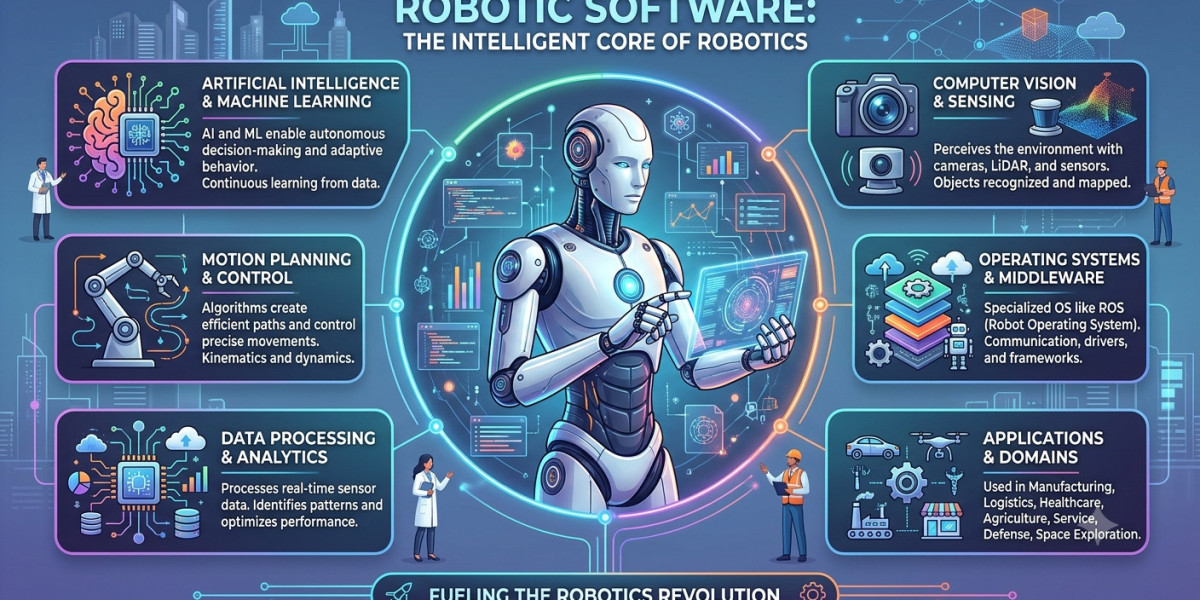
The Robotic Software Market Solution landscape is expanding as businesses increasingly require advanced technologies to manage automated equipment and intelligent robotic systems. Robotic software solutions provide programming, simulation, control, monitoring, navigation, and analytical capabilities across different industrial applications. Manufacturing companies use these solutions to coordinate production robots and improve operational efficiency. Logistics providers adopt robotic applications for warehouse automation, inventory management, and material transportation. Healthcare organizations are exploring software solutions for surgical robotics, rehabilitation, and laboratory automation. Modern robotic software combines artificial intelligence, machine learning, computer vision, cloud computing, and industrial connectivity to support sophisticated automated operations. Organizations evaluate solutions according to functionality, compatibility, scalability, cybersecurity, and implementation requirements. The growing adoption of smart factories and Industry 4.0 technologies is encouraging businesses to integrate robotics with enterprise applications and industrial networks. Cloud-based software is also improving remote management and centralized monitoring. As automation requirements become increasingly complex, demand for reliable and adaptable robotic software solutions is expected to create opportunities through 2035.
Market Drivers: Increasing Need for Automation Solutions
The growing requirement for operational efficiency is encouraging organizations to adopt robotic software solutions. Manufacturing companies are using automation to improve product quality, reduce repetitive manual activities, and increase production consistency. Robotic software enables precise programming, coordinated machine movements, and continuous process monitoring. Automotive manufacturers use these technologies for welding, painting, assembly, and inspection. Logistics organizations are deploying autonomous mobile robots to support warehouse transportation and order fulfillment. Healthcare providers are exploring robotic applications for surgical assistance, rehabilitation, and laboratory operations. Businesses are also adopting automation to address workforce shortages and reduce operational expenses. Improvements in artificial intelligence and computer vision are allowing robots to perform more complex tasks. Organizations increasingly seek software that supports multiple robotic devices and integrates with existing infrastructure. Cloud-based deployment provides additional flexibility by simplifying access and software management. These factors are encouraging demand for intelligent solutions that can improve productivity while supporting changing operational requirements across industrial and commercial environments.
Market Opportunities: Customized Solutions and Advanced Technologies
Specialized software development is creating opportunities for companies targeting different robotic applications. Manufacturing organizations require solutions for production planning, robotic programming, quality inspection, and equipment monitoring. Logistics companies need software capable of coordinating autonomous mobile robots and optimizing warehouse workflows. Healthcare providers may prioritize secure and reliable software for specialized robotic procedures. Agricultural applications can benefit from autonomous navigation and intelligent equipment management. Artificial intelligence is creating opportunities through object recognition, motion planning, and adaptive task execution. Digital twin technology allows organizations to simulate robotic environments and optimize operations before deployment. Cloud-based solutions can provide remote management and centralized monitoring. Vendors may also introduce subscription-based licensing to make automation more accessible to smaller businesses. Integration with industrial Internet of Things systems can improve predictive maintenance and operational analytics. Companies that provide scalable, secure, and application-specific software solutions may benefit from growing automation demand across multiple industries.
Market Trends: Integration, Security, and Intelligent Automation
Robotic software solutions are increasingly incorporating intelligent technologies and advanced integration capabilities. Artificial intelligence and machine learning are improving autonomous operations and enabling robots to adapt to different environments. Cloud computing is supporting remote management and centralized software administration. Digital twins are helping businesses test and optimize robotic workflows. Organizations are also prioritizing interoperability between robotic systems and enterprise software applications. Cybersecurity is becoming increasingly important as connected robotic equipment exchanges information through industrial networks. Providers are introducing stronger authentication, encryption, and access management capabilities. Collaborative robotics is encouraging simplified interfaces and software designed for safe human-machine interaction. Subscription-based platforms and modular software architectures are gaining attention because they provide deployment flexibility. Competition is encouraging vendors to improve technical support, integration options, and user experience. These trends are shaping the development of advanced solutions that address increasingly sophisticated automation requirements across industrial and commercial sectors.
Future Outlook: Robotic Software Solutions Through 2035
The future of robotic software solutions is expected to be supported by expanding automation investments and continuous technological innovation. Manufacturing organizations are likely to prioritize intelligent programming, simulation, and predictive maintenance capabilities. Logistics providers may increase the deployment of autonomous robots, while healthcare and agriculture could explore additional specialized applications. Artificial intelligence and cloud computing are expected to improve the flexibility and performance of robotic systems. Vendors will increasingly focus on scalable solutions that integrate with existing infrastructure and support different robotic hardware platforms. However, implementation costs, cybersecurity concerns, and technical complexity may influence purchasing decisions. Providers that offer flexible licensing, simplified interfaces, and reliable customer support may improve adoption. Strategic partnerships between software developers, robotics manufacturers, and industrial technology companies could further strengthen the ecosystem. By 2035, advanced robotic software solutions are expected to remain essential for intelligent automation, connected operations, and industrial modernization.
FAQs
Q1. What are robotic software solutions?
They are software applications used to program, control, simulate, monitor, and optimize robotic equipment.
Q2. Which technologies improve robotic software solutions?
Artificial intelligence, machine learning, cloud computing, computer vision, digital twins, and industrial IoT improve robotic capabilities.
Explore Our Latest Trending Reports!
Digital Transformation In Manufacturing Market
Human Resource Outsourcing Market