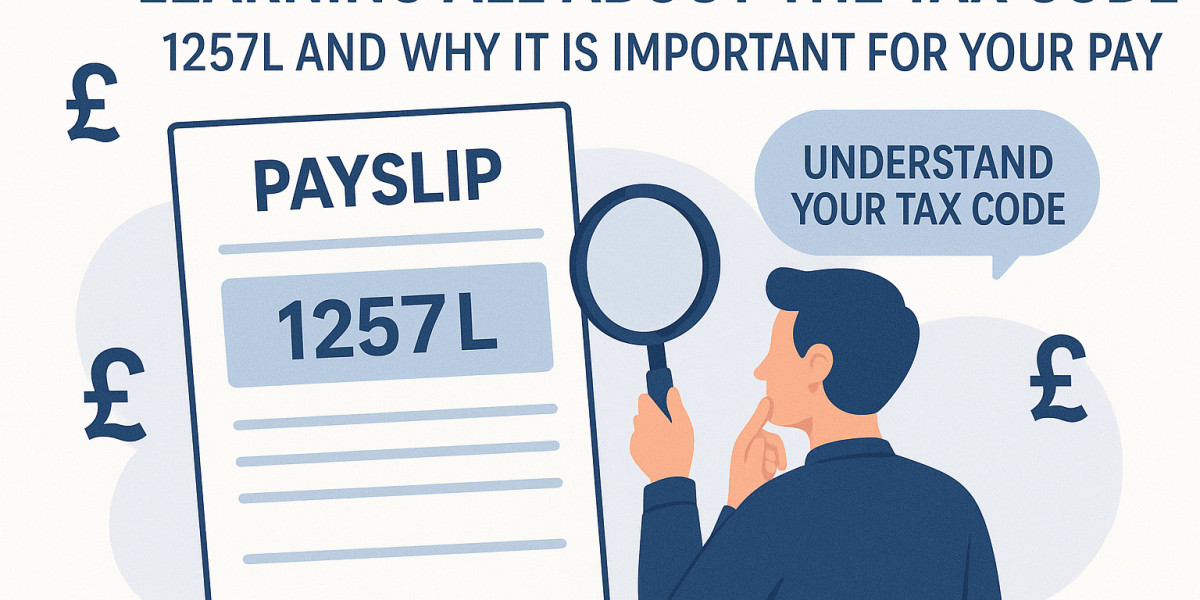

Your pay slip is a combination of different numbers and terms, and sometimes, all these terms do not make sense to you. Apart from containing your name, pay structure, and salary, your pay slip also features your tax code, and people are unsure about this, failing to understand what it means. It is important for you to know that a Tax code is an important part of your pay slip, and it determines how much money you are paid for your work.
Well, even if you are not sure about the tax code and what it means, this article will tell you about the same and present you with the meaning and understanding of the tax code 1257L, which is one of the most common tax code, that features in the pay slips of employees in the United Kingdom. Get ready to know what this tax code means and how it impacts your salary.
Learning the Significance of the Tax Code 1257L
The 1257L tax code is the most used tax code in the United Kingdom, and the majority of people working in the UK fall under this category. The code signifies that a person is allowed a total tax-free personal allowance of £12,570. Your tax-free personal allowance is the money that you earn before you have to start paying tax to the country. The code is mainly used for people who are only working one job and are not privy to untaxed income, benefits or even company perks.
The numbers featured in the tax code ‘1257’ are the allowance that is allowed to you after multiplying it by 10, and the alphabet ‘L’ indicates that the person with this tax code is eligible for the standard structure of the personal allowance.
We understand that it can be difficult to understand the entire concept with a simple definition, which is why we are also presenting you with an example.
Think about an employee who is earning £40,000 a year. This employee has no other job or even benefits, and the tax code provided to them is Tax Code 1257L. This means that they are allowed to earn the basic tax-free personal allowance, i.e. £12,570. However, the income earned after this amount, i.e. £27,430 (£40,000-£12,570), will be taxed by the government at the basic tax rate of 20%.
What is the structure to calculate the 1257L tax structure?
If you have observed that your pay slip mentions the tax code 1257L, then it is important for you to calculate the tax that you are required to pay to the government. There is a very simple method which can be used to determine the pay which is not subject to any tax, and the other application tax bands.
To start, you need to determine your entire annual income, which includes your salary and any other perks or benefits that you are receiving. After this, you need to deduct the tax-free personal allowance (£12,570) from the total income. You need to calculate the rest of your income with a basic rate of 20%, but keep in mind that the 20% tax band is only applicable till an income of £50,270. If your remaining income is more than £50,270, then you will pay a higher tax of 40%.
There are numerous tax calculators available on the internet that will make your task easier by calculating your entire tax for you.
How can you verify if your Tax Code is correct?
There are situations when you see that your tax code has been changed, or you have a slight difference in your pay. Well, in this case, even if you had the tax code 1257L, you need to verify whether your tax code will remain the same even after all this additional income.
You can use the HMRC application or the website to review all the expected income and benefits for every tax code, and then compare them to see whether you have been allotted the correct tax code or not. Additionally, you can also use HRMC to confirm whether your tax code is right or not, as any discrepancy can lead to overpayment or underpayment of taxes.















