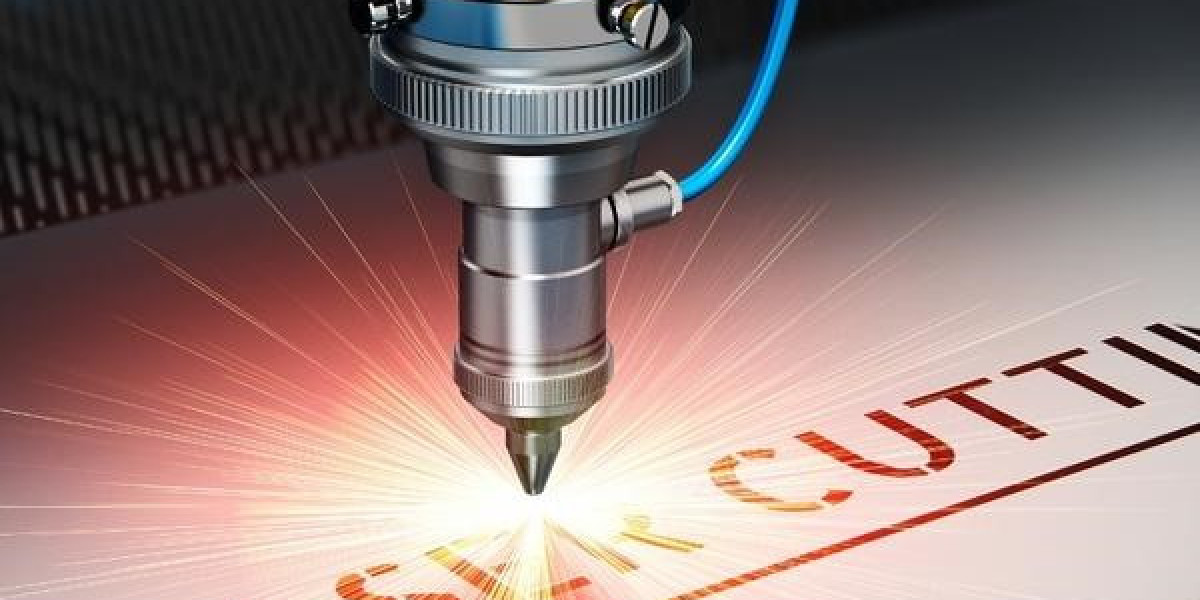

Laser metal cleaner technology is reshaping how industries remove rust, paint, and contaminants from surfaces. Using highly focused laser beams, this contactless cleaning method offers precision, speed, and environmental safety—all while preserving the integrity of the metal underneath.
This blog breaks down everything you need to know about laser metal cleaner, their applications, benefits, and why they’re becoming the preferred solution in aerospace, automotive, and manufacturing industries.
What is a Laser Metal Cleaner?
A laser metal cleaner uses high-intensity laser pulses to remove contaminants from metal surfaces. Instead of abrasive materials or chemicals, it relies on photothermal ablation—a process where laser energy heats and vaporizes unwanted layers like rust or paint without damaging the substrate.
Key Features:
Non-contact & eco-friendly
No need for chemicals or abrasives
Low maintenance and high durability
Minimal heat input, reducing surface warping
How Laser Metal Cleaners Work
Laser cleaners emit a beam that heats contaminants on a metal surface. These contaminants absorb the laser energy more rapidly than the metal, causing them to evaporate or dislodge.
Step-by-Step Process:
Laser is directed at the contaminated surface.
Contaminants absorb laser energy.
Particles are either vaporized or lifted.
Clean metal remains untouched underneath.
Benefits of Using a Laser Metal Cleaner
| Advantage | Details |
|---|---|
| Eco-Friendly | Eliminates the need for toxic solvents or abrasive blasting. |
| Precision | Target specific areas without affecting adjacent surfaces. |
| Cost-Effective | Long-term savings by reducing material wear and labor costs. |
| Safety | Minimal dust and fumes when used with proper fume extraction. |
| Automation Ready | Compatible with CNC machines and robotic arms for mass production cleaning. |
Where Are Laser Metal Cleaners Used?
Laser cleaning is becoming a staple in various sectors due to its versatility.
Common Applications:
Rust removal on structural steel and machinery
Weld preparation and post-weld cleaning
Paint stripping for automotive restoration
Coating removal in aerospace parts maintenance
Decontamination in nuclear facilities
Types of Laser Cleaners
| Type | Use Case |
|---|---|
| Handheld Lasers | On-site cleaning, especially in fieldwork |
| Stationary Systems | Production lines and manufacturing setups |
| Pulsed Lasers | Precision cleaning for sensitive materials |
| Continuous Wave | High-speed industrial surface cleaning |
FAQs on Laser Metal Cleaners
Q1: Is laser cleaning safe for all metals?
Yes, when used correctly, laser cleaning is suitable for aluminum, steel, titanium, copper, and alloys. Surface damage is minimal due to precise energy control.
Q2: How much power is needed?
Laser metal cleaners typically range from 50W to over 2000W. For delicate work, 100W–200W is sufficient. Industrial-grade cleaning often requires 1000W+.
Q3: Does laser cleaning produce hazardous waste?
No liquid waste is generated. Particles are turned to dust or vapor and can be extracted with filters or collectors.
Q4: What is the lifespan of a laser cleaning system?
With proper maintenance, a fiber laser can last over 100,000 hours of operation.
Q5: Can it be used for historical artifact restoration?
Absolutely. Laser cleaning is widely used in archaeology and art conservation because it is non-invasive and highly controllable.
Bullet Points: Why Professionals Prefer Laser Metal Cleaners
Clean with micron-level accuracy
Zero chemical usage—no regulatory storage concerns
Reduce cleaning time by up to 70%
Extend equipment lifespan by preserving material integrity
Improve worker safety by limiting exposure to toxins
Easy integration with existing automation lines
Interactive Tip: Is Laser Cleaning Right for You?
If you’re dealing with:
Repeated rusting
High labor costs from sandblasting
Delicate surfaces that require care
Regulatory challenges with chemical disposal
Laser cleaning is a modern alternative worth considering.
Technical Insight: Comparing Laser Cleaning to Traditional Methods
| Method | Laser Cleaning | Sandblasting | Chemical Cleaning |
|---|---|---|---|
| Contact-Free | Yes | No | No |
| Waste Generation | Minimal | High dust | Toxic residues |
| Material Damage Risk | Low | Moderate | High |
| Automation Friendly | Yes | Limited | No |
| Precision | High | Low | Medium |
Final Thought
Laser metal cleaner systems are no longer the future—they’re the present. With unmatched control, safety, and sustainability, industries seeking efficiency and quality are increasingly adopting this technology for both delicate and industrial applications.