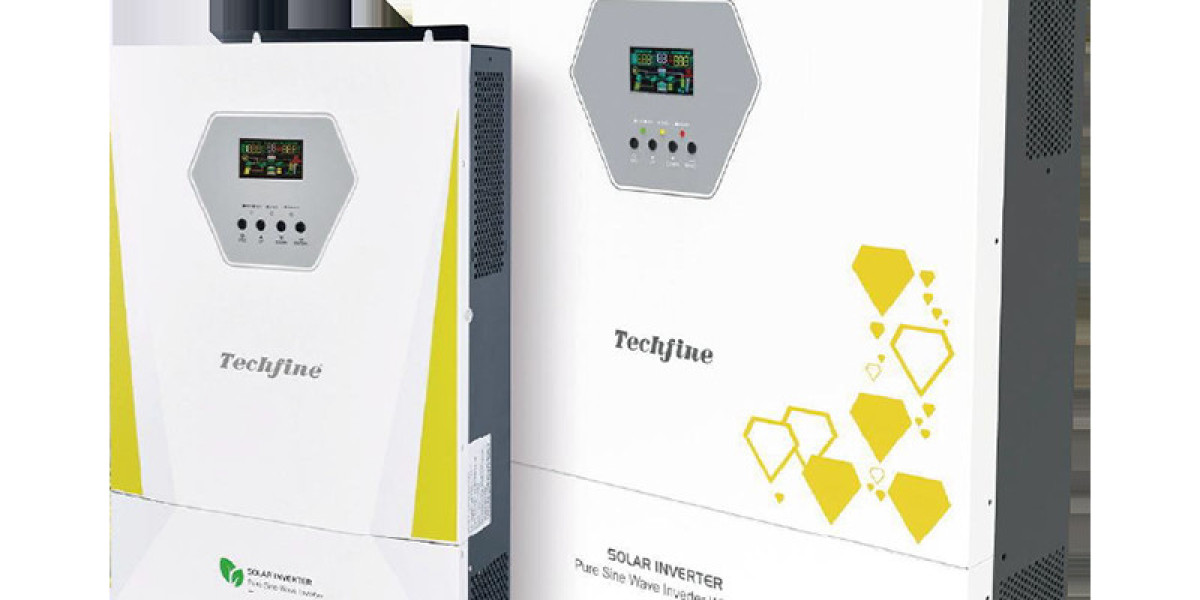

The role of the contemporary PV inverter extends well beyond basic DC-to-AC conversion to include active grid support and system management functionalities. As the penetration of solar energy increases on electrical grids, the PV inverter has evolved from a passive generator into an intelligent grid asset. Advanced inverters, sometimes termed "smart" or "grid-supportive," can provide services that help maintain grid stability and power quality. These capabilities are becoming increasingly important for the reliable integration of high levels of variable renewable generation. This analysis explores the advanced grid functions, communication protocols, and safety features that define modern PV inverter technology, concluding that its sophistication is key to a sustainable energy future.
A primary advanced function is dynamic grid support. Traditional inverters simply disconnect during grid disturbances. Modern grid-supportive PV inverters, however, can ride through minor fluctuations in voltage and frequency without shutting down, providing what is known as Low Voltage Ride Through and Frequency Ride Through. This prevents the sudden loss of thousands of solar systems during a minor grid event, which could exacerbate the problem. Furthermore, some PV inverters can provide reactive power support. While active power does the actual work, reactive power is necessary to maintain grid voltage levels. A PV inverter can be programmed to inject or absorb reactive power as needed, helping to stabilize local voltage and reduce strain on grid infrastructure, a service traditionally provided only by large power plants.
Another critical capability involves power curtailment and management. During periods of high solar production and low local demand, grid voltage on a distribution circuit can rise too high. A smart PV inverter can respond by dynamically reducing its active power output—a process called volt-watt response. This allows more solar to be integrated onto existing power lines without causing violations. Similarly, a PV inverter can be configured with a set maximum power output limit to comply with utility interconnection agreements. For systems with battery storage, the PV inverter often forms part of a hybrid inverter or is paired with a separate battery inverter, intelligently managing energy flow between solar panels, batteries, and the grid based on time-of-use rates or backup power needs.
Communication and control are foundational to these smart functions. A modern PV inverter typically supports standard communication protocols like SunSpec Modbus or IEEE 2030.5. This allows it to receive external setpoints from a utility or a system controller. For instance, a utility could send a signal to a fleet of PV inverters to temporarily reduce output during peak grid stress. On the consumer side, this communication enables detailed monitoring and control via apps. Safety remains paramount; all advanced functions are built upon the PV inverter's core requirement to detect an island condition and disconnect immediately during a true grid outage for safety.
The PV inverter has transitioned into an active participant in grid management. Its value now encompasses not only energy conversion but also the provision of grid services that enhance overall system reliability and enable higher renewable penetration. Therefore, the specifications of a PV inverter regarding its grid support functions, communication capabilities, and interoperability are as important as its basic efficiency rating. As electricity networks evolve towards greater decentralization, the intelligent PV inverter stands as a critical enabling technology, ensuring that distributed solar generation contributes positively to grid stability and resilience, rather than presenting a challenge to be managed.
Ubicación del Autor
London, Reino Unido