
Tailored clothing changes how a woman's outfit fits by adjusting every measurement to match her unique body shape. Instead of settling for "close enough" sizing, tailoring brings fabric closer where it should sit snug and releases it where more room is needed. The result is clothing that moves with the body, sits flat without pulling, and creates a polished appearance that ready made garments rarely achieve.
The Core Problem With Standard Sizing
Most women know the frustration of buying clothes that fit in one area but fail in another. A blazer might fit the shoulders but gap at the waist. Trousers may sit perfectly on the hips but bunch at the ankles. Dresses often need taking in at the bust or letting out at the hips.
This happens because standard sizing is based on average measurements. But no woman is average in every dimension. Height, torso length, shoulder width, arm length, bust size, waist placement, and hip curves all vary independently from person to person.
Tailored womens clothing addresses this by treating each measurement as a separate adjustment point rather than forcing the body into predetermined size brackets.
Where Tailoring Makes the Biggest Difference
Shoulder and Neckline Alignment
The shoulder seam is one of the most visible fit indicators. When a shoulder seam droops past the natural shoulder point, the entire garment looks oversized. When it sits too high, fabric pulls and restricts movement.
A tailor can reset shoulder seams to sit exactly where they should. This single adjustment often transforms how a jacket or blouse looks on the body.
Bust and Dart Placement
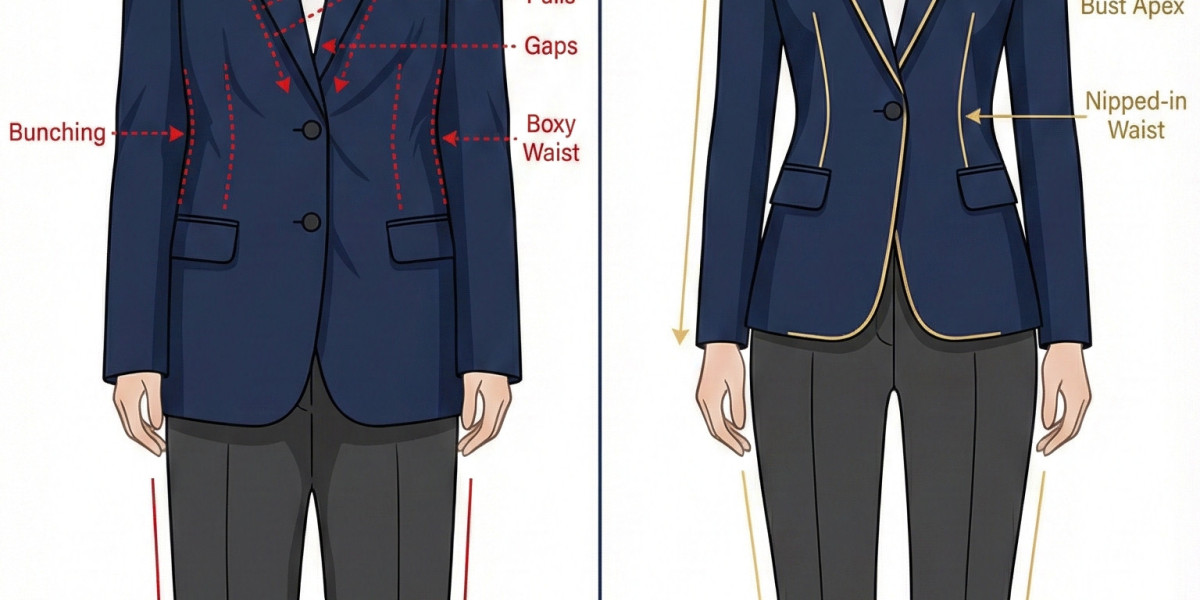
Women's clothing relies heavily on darts to create shape. Factory made garments place darts based on standard proportions. If a woman's bust sits higher or lower than average, the dart misses its target. This creates wrinkling, pulling, or an unflattering silhouette.
Tailoring repositions darts to match the actual high point of the bust, allowing fabric to drape correctly.
Waist Definition
Off the rack clothing often skips the waist entirely or places it incorrectly. For women with a defined waist, this means clothes look boxy. For women with shorter or longer torsos, waistbands end up in awkward positions.
Taking in the waist or adjusting where a waistband sits creates proper proportions and a more refined appearance.
Hip and Seat Adjustments
Trousers and skirts commonly pull across the hips or sag in the seat. This happens when the hip to waist ratio differs from the pattern used in production.
A tailor can add or remove fabric at the hips and reshape the seat curve to eliminate pulling and bunching.
Hemlines and Length
Proper length affects both function and proportion. Trousers that pool at the ankle or sleeves that extend past the wrist make outfits look unfinished. Skirt lengths that hit at unflattering points on the leg can shorten the visual line of the body.
Custom hemming creates the right length for height, shoe choice, and personal preference.
Why Ready Made Clothing Falls Short
Clothing manufacturers produce garments at scale. They use standardized patterns graded up or down from a base size. This system works for efficiency, not precision.
Additionally, different brands interpret sizes differently. A size 10 from one label fits nothing like a size 10 from another. Women often own clothing across three or four sizes depending on brand and cut.
Tailored womens clothing removes this inconsistency. Whether adjusting a purchased garment or creating something from scratch, the focus stays on one body with its specific measurements.
What Actually Happens During a Fitting
A professional fitting typically involves several steps:
Taking measurements at multiple points including bust, waist, hips, shoulder width, arm length, and torso length
Checking posture and stance to account for how fabric naturally falls on the body
Pinning adjustments while the garment is worn to see changes in real time
Marking alterations for shoulder adjustments, dart repositioning, hem length, and side seam shaping
The tailor then makes alterations based on these markings. Complex adjustments may require a second fitting before final finishing.
Investment Versus Cost
Many women hesitate at tailoring costs. However, a well fitted garment gets worn repeatedly. A poorly fitted one often sits unworn or gets discarded.
Basic alterations like hemming and taking in seams are relatively affordable. More complex adjustments like resetting shoulders or restructuring bodices cost more but can rescue expensive pieces that would otherwise go unused.
The return comes in clothing that performs its function: looking good, feeling comfortable, and lasting through repeated wear.
Practical Applications
Business professionals benefit from jackets and trousers that project competence without distraction from poor fit. Women attending formal events gain confidence from dresses that sit correctly without constant adjustment. Even casual wear improves when basic pieces like jeans and blazers fit precisely.
The common thread is intentionality. Rather than accepting what mass production offers, tailoring puts control back into the wearer's hands.
Conclusion
Tailored clothing changes fit by acknowledging that bodies are not standardized. Every adjustment, from shoulder seams to hemlines, serves a specific purpose. The outcome is clothing that sits correctly, moves comfortably, and presents a finished appearance. For women tired of settling for approximate sizing, tailoring offers a practical solution grounded in craftsmanship rather than compromise.
Frequently Asked Questions
Q.1 How much does it cost to tailor a dress or blazer?
Ans: Basic alterations like hemming typically range from $10 to $30. Taking in seams or adjusting darts may cost $20 to $60. Complex work like restructuring shoulders can run $75 or more depending on the garment and tailor.
Q.2 Can all clothing be tailored?
Ans: Most garments can be altered to some degree. However, items with limited seam allowance, complex construction, or delicate fabrics may have restrictions. A tailor can assess what adjustments are possible during a consultation.
Q.3 How do I find a good tailor?
Ans: Ask for recommendations from local dry cleaners, bridal shops, or clothing boutiques. Read reviews and start with a simple alteration to test their work before committing to larger projects.
Q.4 Should I buy clothes in a larger or smaller size if I plan to tailor them?
Ans: Generally, buy to fit your largest measurement point. It is easier to take fabric in than to let it out. A tailor can reduce excess fabric at other areas.
Q.5 How long do alterations usually take?
Ans: Simple hemming may be ready in a few days. More involved alterations typically take one to two weeks. Rush services are often available for an additional fee.