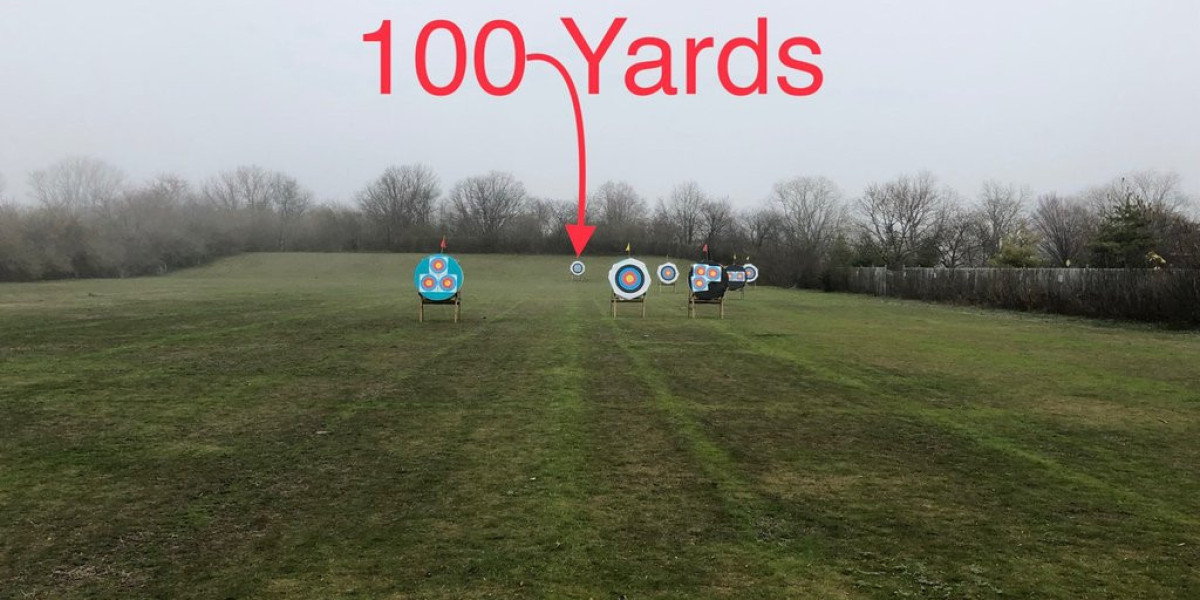

We present the precise and universally accepted conversion of 100 yards to meters using the international measurement standard.
100 yards equals exactly 91.44 meters.
This value is based on the fixed definition where 1 yard = 0.9144 meters. The conversion is exact, not rounded, and is used consistently across science, engineering, athletics, construction, and international standards.
Formula used:
meters = yards × 0.9144
100 yards × 0.9144 = 91.44 meters
Why the 100 Yards to Meters Conversion Matters
The conversion from yards to meters is essential because yards are primarily used in the United States and the United Kingdom, while meters are the global SI unit of length. Converting 100 yards to meters ensures clarity, accuracy, and consistency in international communication, documentation, and measurement.
This conversion is especially relevant in:
Track and field athletics
American football and sports analytics
Construction and land measurement
Military and tactical distance estimation
Education and academic work
100 Yards in Meters for Sports and Athletics
In competitive sports, distances are frequently referenced in yards, particularly in American football and legacy track events. When converted to metric units, 100 yards equals 91.44 meters, which is shorter than the standard 100-meter sprint.
This distinction is critical when comparing athletic performances:
100 yards: 91.44 meters
100 meters: approximately 109.36 yards
Sprint times over 100 yards are therefore not directly comparable to 100-meter sprint times without adjustment.
Comparison Table: Yards to Meters Around 100 Yards
| Distance (Yards) | Distance (Meters) |
|---|---|
| 90 yards | 82.30 meters |
| 95 yards | 86.87 meters |
| 100 yards | 91.44 meters |
| 105 yards | 96.01 meters |
| 110 yards | 100.58 meters |
This table highlights how 100 yards in meters fits into the broader conversion range and reinforces its precise placement at 91.44 meters.
Historical Context of Yards and Meters
The yard originates from traditional English measurement systems, while the meter was developed as part of the metric system for universal standardization. Today, the meter is defined using the speed of light, while the yard remains legally defined in terms of the meter.
Because of this relationship, conversions such as 100 yards to meters are mathematically exact rather than estimated.
Engineering and Construction Applications
In engineering and construction documentation, mixing measurement systems without proper conversion can cause costly errors. Using the exact value of 91.44 meters for 100 yards ensures alignment with metric-based specifications, blueprints, and compliance standards.
Common use cases include:
Site planning and surveying
Road and infrastructure design
Utility layout and spacing calculations
Precision in these fields depends on exact conversions rather than approximations.
Military and Tactical Distance Interpretation
Distance estimation in military and tactical contexts often uses yards, especially in legacy systems. When translated to metric maps or international coordination, 100 yards converts directly to 91.44 meters, allowing seamless interoperability.
This conversion is also relevant in:
Training simulations
Range estimation
Field navigation exercises
Educational Use of 100 Yards to Meters
In mathematics and physics education, the 100 yards to meters conversion is frequently used to demonstrate:
Unit conversion principles
Multiplication with fixed constants
Differences between imperial and metric systems
Students are often taught to remember the key constant:
1 yard = 0.9144 meters, making 100 yards = 91.44 meters an intuitive extension.
Common Mistakes When Converting 100 Yards to Meters
Several recurring errors appear in informal conversions:
Rounding 100 yards to 90 meters instead of 91.44 meters
Confusing yards with feet
Using approximate conversion factors instead of the exact value
For accuracy-critical contexts, the precise figure of 91.44 meters must always be used.
Quick Reference Conversion Formula
For fast and reliable calculations:
Yards to meters: multiply by 0.9144
Meters to yards: divide by 0.9144
Applying this rule ensures consistent and error-free results.
Practical Examples Using 100 Yards in Meters
A football field segment of 100 yards measures 91.44 meters
A sprint training distance labeled 100 yards equals 91.44 meters
A construction setback of 100 yards converts to 91.44 meters
These examples demonstrate how the conversion applies seamlessly across real-world scenarios.
Metric Comparison: Visualizing 91.44 Meters
To visualize 91.44 meters, consider:
Slightly shorter than a full soccer field length
Longer than a standard Olympic swimming pool
Approximately 300 feet in imperial units
This contextualization helps translate abstract numbers into physical understanding.
Conclusion: Accurate Conversion of 100 Yards to Meters
100 yards equals exactly 91.44 meters. This conversion is precise, standardized, and universally accepted. Whether applied in sports, engineering, education, or technical documentation, using the exact value ensures clarity and consistency.