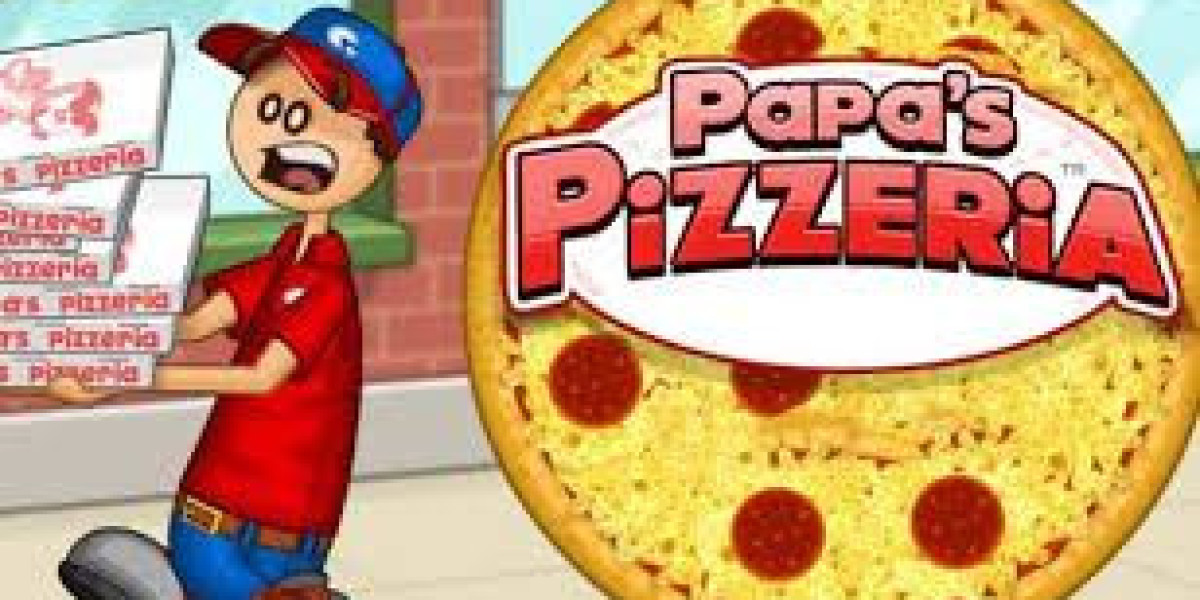

There’s a specific kind of silence in Papa’s Pizzeria that only shows up when things start to go wrong.
It’s not actual silence, of course. The game has its usual background noise, the soft clicks and movement between stations. But mentally, everything narrows. You notice the oven more. The waiting customers. The unfinished pizza sitting halfway covered in toppings.
And time starts to feel different.
Not faster, not slower—just heavier.
Time Isn’t Neutral Here
In most games, time is either a background system or a visible countdown. You’re racing against it, or ignoring it.
In Papa’s Pizzeria, time sits somewhere in between.
There’s no ticking clock telling you when you’ve failed. No dramatic buzzer when things fall apart. But everything is quietly measured:
How long a customer waits before ordering
How evenly you place toppings, without rushing
How long a pizza sits in the oven before it tips from perfect to ruined
Nothing forces you to hurry—but everything punishes you if you don’t manage time well.
That subtle pressure changes how you play.
You start feeling time instead of tracking it.
Waiting as a Game Mechanic
What’s interesting is how much of the game is built around waiting.
You’re waiting for customers to arrive. Waiting for pizzas to bake. Waiting for the right moment to switch tasks.
But it never feels passive.
Waiting becomes active decision-making. Do you stay at the oven and watch closely, or risk stepping away to take another order? Do you finish one pizza completely, or leave it half-done while you handle something else?
Every moment of waiting carries a small risk.
And because the game rarely interrupts you with explicit alerts, you’re responsible for remembering everything. That mental load is where the tension comes from.
It’s not about speed—it’s about attention.
The Weight of Small Mistakes
A pizza left in the oven just a few seconds too long doesn’t explode or fail dramatically.
It just… scores lower.
That’s what makes mistakes feel heavier than they should.
They’re not catastrophic, but they’re visible. Measurable. Permanent.
You can’t undo a slightly uneven topping spread. You can’t fix a cut that’s just a bit off-center. The game doesn’t give you a reset button for small errors—it lets them accumulate.
And over time, you start to care about those details more than you expected.
Because each one reflects how well you handled the moment.
Attention as a Limited Resource
The game quietly teaches you that attention is finite.
You can’t focus on everything at once—not really.
If you’re carefully placing toppings to maximize accuracy, you might lose track of the oven. If you’re rushing to take multiple orders, you might compromise the quality of what’s already in progress.
So you start allocating attention like it’s a resource.
You decide what deserves focus and what can be handled quickly. You accept that something might slip—but you try to control what slips.
This is where the experience starts to feel surprisingly close to real-world task management, something touched on in [how attention shapes performance under pressure]. It’s not about doing everything perfectly. It’s about choosing where perfection matters.
The Rhythm of Controlled Chaos
When the game is at its best, it feels like controlled chaos.
Customers are lining up. Multiple pizzas are mid-process. You’re moving quickly between stations, trying to keep everything from collapsing.
And yet, there’s a rhythm underneath it.
You know when to glance at the oven. You know how long you can leave a task unattended. You know which order to prioritize when everything feels urgent.
It’s not calm—but it’s not panic either.
It’s a state where you’re fully engaged, making constant small decisions, adjusting in real time. A kind of focus that’s hard to replicate outside of these tightly designed systems.
Why It’s Hard to Walk Away Mid-Shift
One of the more subtle hooks of games like this is how difficult it is to stop in the middle of a session.
Not because of rewards or cliffhangers, but because of incompletion.
You don’t want to leave with orders unfinished. With customers waiting. With a system still in motion.
There’s always one more pizza that feels like it needs your attention before you can step away.
That’s what pulls you into “just one more day.” Not ambition—responsibility.
Even though the stakes are fictional, the structure creates a sense of obligation. You started the shift, so you want to finish it properly.
This ties into something explored in [why unfinished tasks stay in your mind], where incomplete systems create a kind of mental tension that’s hard to ignore.
The Calm After the Rush
Then, suddenly, it ends.
The last customer leaves. The oven is empty. The stations are quiet again.
And there’s a brief moment where everything feels still.
That contrast—the shift from constant motion to complete calm—is part of what makes the experience stick. You feel the absence of pressure just as strongly as you felt its presence.
It’s a small reset.
A chance to reflect on how things went, even if only for a second before the next day begins.
Why It Feels Meaningful (Even When It Isn’t)
Objectively, nothing that happens in Papa’s Pizzeria really matters.
No long-term consequences. No lasting impact. Just a cycle of orders and scores.
And yet, while you’re playing, it feels meaningful.
Because the game is built around clear cause and effect. Effort leads to visible results. Attention improves outcomes. Mistakes have understandable consequences.
That clarity is satisfying.
It creates a small world where your actions always connect to what happens next. No randomness, no ambiguity—just systems responding to how you engage with them.
In that space, even making a pizza can feel important.