
Electronic and electrical products are an essential part of modern life, but their disposal creates a growing environmental challenge. As the use of electronics increases, businesses involved in manufacturing, importing, and selling electrical and electronic equipment in India need to understand their responsibilities for managing the e-waste generated from their products.
The Extended Producer Responsibility (EPR) framework under India's E-Waste (Management) Rules, 2022 places responsibility on specified producers for managing the end-of-life stage of covered electrical and electronic equipment.
For businesses covered by the rules, obtaining EPR Registration for E-Waste from the Central Pollution Control Board (CPCB) is an important compliance requirement.
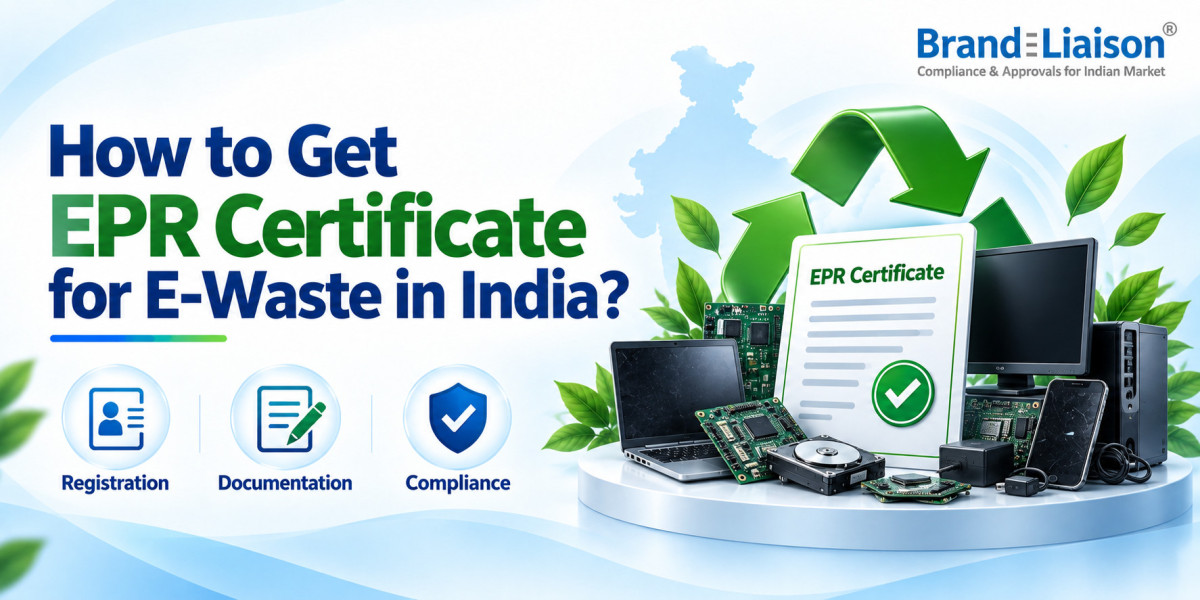
In this guide, we explain how to get an EPR Certificate for E-Waste in India , including eligibility, registration process, documents, EPR obligations, EPR certificates, costs, timelines, returns, and how Brand Liaison can assist.
What is an EPR Certificate for E-Waste?
EPR stands for Extended Producer Responsibility .
Under the E-Waste (Management) Rules, 2022, the EPR framework requires covered producers to take responsibility for the environmentally sound management of e-waste arising from their electrical and electronic equipment.
The CPCB operates an online E-Waste EPR Portal through which producers can apply for registration and manage their EPR obligations. CPCB states that the portal is used for producer registration, EPR targets/obligations, and online purchase and transfer of EPR certificates.
It is useful to distinguish between:
E-Waste EPR Registration — registration of the producer with CPCB.
EPR Target/Obligation — the recycling responsibility assigned to the registered producer, where applicable.
EPR Certificate — certificates generated by registered recyclers and transferred through the CPCB portal to registered producers for fulfilling applicable EPR obligations.
Therefore, when businesses search for “EPR Certificate for E-Waste,” they may be referring either to producer EPR registration or to the EPR certificates used for fulfilling recycling obligations.
Who Needs EPR Registration for E-Waste in India?
Under the E-Waste (Management) Rules, 2022, the EPR framework covers four categories of entities:
Manufacturer
Producer
Refurbisher
Recycle
CPCB's producer registration SOP states that producers of notified electrical and electronic equipment are required to register on the portal and obtain EPR targets through the portal as applicable.
A producer can include an entity that:
Manufactures and sells electrical and electronic equipment under its own brand
Sells under its own brand equipment manufactured or assembled by another manufacturer
Offers imported electrical and electronic equipment for sale
Imports used electrical and electronic equipment
The specific definition and applicability should be checked against the current rules and the product categories listed under the applicable schedules.
What Products Come Under E-Waste EPR?
EPR obligations apply to electrical and electronic equipment covered under the E-Waste (Management) Rules and their applicable schedules.
Examples can include various categories of:
Consumer electronics
Information technology equipment
Telecommunication equipment
Electrical equipment
Display equipment
Large and small electronic appliances
Other notified electrical and electronic equipment
The exact applicability depends on the product category and the current list of covered equipment.
Businesses should therefore check their product against the applicable CPCB E-Waste requirements before deciding whether EPR registration is required.
How to Get EPR Certificate for E-Waste in India?
The E-Waste EPR registration process is handled through the CPCB's online E-Waste EPR Portal.
Step 1: Determine EPR Applicability
First, identify whether your business qualifies as a manufacturer, producer, refurbisher, or recycler under the E-Waste (Management) Rules, 2022.
For producers, also identify the electrical and electronic equipment being manufactured, imported, or sold under the applicable brand.
This step is important because the EPR obligation depends on the nature of the business and the products involved.
Step 2: Identify the Applicable EEE Categories
The producer needs to identify the applicable electrical and electronic equipment categories.
Product information may include:
Product name
Product category
Brand
Model
Quantity sold
Manufacturing quantity
Import quantity
Weight-related information
Other information required by the CPCB portal
Accurate product classification is important for calculating and managing EPR obligations.
Step 3: Prepare the Required Documents
Before starting the online application, the applicant should prepare the necessary company, product, and compliance documents.
Depending on the applicant and registration type, these may include:
Company incorporation/registration documents
PAN
GST certificate
Authorized signatory details
Brand/trademark documents
Product details
Importer/manufacturer information
IEC, where applicable
Sales/import data
RoHS-related declarations and technical documentation
Other documents required by CPCB
The exact documents can vary according to the applicant category and portal requirements.
Step 4: Create an Account on the CPCB E-Waste EPR Portal
The producer needs to create an account on the designated CPCB E-Waste EPR Portal.
CPCB's portal provides online registration facilities for producers and other stakeholders under the E-Waste (Management) Rules, 2022.
Step 5: Fill in the Producer Registration Application
The applicant must enter the required business and product information.
This may include:
Company information
Registered address
Manufacturing/import details
Brand information
EEE categories
Product quantities
Sales information
Contact details
Authorized person information
The information should be accurate and supported by appropriate records.
Step 6: Submit the Required Declarations
The CPCB portal requires specified declarations and supporting documents.
The current portal provides, among other items, a covering letter/undertaking and a signed declaration on the company's letterhead for producer applications.
Applicants should carefully review the current portal requirements before submitting the application.
Step 7: CPCB Reviews the Application
After submission, CPCB reviews the information and documents.
If deficiencies or clarifications are identified, the applicant may need to respond through the portal.
Providing complete and consistent information can help reduce avoidable delays.
Step 8: Receive EPR Registration
Once the application is approved, CPCB generates the EPR Registration Certificate for the producer through the E-Waste EPR Portal.
The registered producer can then manage its applicable EPR obligations through the portal.
How Do Producers Fulfil E-Waste EPR Obligations?
Obtaining EPR registration is not the end of the compliance process.
Registered producers have to fulfil their applicable EPR targets/obligations through the CPCB EPR framework.
CPCB states that producers are required to achieve applicable EPR targets through the portal.
The process generally involves:
Obtaining EPR registration
Reporting relevant sales data
Receiving applicable EPR targets
Procuring eligible EPR certificates from registered recyclers
Transferring/using the certificates through the portal as applicable
Filing required returns
Maintaining supporting records
What is an EPR Certificate Generated by a Recycler?
An EPR certificate is associated with recycling activity carried out by a registered e-waste recycler.
Registered recyclers generate EPR certificates through the CPCB portal based on their eligible recycling activity. These certificates can then be transferred to registered producers for fulfilment of applicable EPR obligations.
CPCB's E-Waste EPR Portal specifically provides a framework for generation and transfer of EPR certificates.
This creates a digital mechanism connecting producers with registered recyclers.
Can You Buy EPR Certificates for E-Waste?
Registered producers can fulfil their applicable EPR obligations through eligible EPR certificates available through the CPCB EPR system.
CPCB states that producers fulfil their EPR responsibility through online purchase of EPR certificates from registered recyclers and submit the relevant information through the portal/returns.
Businesses should ensure that they deal only with appropriately registered entities and follow the current CPCB portal process.
Documents Required for E-Waste EPR Registration
The exact documentation depends on the applicant and the nature of the business.
Common documents may include:
Company Documents
Certificate of Incorporation
PAN
GST Registration
Registered office details
Authorized signatory details
Product and Brand Documents
Brand/trademark documents
Product list
EEE category details
Product specifications
Model information
Sales data
Import data, where applicable
Importer Documents
For importers, documents may include:
Import Export Code (IEC)
Import-related information
Brand authorization, where applicable
Product information
Compliance Documents
Depending on the application, businesses may also need:
RoHS compliance declaration
Technical documents
Undertakings
Self-declarations
Other CPCB-prescribed documents
Applicants should always check the current CPCB portal and applicable SOP before submitting the application.
What is RoHS Compliance in E-Waste EPR?
RoHS stands for Restriction of Hazardous Substances.
The E-Waste (Management) Rules, 2022 include requirements relating to restriction of hazardous substances in electrical and electronic equipment.
Manufacturers and producers should maintain the relevant technical documentation and declarations demonstrating compliance with applicable requirements.
CPCB's FAQ also refers to a self-declaration on RoHS compliance and availability of technical documents in the context of adding EEE items to an existing producer registration.
E-Waste EPR Certificate Cost in India
The total cost of obtaining and maintaining E-Waste EPR compliance depends on several factors.
Costs may include:
CPCB registration fee, where applicable
Annual maintenance charges
Professional consultancy charges
Documentation expenses
EPR certificate procurement costs
Other compliance-related expenses
The cost of EPR certificates themselves can vary based on applicable market and regulatory factors.
Therefore, there is no single fixed price for EPR Certificate for E-Waste in India.
Businesses should assess their product category, annual sales/import quantities, EPR obligation, and compliance requirements before estimating the total cost.
How Long Does E-Waste EPR Registration Take?
The processing time can vary depending on:
Completeness of the application
Accuracy of submitted information
Product classification
Supporting documents
CPCB review
Clarifications or deficiencies
Portal processing
CPCB's SOP indicates that where an application is incomplete, shortcomings are communicated through the portal and the applicant is required to respond within the specified period.
Preparing complete documentation before submission can help avoid unnecessary delays.
E-Waste EPR Quarterly and Annual Returns
EPR compliance continues after registration.
Registered producers are required to maintain their applicable records and submit returns through the CPCB portal according to the prescribed requirements.
CPCB currently reminds registered stakeholders to file quarterly returns regularly and on time. The portal also currently states that the annual return filing deadline for FY 2025–26 has been extended to 30 September 2026.
Businesses should always check the CPCB portal for the latest return deadlines because regulatory timelines can change.
EPR Registration for Imported Electronic Products
Importers and foreign brands selling electrical and electronic equipment in India should carefully evaluate their EPR obligations.
A company that imports covered electrical and electronic equipment for sale in India may fall within the definition of a producer under the E-Waste (Management) Rules, 2022.
Foreign manufacturers and importers should therefore assess:
Product category
Brand ownership
Import structure
Sales model
EEE quantities
Applicable EPR obligation
CPCB registration requirements
Completing EPR compliance before commercial operations can help businesses avoid regulatory issues.
Common Mistakes in E-Waste EPR Registration
Businesses can face delays or compliance issues because of avoidable errors.
1. Incorrect Product Classification
Selecting the wrong EEE category can affect registration and EPR calculations.
2. Inconsistent Sales Data
Sales and import data should be accurate and supported by business records.
3. Missing RoHS Documentation
Applicable RoHS declarations and technical documents should be maintained.
4. Incomplete Company Documents
Company, GST, PAN, brand, and authorization information should be consistent.
5. Treating Registration as the Entire Compliance
EPR registration is only one part of the process. Producers must also fulfil applicable EPR obligations and submit required returns.
6. Purchasing Certificates from Unregistered Recyclers
Producers should use the CPCB EPR system and eligible registered recyclers for applicable EPR certificate transactions.
7. Missing Return Deadlines
Quarterly and annual reporting requirements should be monitored regularly.
How Brand Liaison Helps with E-Waste EPR Registration?
Brand Liaison provides professional assistance for businesses seeking EPR compliance for electronic and electrical products in India.
Our E-Waste EPR support can include:
EPR applicability assessment
Product category identification
CPCB EPR registration assistance
Documentation support
Product and brand data preparation
RoHS documentation guidance
EPR obligation assistance
EPR certificate compliance support
Return filing assistance
Amendment and update support
End-to-end EPR compliance guidance
With 12 years of experience in compliance certification and support for 500+ manufacturers, Brand Liaison helps manufacturers, importers, and brands navigate India's product compliance requirements.
Frequently Asked Questions About E-Waste EPR
What is an EPR Certificate for E-Waste?
EPR compliance for e-waste involves CPCB registration and fulfilment of applicable recycling obligations under the E-Waste (Management) Rules, 2022. EPR certificates generated by eligible registered recyclers can be transferred through the CPCB portal for producers to fulfil applicable obligations.
Who needs E-Waste EPR Registration in India?
Covered manufacturers, producers, refurbishers, and recyclers are required to register under the applicable E-Waste (Management) Rules, 2022 framework. Producers of notified electrical and electronic equipment are required to register through the CPCB E-Waste EPR Portal.
Is EPR registration mandatory for electronic product importers?
An importer offering covered electrical and electronic equipment for sale can fall within the definition of a producer. Applicability should be assessed based on the product and business model.
How much does E-Waste EPR Registration cost?
The total cost depends on applicable CPCB charges, maintenance charges, professional assistance, EPR certificate requirements, and other factors. There is no single fixed cost for every business.
How long does EPR registration take?
The timeline varies depending on the completeness of the application, supporting documents, CPCB review, and any clarification required.
Do producers need to file EPR returns after registration?
Yes. EPR compliance continues after registration, and producers must meet applicable obligations and submit the prescribed returns through the CPCB portal.
Can Brand Liaison help with E-Waste EPR Registration?
Yes. Brand Liaison can assist manufacturers, importers, and brands with EPR applicability, documentation, CPCB registration, EPR compliance, and return-related support.
Conclusion
Getting an EPR Certificate for E-Waste in India involves more than simply completing an online registration form. Businesses dealing with covered electrical and electronic equipment need to identify their EPR applicability, register through the CPCB E-Waste EPR Portal, provide accurate product and business information, fulfill applicable recycling obligations, and maintain the required compliance records and returns.
Under the current E-Waste (Management) Rules, 2022 framework, CPCB manages the E-Waste EPR registration and certificate system through its online portal.
For manufacturers, importers, and brands entering or operating in the Indian electronics market, understanding EPR requirements early can make ongoing compliance easier to manage.
BIS ISI certification consultant in India
BIS ISI consultant in India
BIS ISI Certification Consultant in Delhi
BIS CRS Rertification Consultant in Delhi
WPC Certificate Consultant in Delhi
WPC ETA Certificate Consultant
BEE Certification Consultant in India
BEE Certification Consultant in Delhi
EPR certification consultant in India
EPR certification consultant in Delhi
EPR Certification for Electronic Waste
EPR Certificate for Plastic Waste
EPR Certification for Battery Waste
EPR Certification for Tire Waste
EPR Certification for Used Oil
TEC Certification Consultant in India
TEC certification consultant in Delhi
Best BIS Scheme X Consultant
BIS Certificate for Work Chairs