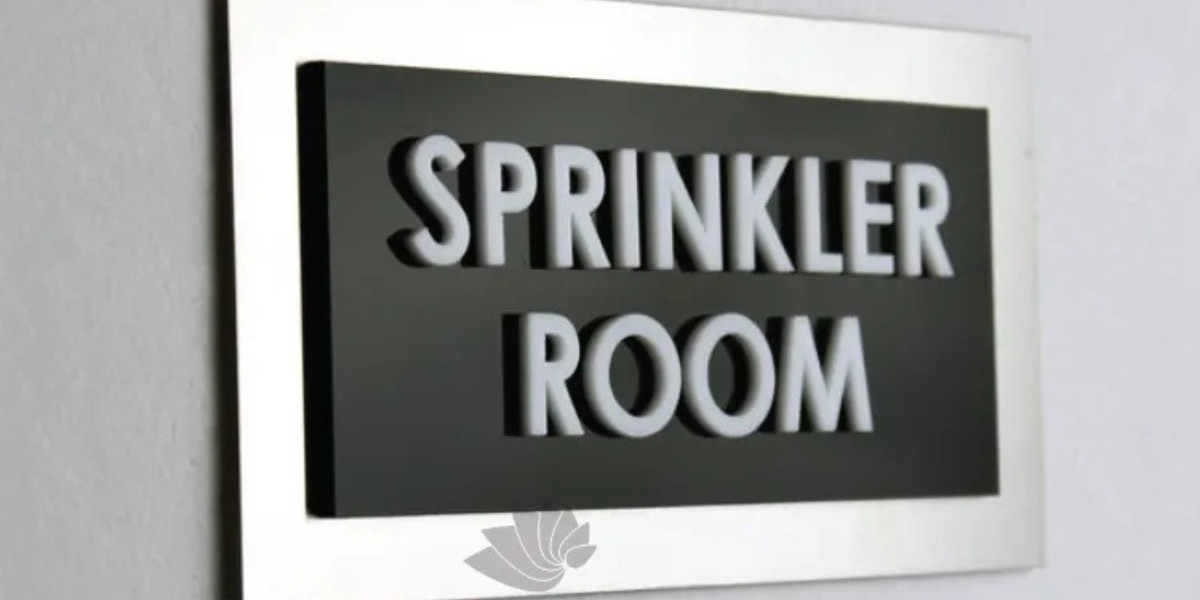

A name board helps people understand who, what, or where something is. It might identify an office, employee, department, shop, classroom, property, or meeting room. Although the sign itself may be small, clear identification can make a building much easier to use.
The right choice depends on several things, including where the sign will be placed, how far away it needs to be read, how often the information changes, and the type of environment around it. Materials such as acrylic, aluminium, wood, and stainless steel offer different appearances and practical qualities.
1. Why Clear Identification Matters
Imagine arriving at a large office for the first time. You know the name of the company you need to visit, but there are several doors and corridors with no clear identification. Even a simple sign outside each room can make the experience much easier.
This is one of the main reasons identification signs are used in workplaces and public spaces.
A clear board can help:
- Direct visitors to the correct area
- Identify employees and departments
- Mark meeting rooms
- Organise large offices
- Identify business entrances
- Provide information at reception areas
- Make shared buildings easier to navigate
The sign does not need to be elaborate. Its first job is to communicate information clearly.
2. Common Places for Name Boards
A name board can be used in almost any environment where people need to identify a person, place, or organisation.
Corporate Offices
Businesses may use signs for individual offices, boardrooms, departments, reception areas, and shared facilities.
Retail Shops
Stores can use identification signs for entrances, counters, departments, fitting rooms, and service areas.
Schools and Universities
Classrooms, laboratories, staff rooms, administration offices, and activity areas often require straightforward identification.
Medical Facilities
Clinics and healthcare centres can use signs to identify consultation rooms, reception desks, departments, and other facilities.
Residential Properties
Homeowners and property managers may install signs at gates, entrances, apartment doors, or shared residential areas.
The size and style can vary considerably between these locations. A classroom sign, for example, has different requirements from a building entrance sign.
3. Selecting the Right Material
The material influences how the sign looks, how it feels, how it is installed, and how long it may remain useful.
Acrylic
Acrylic is often selected for modern indoor environments. It can be transparent, frosted, coloured, or opaque and can accommodate different lettering and graphic treatments.
Aluminium
Aluminium provides a lightweight metal option. It can work well for offices, commercial buildings, and directional signs.
Stainless Steel
Stainless steel has a distinct metallic appearance and can suit professional interiors where a more substantial finish is desired.
Wood
Wood provides a natural appearance and can complement cafés, restaurants, homes, schools, and interiors that use timber or other natural materials.
PVC
PVC and similar plastic materials can be useful for certain indoor applications where a lightweight solution is needed.
There is no single material that works for every situation. The installation environment should always be considered first.
4. When to Use an Acrylic Name Board
An acrylic name board can be a suitable option for offices, reception areas, doors, and other indoor locations.
One advantage of acrylic is the variety of finishes available. Clear acrylic can create a light appearance, while frosted acrylic can offer a softer look. Coloured sheets can also be selected to match an existing interior.
For example, a company with glass partitions might use frosted acrylic signs for meeting rooms. This can provide identification without making the space feel visually crowded.
Acrylic can also be used for employee names, room numbers, department labels, and reception displays.
When selecting the design, readability should remain the priority. A complicated background or excessive decoration can reduce the usefulness of the sign.
5. Desk Name Plates and Personal Identification
A desk name plate serves a slightly different purpose. Instead of identifying a room or building, it normally identifies the person using a particular desk or workstation.
It can include:
- Employee name
- Job title
- Department
- Company name
- Small logo
For example:
Omar Hassan
Finance Department
Desk plates are particularly useful in offices where visitors regularly meet different employees. They are also common at conferences, training sessions, reception desks, and formal events.
The plate should be large enough for nearby visitors to read but not so large that it takes up unnecessary workspace.
6. Understanding Acrylic Sandwich Boards
An acrylic sandwich board is generally a freestanding display format where information can be presented on one or both visible sides.
This type of sign can be useful when people approach a location from different directions. Unlike a fixed wall sign, it can be positioned where it is needed and moved when circumstances change.
Potential uses include:
- Temporary event directions
- Restaurant information
- Retail notices
- Menu displays
- Reception messages
- Exhibition information
A sandwich-style display is not necessarily appropriate for permanent room identification. For a meeting room or office door, a fixed plate is usually more practical.
The choice should therefore be based on how the sign will be used rather than simply its appearance.
7. Designing for Easy Reading
Good sign design starts with the reader.
A person should be able to understand the main information without having to move very close to the board. Several design details affect this.
Letter Size
Text should be large enough for the intended viewing distance. A small desk plate does not need the same lettering as a lobby sign.
Font Choice
Simple fonts are generally easier to read than highly decorative typefaces, especially when the sign is viewed quickly.
Colour Contrast
Text needs enough contrast against its background. If both the lettering and background are similar in tone, readability can suffer.
Spacing
Letters and words should have enough breathing room. Crowded text can make even a short message difficult to understand.
Information Hierarchy
If a sign contains several pieces of information, the most important item should be visually dominant.
For example, on an employee office sign, the person's name might be larger than the department or job title.
8. Choosing the Correct Size and Location
A sign can be well designed but still ineffective if it is positioned poorly.
Before installation, consider how people approach the sign. Is it viewed from a hallway, across a reception area, or from close range?
For a door sign, the available door space needs to be measured. For a reception sign, the surrounding wall or counter should be considered.
The height also matters. If the sign is installed too high, visitors may struggle to read it comfortably. If it is placed behind furniture or other objects, its visibility will be reduced.
For multiple signs in one building, keeping their height and general layout consistent can make navigation more intuitive.
9. Keeping Office Signage Consistent
Large workplaces often need many different signs. Without a common design approach, the result can look disjointed.
A simple identification system might use the same:
- Typeface
- Colour scheme
- Material
- Border style
- Mounting method
- Letter arrangement
For instance, a company could use matching acrylic signs for meeting rooms and offices while using slightly larger versions for departments.
This does not mean every sign has to look exactly the same. Different sizes and layouts can be used while maintaining a consistent visual identity.
Zahrat Al Madina Printing is one Dubai printing business that works with different printed identification products, including office-related signage.
10. Maintenance and Long-Term Use
Maintenance requirements depend on the material and location.
Indoor boards generally experience less exposure to weather, but they can still collect dust and fingerprints. Regular cleaning can help maintain their appearance.
Acrylic surfaces should be cleaned with suitable soft materials rather than abrasive products that could cause scratches.
Outdoor signs require additional consideration. Sunlight, rain, humidity, dust, and temperature changes can affect some materials and printed surfaces over time.
It is also worth thinking about whether the information will remain permanent. An office may change employees or room assignments, for example. If frequent updates are expected, a replaceable or modular design may be more practical than a permanently fixed format.
Practical Example: Planning Signs for a Small Office
Consider a company moving into a new office with ten rooms.
Instead of creating every sign separately, the company could first make a list:
- Reception
- Meeting Room A
- Meeting Room B
- Finance
- Human Resources
- Management
- IT
- Staff Room
- Storage
- Restroom
The same basic design could then be adapted to each location.
For the manager's office, a smaller plate could include the person's name and position. For meeting rooms, only the room name might be needed. Reception could use a larger sign because it is a primary point of identification.
This approach keeps the workplace organised while avoiding unnecessary information.
Frequently Asked Questions
What is a name board used for?
It is used to identify a person, room, business, department, property, or other location. It can also provide basic directions or information.
Is acrylic a good material for indoor signs?
Acrylic can be a practical choice for many indoor applications. It is available in different finishes and can accommodate printed or layered lettering.
What information should go on a desk name plate?
A person's name is usually the main information. A job title, department, company name, or small logo can be added when space allows.
Where can an acrylic sandwich board be used?
It can be used for temporary information, event directions, retail messages, menus, and other displays where a freestanding format is useful.
How do I choose the right size?
Consider the available installation space, viewing distance, amount of text, and purpose of the sign. The board should be large enough to read comfortably without overwhelming the surrounding area.
Should office signs all match?
They do not have to be identical, but a consistent material, font, colour scheme, or layout can create a more organised appearance.
Can name boards be used outdoors?
Yes, but the material, printing method, mounting system, and expected weather exposure should be considered before choosing an outdoor design.
Conclusion
A well-planned name board makes identification easier without demanding much attention from the people using a space. Whether it is installed on an office door, placed at a reception desk, positioned at a property entrance, or used to identify an employee, its basic purpose remains the same: clear communication.
Acrylic can provide a modern option for indoor spaces, while metal, wood, and other materials offer different practical and visual qualities. Smaller desk name plates are useful for personal identification, while an acrylic sandwich board can work when information needs to be displayed in an open area.
The most important step is to start with the actual purpose of the sign. Once the location, viewing distance, information, material, and installation method are understood, it becomes much easier to create a sign that is useful, readable, and appropriate for its surroundings.
Ubicación del Autor
Umm Ramool - Dubai - United Arab Emirate