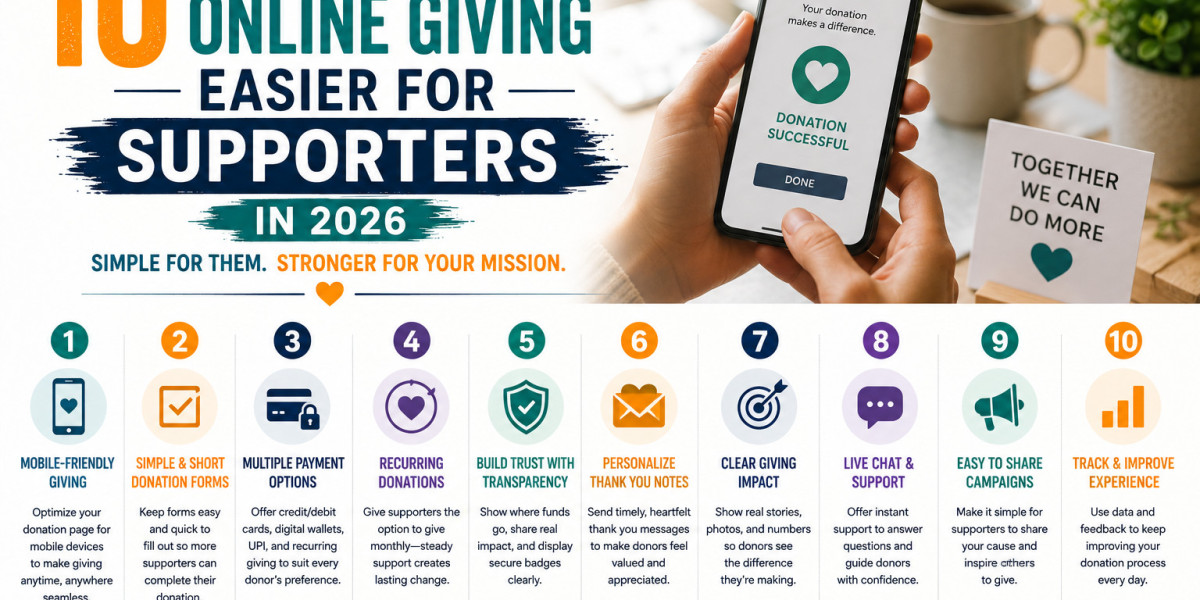

Online giving has changed the way people support charities, nonprofits, mosques, humanitarian projects, and community initiatives. A person can learn about a cause and contribute within minutes without visiting an office or completing a traditional paper form.
However, convenience depends heavily on the quality of the digital experience. If a donation page is difficult to navigate, takes too long to load, requires unnecessary information, or does not clearly explain the payment process, potential supporters may leave before completing their contribution.
For charities, improving online giving is therefore not only a technical task. It involves understanding what donors need before, during, and after making a contribution.
In 2026, organizations can use better website design, mobile optimization, secure payment options, clear campaign information, and personalized communication to make charitable giving easier.
This guide presents 10 practical ways organizations can create a simpler and more reliable online giving experience.
What Makes Online Giving Easy?
An easy donation experience allows a supporter to move through the process without unnecessary obstacles.
The donor should be able to understand the campaign, choose an amount, select an appropriate payment method, provide required information, complete the transaction, and receive confirmation.
The process should also work well on different devices and accommodate supporters who may be donating from different countries.
Most importantly, the donor should never have to wonder what to do next.
1. Keep the Donation Process Short
One of the simplest improvements is reducing unnecessary steps.
A donor should not have to complete a long form just to make a basic contribution.
Only information that is genuinely necessary should be requested. Optional questions can be kept separate from the primary donation process.
For example, if a supporter wants to make a one-time donation, the process could involve selecting a campaign, choosing an amount, entering required details, selecting a payment method, and confirming the contribution.
A shorter process can reduce frustration and make it easier for people to complete their intended donation.
2. Make Donation Buttons Easy to Find
Visitors should not have to search the website for a way to contribute.
Donation buttons should be clearly visible on campaign pages and placed in logical locations throughout the website.
However, visibility does not mean using excessive pop-ups or repeatedly interrupting visitors.
The goal is to make the donation option accessible when someone has decided they want to contribute.
A clear call to action can be particularly useful on mobile devices, where screen space is limited.
3. Optimize the Experience for Smartphones
Many supporters will encounter a fundraising campaign through social media or a search engine while using a smartphone.
The entire donation journey should therefore be designed for smaller screens.
Text should be readable, buttons should be large enough to tap, forms should fit the screen, and payment pages should not require unnecessary zooming or scrolling.
A strong mobile giving experience should feel almost as straightforward as donating from a desktop.
Organizations should test donation pages on different devices before promoting campaigns widely.
4. Offer Relevant Payment Options
Supporters may prefer different payment methods depending on their location and circumstances.
A digital fundraising system can make giving more convenient when it supports appropriate and secure payment options.
Organizations serving international audiences should also consider whether donors from different countries can contribute without unnecessary restrictions.
Payment instructions should be clear, and supporters should know what happens after a transaction is completed.
If a payment fails, the website should provide a useful explanation and allow the donor to try again without restarting the entire process.
5. Clearly Explain Donation Amounts
Some donors appreciate suggested contribution amounts because they make the decision process quicker.
A campaign could provide several options while allowing supporters to enter a custom amount.
The important point is that suggested amounts should not create unnecessary pressure.
Organizations can also explain what different contributions may help provide.
For example, a campaign could explain that certain contribution levels may help provide food packages, educational materials, medical assistance, or project supplies.
These examples should be accurate and should not imply a direct one-to-one relationship unless the organization can verify it.
6. Make Recurring Giving Simple
Some supporters prefer to contribute regularly rather than make individual donations throughout the year.
A simple recurring giving option can allow donors to choose a schedule that works for them.
Organizations should clearly explain how recurring contributions operate, including how donors can update payment details, change the amount, or stop future payments.
Recurring giving can be particularly relevant to programs that require continuous funding, such as education, food assistance, healthcare, orphan support, and community services.
The option should be presented clearly without making one-time donors feel pressured to become recurring supporters.
7. Provide Clear Information Before Payment
Donors should be able to understand the campaign before entering payment information.
Important details can include:
- Campaign purpose
- Fundraising target
- Intended beneficiaries
- Location of the project
- Expected use of donations
- Organization responsible for the campaign
- Relevant updates or reports
A supporter should not need to leave the donation page repeatedly to find basic information.
A transparent donation process helps people make informed decisions while reducing uncertainty.
For Islamic campaigns, organizations should also identify whether a project accepts Zakat, Sadaqah, or another form of charitable giving.
8. Build Trust With Secure Checkout
Security is an important part of online giving.
Donors need confidence that their payment and personal information are being handled appropriately.
Organizations should use reputable payment processing technology and maintain appropriate website security.
The checkout experience should also look consistent with the organization's official website.
Unexpected redirects, unclear payment instructions, or unfamiliar forms can create unnecessary concern.
A secure and professional checkout process can make supporters more comfortable completing their contribution.
9. Give Donors Immediate Confirmation
After a donation is successfully processed, the supporter should receive confirmation.
This may include the contribution amount, transaction details, campaign name, and information about the next steps.
Where appropriate, organizations can also provide a donation receipt.
Immediate confirmation helps donors know that their contribution was successfully received.
It can also prevent uncertainty when a payment takes time to appear on a bank or card statement.
10. Continue Supporting the Donor After Payment
The donor experience does not end at checkout.
After receiving a contribution, organizations can provide meaningful updates about the campaign.
For example, donors could receive information when a project begins, reaches a milestone, or is completed.
A digital donor engagement strategy can help organizations maintain communication without constantly asking supporters for additional contributions.
The content should remain relevant and useful.
A completed project report, beneficiary update, or explanation of future plans can be more valuable than repeated generic fundraising messages.
Why Accessibility Matters in Online Giving
An accessible website can make charitable giving easier for a wider range of people.
Organizations should use readable fonts, sufficient contrast, descriptive labels, clear form instructions, and logical navigation.
Images should have appropriate alternative text where needed, and important information should not be communicated through visuals alone.
Accessibility is not only beneficial for people with disabilities. Clear design can make websites easier for everyone to use.
Making International Giving More Convenient
Charities with supporters across borders should consider the needs of international donors.
Currency information should be clear, payment options should be explained, and any relevant restrictions should be communicated before the donor begins the transaction.
Organizations should also avoid creating confusion by displaying inconsistent amounts across different pages.
If exchange rates may affect the final amount, donors should be informed appropriately.
Clear international giving information can help supporters understand what they are contributing without unnecessary uncertainty.
Making Islamic Giving Easier Online
Muslim donors may have different charitable intentions throughout the year.
Someone may want to pay Zakat, give Sadaqah, support a Sadaqah Jariyah project, contribute to Ramadan relief, provide Qurbani, support a mosque, or help vulnerable families.
A digital Islamic donation experience should clearly separate these purposes where necessary.
For Zakat campaigns, organizations should provide relevant information about how the funds are intended to be distributed.
For Sadaqah Jariyah projects, campaign pages can explain how the project is expected to provide ongoing benefit.
Organizations should be careful when providing religious guidance and should refer complex jurisprudential questions to qualified Islamic scholars.
How Madinah Can Help Simplify Digital Giving
Madinah provides online fundraising solutions designed for charities, nonprofits, community organizations, and Islamic causes.
Organizations can use digital fundraising tools to create campaigns related to Zakat, Sadaqah, humanitarian relief, education, clean water, healthcare, orphan support, mosque projects, and other community needs.
A centralized fundraising experience can make it easier for supporters to find campaigns and contribute online.
For organizations, the objective should be to combine fundraising technology with clear communication, secure payment processes, and meaningful post-donation updates.
Common Problems That Make Online Donations Difficult
Several small issues can prevent a supporter from completing a contribution.
A campaign may have a broken payment button, a slow page, confusing instructions, an overly long form, or unclear information about how funds will be used.
Other problems include:
- Poor mobile design
- Unexpected payment errors
- Missing confirmation messages
- Difficult-to-find donation buttons
- Unclear recurring donation terms
- Outdated campaign information
Organizations should regularly test their donation process from a donor's perspective.
A useful test is to ask someone unfamiliar with the website to complete a donation and observe where they experience confusion.
How Charities Can Measure Improvements
Improving online giving should be based on actual user behavior where appropriate.
Organizations can monitor metrics such as donation-page visits, completed donations, abandoned forms, recurring-giving sign-ups, and mobile conversion rates.
If many people visit a campaign but only a small percentage complete donations, there may be an issue with the page, payment process, campaign clarity, or overall trust experience.
Testing different page layouts and simplifying forms can help organizations identify improvements.
The objective should be to remove genuine obstacles rather than manipulate visitors into donating.
Frequently Asked Questions
How can charities make online donations easier?
Charities can simplify donation forms, improve mobile usability, provide secure payment options, explain campaigns clearly, offer recurring giving, and provide immediate confirmation after successful transactions.
Why is mobile optimization important for online donations?
Many donors access campaigns through smartphones. A mobile-friendly donation page allows supporters to read information and complete payments without unnecessary scrolling or technical problems.
Should charities offer recurring donations?
Recurring donations can be useful for supporters who want to contribute regularly. Organizations should clearly explain how recurring payments work and how donors can manage them.
How can donors know whether an online donation page is secure?
Donors should verify that they are using the organization's official website or fundraising page and look for appropriate security indicators and clear payment information. They should avoid sending money through unverified links or accounts.
What information should appear before someone donates?
A campaign should explain its purpose, target, intended beneficiaries, organization responsible for the campaign, and how contributions are expected to be used.
Can I make Islamic donations online?
Yes, many organizations provide online options for Zakat, Sadaqah, Sadaqah Jariyah, Ramadan giving, Qurbani, and other charitable causes. Donors should verify the organization and campaign before contributing.
What happens after an online donation?
Typically, the donor receives confirmation that the transaction was processed. Depending on the organization, they may also receive a receipt and later updates about the supported campaign.
Conclusion
Making online giving easier is not simply about adding a payment button to a website. It requires organizations to think about the complete donor journey.
From the moment someone reaches a campaign page to the moment they receive confirmation and later project updates, every step can influence their experience.
Shorter forms, clear campaign information, mobile optimization, secure payment technology, recurring giving, accessible design, and effective communication can remove unnecessary barriers.
For Islamic charities and community organizations, clearly presenting Zakat, Sadaqah, Sadaqah Jariyah, Ramadan, Qurbani, mosque, and humanitarian campaigns can make it easier for supporters to choose a cause that matches their intentions.
Madinah provides digital fundraising solutions that can help organizations create and manage online campaigns across a range of charitable causes.
Ultimately, an easier giving experience benefits everyone. Donors can contribute with greater convenience and clarity, while organizations can spend less time dealing with avoidable donation problems and more time focusing on the communities and causes they serve.
Ubicación del Autor
Canada