
Running a small or medium-sized business often means managing several responsibilities with limited time and resources. Finance teams may handle customer invoices, supplier payments, tax records and account reconciliation using a combination of accounting software, spreadsheets and email. As transaction volumes grow, these processes can become difficult to manage efficiently.
For businesses preparing for the UAE's electronic invoicing requirements, choosing the right software is an important step. A suitable UAE e-invoicing solution for SMEs should fit the company's existing accounting processes, support the applicable compliance requirements and offer a practical way to exchange structured invoices electronically. The goal is to find a solution that meets current business needs without introducing unnecessary complexity.
Why E-Invoicing Matters for Small and Medium-Sized Businesses
Electronic invoicing changes how businesses create, exchange and process invoices. Traditional methods often involve sending PDF files by email or entering invoice details manually into accounting systems. These documents may be useful for record-keeping, but they are not structured electronic invoices under the UAE's e-invoicing framework.
Structured e-invoices contain data that compatible systems can process electronically. This can reduce repetitive data entry and make invoice information easier to transfer between connected business systems.
For SMEs, these changes can be particularly relevant when a small finance team manages transactions for many customers and suppliers. A more organised invoicing workflow can help employees spend less time handling routine administrative tasks and more time resolving financial issues that need attention.
However, businesses should first confirm whether their transactions fall within the applicable rules and establish their implementation timeline using official UAE guidance.
What Should SMEs Look for in E-Invoicing Software?
1. Compatibility With Existing Accounting Software
Many SMEs already use accounting applications to manage invoices, payments and financial reports. Replacing these systems may be unnecessary if the existing software can work with a suitable e-invoicing solution.
Before choosing a provider, businesses should check how invoice data will move between their accounting application and the electronic invoicing system. Ask whether the integration requires additional configuration, manual transfers or custom development.
For example, a small trading company may generate invoices in its accounting software and maintain customer details in the same system. A suitable integration should transfer the required information accurately without forcing employees to recreate every invoice.
2. Clear Pricing and Predictable Costs
Budget is an important consideration for SMEs. However, comparing providers based only on their advertised starting price may not reveal the full cost of implementation.
Businesses should ask about setup charges, recurring subscription fees, integration costs, transaction limits and additional support expenses. They should also establish whether future changes or additional users will affect the price.
A clear breakdown makes it easier to compare providers and estimate the ongoing cost of operating the solution.
3. Invoice Validation and Error Handling
Incorrect invoice details can lead to delays and additional work. Missing customer information, inconsistent tax data or invalid fields may prevent an invoice from passing the required checks.
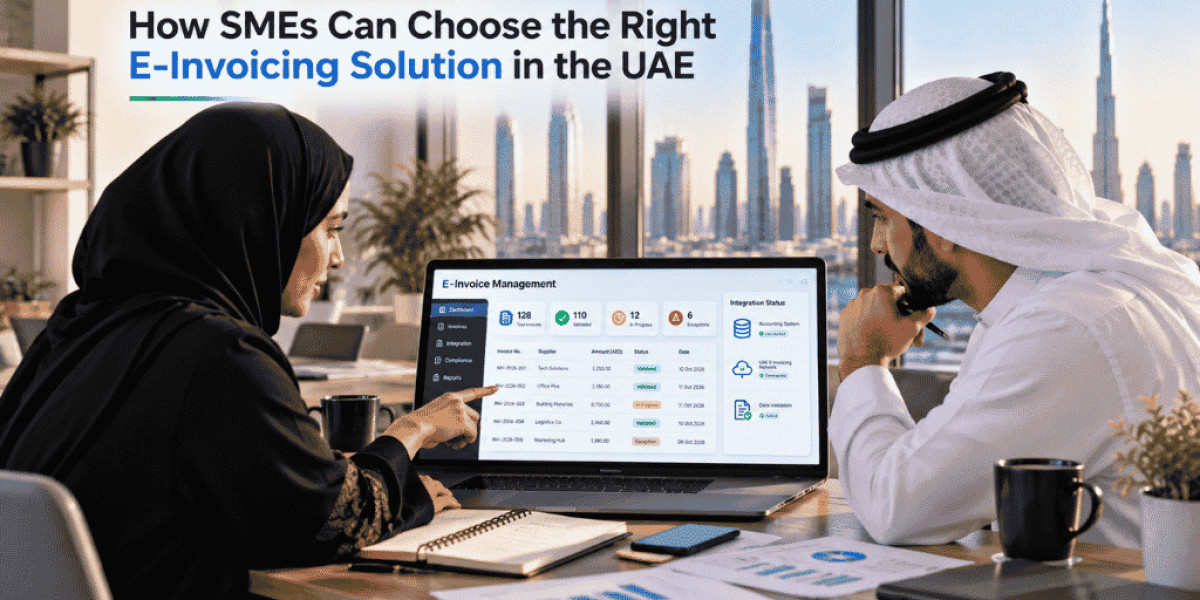
SMEs should understand how a solution identifies errors and explains what needs to be corrected. It is also worth checking whether users can track invoice statuses and identify transactions that require attention.
For a business with a small finance team, clear error messages and straightforward correction procedures can make everyday invoice management easier.
4. Support and Ease of Use
A feature-rich platform may still be difficult to adopt if employees need extensive technical knowledge to operate it. SMEs should consider how easily their finance staff can learn the workflow and whether practical assistance is available during implementation.
Ask providers about onboarding, employee training, technical support and the process for resolving integration issues. Businesses should also understand how software updates and changes to applicable technical requirements will be handled.
Preparing Your Business for UAE E-Invoicing
Selecting software is only one part of the preparation process. Businesses should also review their existing records, identify system requirements and assign responsibilities before implementation begins.
Start by checking the quality of customer and supplier information. Review the invoice fields used by the accounting system and identify any manual processes that may need to change.
Next, verify the provider's current accreditation status using the UAE Ministry of Finance's official list. Accreditation should be checked directly rather than assumed from a provider's marketing claims.
Businesses should then plan the integration and testing process. Representative invoices should be tested to confirm that information is transferred correctly, validation issues are reported and relevant processing statuses can be tracked.
Companies exploring available options can review Webtel's UAE e-invoicing solution for information about its stated e-invoicing offering.
Common Mistakes SMEs Should Avoid
One mistake is assuming that existing accounting software automatically meets all UAE e-invoicing requirements. Businesses should verify the system's actual capabilities and determine whether additional integration is needed.
Another is delaying preparation until the implementation deadline approaches. Reviewing invoice data, comparing providers and testing integrations can take time, particularly when the business relies on customised software or external IT support.
Some businesses may also overlook the importance of employee responsibilities. Even with suitable software, someone needs to monitor errors, correct invoice information and coordinate with the provider when technical issues arise.
Finally, SMEs should avoid choosing a solution solely because it offers the lowest price. Compatibility, support, security and the total cost of implementation all affect whether a solution is suitable over the longer term.
Choosing a Solution That Fits Your Business
The right e-invoicing solution should match the size of the business, its existing accounting systems and its operational requirements. SMEs should compare providers based on system compatibility, pricing, validation capabilities and the support available during and after implementation.
The UAE Ministry of Finance publishes official guidance on the electronic invoicing framework, provider accreditation and phased implementation. Businesses should use these resources to confirm their obligations and deadlines before finalising their plans.
By reviewing these factors early, SMEs can make a more informed software decision and prepare their invoicing processes for the transition to structured electronic invoice exchange.