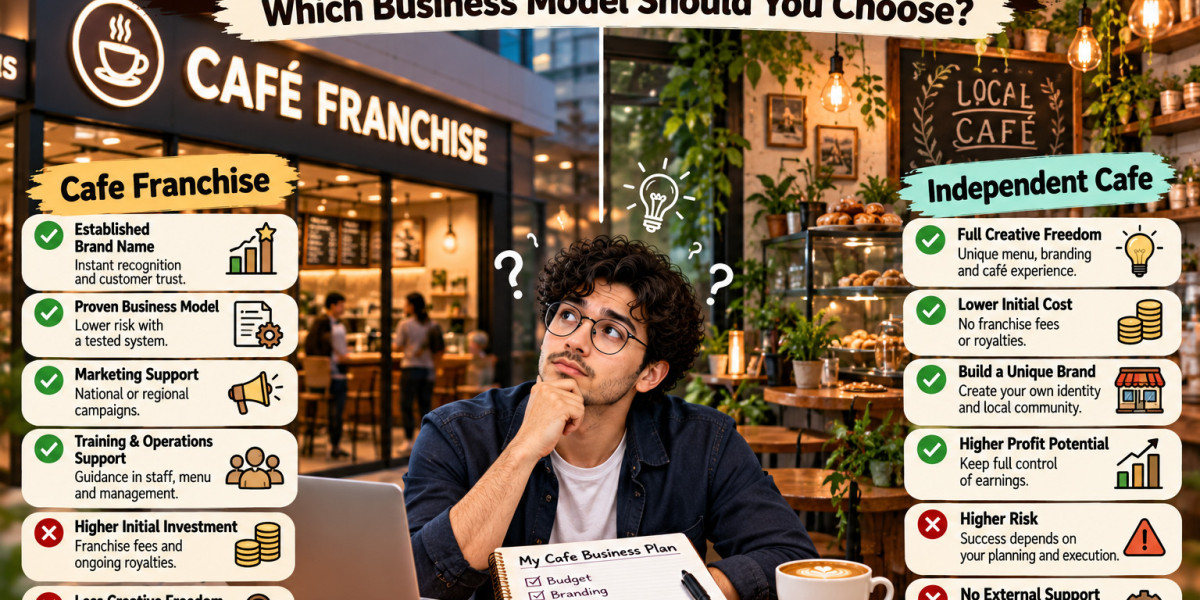

Starting a cafe is an attractive business opportunity in India, especially as coffee culture grows in metro cities, smaller towns, and college areas. However, before investing money, one important decision is whether to open a franchise cafe or start your own independent cafe.
Both models have their advantages and challenges. A franchise offers an established brand and a structured business system, while an independent cafe gives you greater freedom to create your own concept. Understanding the differences can help you choose the right option based on your budget, experience, and business goals.
In this guide, we compare a cafe franchise vs own cafe to help you make an informed decision.
What Is a Cafe Franchise Business?
A cafe franchise is a business operated under an established coffee brand. The franchise owner pays an initial franchise fee or investment and follows the brand's operating standards, menu guidelines, and business processes.
Depending on the agreement, the franchisor may provide staff training, equipment guidance, marketing support, supplier connections, and assistance with selecting a location.
This model is suitable for entrepreneurs who want to enter the cafe industry with an existing business framework rather than building everything from scratch.
However, franchise owners must follow the brand's rules and may need to pay ongoing royalties or marketing fees.
What Is an Independent Cafe?
An independent cafe is a privately owned coffee shop that operates under its own brand. The owner controls the cafe's concept, menu, pricing, interior design, marketing strategy, and customer experience.
For example, you could open a speciality coffee shop, a student-friendly cafe, or a neighbourhood coffee outlet with a unique theme.
Unlike a franchise cafe business, an independent cafe does not require permission to operate under another company's brand. However, the owner must develop the business strategy, establish supplier relationships, build brand awareness, and create operating procedures independently.
This model offers more creative freedom but generally requires greater personal involvement.
Cafe Franchise vs Own Cafe: Key Differences
Factor | Cafe Franchise | Independent Cafe |
Brand recognition | Existing brand identity | Must build recognition |
Initial investment | Depends on brand and agreement | Depends on concept and setup |
Business support | Training and guidance may be available | Owner arranges support |
Menu flexibility | Usually restricted by brand standards | Greater freedom |
Marketing | Brand-level and local support may be available | Owner manages marketing |
Operating rules | Must follow franchise guidelines | Owner sets the rules |
Ongoing fees | Royalties or other fees may apply | No franchise royalties |
Business independence | Limited by agreement | High |
The right choice depends on whether you value an established business structure or complete control over your cafe.
1. Initial Investment and Operating Costs
Investment is one of the biggest factors when comparing an independent cafe vs franchise.
A franchise investment may include the franchise fee, equipment, interiors, staff training, initial inventory, and other setup expenses. Some brands also charge recurring royalties or marketing fees. The total cost varies significantly depending on the brand, location, outlet size, and agreement.
An independent cafe allows you to control spending by choosing your own equipment, furniture, menu, and interior design. You could begin with a smaller takeaway outlet or invest more in a full-service coffee shop.
However, lower setup costs do not automatically mean higher profits. Both models must account for rent, salaries, ingredients, utilities, maintenance, marketing, and working capital.
Before choosing either model, prepare a realistic budget and estimate how much revenue your cafe needs to cover its monthly expenses.
2. Brand Recognition and Customer Trust
A franchise cafe benefits from an established brand, provided customers in your target market already recognise it. This can help attract initial customers and reduce the effort required to introduce the business.
An independent cafe starts without that advantage. You must build trust through coffee quality, service, pricing, customer reviews, and local marketing.
However, an independent cafe can develop a strong local following by offering something distinctive, such as regional flavours, speciality coffee, fresh bakery products, or a comfortable workspace.
If you want to benefit from an existing brand identity, a franchise may be suitable. If you want to build a unique identity, an independent cafe offers more flexibility.
3. Training and Business Support
Running a cafe involves more than preparing coffee. Owners must manage inventory, staff, customer service, hygiene, supplier relationships, and daily operations.
A franchise may provide operating manuals, training, standardised recipes, marketing materials, and guidance during setup. The exact support depends on the franchisor and should be verified before signing an agreement.
An independent cafe owner must develop these systems independently or hire experienced professionals.
For first-time entrepreneurs, franchise support can make the initial learning process easier. Experienced cafe operators may prefer the freedom to create their own processes.
Remember that franchise support does not guarantee business success. Location, execution, customer demand, and cost management remain important.
4. Menu Flexibility and Creativity
An independent cafe gives you greater control over your offerings. You can introduce seasonal drinks, experiment with coffee beans, create signature beverages, and change prices based on customer feedback.
A franchise generally follows an approved menu and pricing structure. This helps maintain consistency across outlets but may limit experimentation.
If your business idea depends on a menu or a unique cafe experience, an independent model may be more appropriate.
On the other hand, a franchise can suit entrepreneurs who prefer to work with an established product range and standardised operating procedures.
5. Marketing and Customer Acquisition
Franchise brands may offer national advertising, social media resources, promotional campaigns, and brand guidelines. This can reduce the burden of developing every marketing activity independently, although local promotion may still be the franchise owner's responsibility.
Independent cafe owners must create their own marketing strategy. This may include Google Business Profile optimisation, local SEO, Instagram content, loyalty programmes, influencer collaborations, and customer referral offers.
The advantage is that independent owners can respond quickly to local trends and test different promotional ideas.
Regardless of the model, marketing should focus on reaching the right audience, encouraging repeat visits, and building long-term customer relationships.
6. Profit Potential and Business Risks
Neither a franchise nor an independent cafe guarantees higher profits.
A franchise may benefit from established processes and customer recognition, but royalties, brand fees, and mandatory purchases can affect margins. An independent cafe avoids franchise royalties but must invest time and money in brand development and operational planning.
Both models face risks such as high rental costs, inconsistent footfall, rising ingredient prices, staff turnover, and changing customer preferences.
Before investing, estimate monthly sales, food and beverage costs, fixed expenses, break-even sales, and working capital requirements. For a franchise, review the agreement carefully and ask existing franchise owners about actual operating expenses and business challenges.
Which Business Model Should You Choose?
A cafe franchise may be the better choice if you are a first-time entrepreneur, prefer structured guidance, and are comfortable following an established brand's operating rules.
An independent cafe may be the better choice if you have a distinctive concept, want full creative control, and are prepared to build your brand and operating systems from the beginning.
If you are exploring coffee franchise opportunities in India, compare the total investment, training, location support, royalty structure, and agreement terms before selecting a brand. Do not make the decision based on brand popularity alone.
Conclusion
Choosing between a cafe franchise vs own cafe depends on your investment capacity, experience, and long-term business vision. A franchise provides an established framework and potential brand recognition, while an independent cafe offers greater flexibility and ownership of your brand identity.
Take time to research your target market, understand local customer preferences, and prepare a detailed financial plan. The most suitable business model is the one that matches your resources and allows you to operate sustainably.
Whether you choose a franchise cafe business or an independent coffee shop, consistent quality, good service, sensible cost management, and customer loyalty will play an important role in long-term growth.
Frequently Asked Questions
1. Is a cafe franchise better than an independent cafe?
A cafe franchise may suit beginners who want structured support and an established brand. An independent cafe may suit entrepreneurs who prefer creative freedom and control over business decisions.
2. Is an independent cafe cheaper to start?
It can be cheaper because there may be no franchise fee or royalty payments. However, total costs depend on the location, equipment, interiors, menu, and scale of operations.
3. Can an independent cafe be more profitable than a franchise?
Yes, it can be, but profitability depends on sales, operating costs, customer retention, and management. Neither model guarantees better financial results.
4. What should I check before investing in a cafe franchise?
Review the total investment, franchise fee, recurring royalties, training, supplier requirements, territory restrictions, agreement duration, renewal conditions, and exit terms. Also, assess the local market and speak with existing franchise owners where possible.